


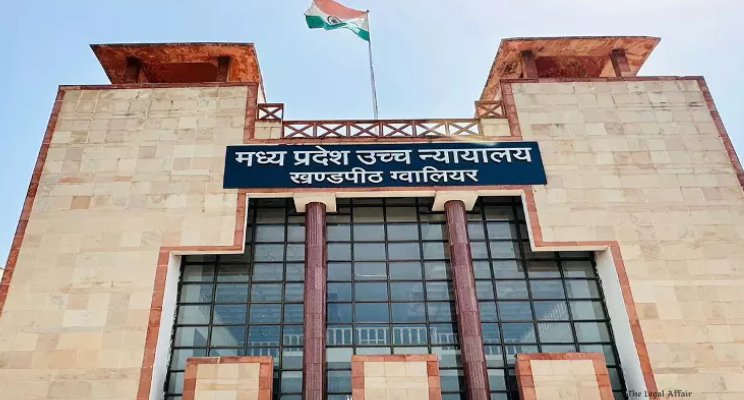
Introduction:
In a significant ruling reinforcing the principles of fairness, free consent, and procedural sanctity in civil settlements, the Madhya Pradesh High Court held that a compromise deed affecting the rights and interests of multiple parties cannot attain legal validity unless every concerned party voluntarily and knowingly consents to its terms. The judgment, delivered by Justice Jai Kumar Pillai in Govind Through Legal Representative v. Sayarbai and Others [S.A. No. 2217/2025], centered around a bitter property dispute among the heirs of late Ambaram, a resident of the village of Nipawali in the Dhar district. The case revolved around competing wills and claims of inheritance over 4.397 hectares of ancestral land, testing the limits of what constitutes a legally enforceable compromise in civil proceedings. The Court’s decision not only clarified the importance of inclusive consent in compromise deeds but also reaffirmed the stringent standards required to prove a Will’s authenticity under Section 68 of the Indian Evidence Act, 1872, thus striking a balance between procedural law and substantive justice.
Arguments of Both Sides:
The dispute traces its origin to the death of Ambaram, whose four children — Sayarbai, Sangeeta, Mangilal, and Kamlabai — jointly filed a suit seeking a declaration of title, partition, and permanent injunction against their brother Govind. They also sought a judicial declaration regarding the authenticity of the “original Will” executed in June 2018, which they claimed rightfully distributed the property among all heirs. The plaintiffs contended that Govind had fraudulently procured a “disputed Will” favoring himself by taking advantage of their father’s deteriorating health and illiteracy, registering it secretly and without the knowledge of other family members. They argued that the property in question was ancestral, and therefore, their father had no unilateral authority to bequeath it entirely to one son, particularly since the land had already been divided and each heir was in possession of their respective share.
On behalf of the plaintiffs, it was asserted that the mutation entry, which transferred ownership on the basis of the alleged Will, was done unlawfully despite their objections. They narrated that following repeated threats of dispossession by Govind, they were compelled to seek judicial redress to declare the disputed Will void and to protect their 1/5th share each in the ancestral land. Importantly, while the State of Madhya Pradesh was made a formal respondent, no relief was sought against it, and it chose not to file a reply, effectively remaining a passive party in the proceedings.
Opposing these claims, Govind’s son, representing his deceased father’s estate, presented a diametrically opposite narrative. He asserted that Ambaram, in the presence of all his children and witnesses, had voluntarily executed the disputed Will in favor of Govind, which had been duly registered and witnessed. He further claimed that during his lifetime, Govind had distributed the land equitably among his own heirs, including the present appellant, who had been cultivating and possessing the land without dispute. His counsel, Advocate Sulabh Samaiya, argued that both the Trial Court and the First Appellate Court had erred in dismissing the validity of the Will and in disregarding the compromise that was subsequently reached between some family members.
The appellant argued that after prolonged litigation, a mutual compromise had been executed between himself (Govind’s son) and three of the sisters — Sayarbai, Sangeeta, and Kamlabai — who had acknowledged in court that the disputed Will was validly executed by their father. The appellant further submitted that the courts below failed to appreciate this settlement and had erroneously proceeded to adjudicate the matter as though no compromise existed. According to him, once certain heirs had admitted the Will’s validity through the compromise deed, the courts ought to have accepted it as binding upon all.
He also attacked the lower courts’ finding that the Will was not duly executed, contending that the absence of a signature and presence of a thumb impression by the testator did not automatically invalidate a Will under Indian law. He pointed out that the Evidence Act and the Indian Succession Act recognize thumb impressions as a valid form of execution, particularly in rural India, where illiteracy is common. He urged the High Court to view the Will as genuine, pointing out that there was no direct evidence showing coercion or fraud and that both the lower courts had failed to evaluate the intention of the testator, which remained the cornerstone of testamentary law.
The respondents, on the other hand, vehemently opposed these arguments. They maintained that the so-called compromise could not be considered legally binding since it excluded one of the key co-defendants, namely Mangilal, whose rights and interests were directly intertwined with the disputed property. They argued that under well-established principles of civil law, a compromise deed cannot operate partially, binding some parties while excluding others with equal stakes. Such a selective settlement, they contended, was inherently invalid and could not confer legal finality. Moreover, the respondents argued that the execution of the disputed Will was shrouded in suspicion, as the testator was reportedly taken away under the pretext of medical treatment and made to affix his thumb impression without full comprehension of the document’s contents.
The respondents also emphasized that the attesting witnesses of the Will were neither examined nor produced in court, thereby violating Section 68 of the Indian Evidence Act, which mandates at least one attesting witness to prove the execution of a Will. The plaintiffs, particularly the women, testified that they were unaware of the Will until it surfaced during a mutation proceeding. They claimed that Govind, exploiting his father’s vulnerability, had orchestrated the Will for personal gain. Their cross-examination statements, which remained unchallenged, lent strong evidentiary weight to their version. They argued that the High Court should uphold the findings of the lower courts, which had both declared the disputed Will void and recognized the rightful partition of the land.
Court’s Judgment:
After meticulously examining the factual matrix, testimonial evidence, and legal principles governing wills and compromises, the Madhya Pradesh High Court dismissed the appeal and upheld the concurrent findings of the lower courts. Justice Jai Kumar Pillai observed that for any compromise to attain legal sanctity, it must represent the voluntary, informed, and conscious consent of all parties whose rights or interests are affected by its terms. The Court held that the compromise deed produced by the appellant was incomplete and unenforceable because Mangilal, one of the co-defendants and a rightful heir, had neither participated in the compromise nor signed the deed.
The Court underscored that law does not recognize a partial compromise, especially in cases involving joint property and shared rights. A settlement that binds only a subset of parties while excluding others who stand on the same legal footing cannot be said to reflect genuine consensus. Such a selective compromise, according to the Court, lacks the element of universality required to confer binding legal effect. Consequently, the Court held that in the absence of Mangilal’s consent, the compromise was incomplete, non-binding, and devoid of legal validity.
Justice Pillai’s judgment also delved deeply into the question of the Will’s genuineness and execution. The Court noted that Ambaram had used his thumb impression instead of his signature, and that the beneficiaries had failed to provide satisfactory evidence establishing the document’s authenticity. It was observed that even Sayarbai and Sangeetabai, both illiterate rural women, had used thumb impressions on documents, indicating their limited awareness and vulnerability to manipulation. In such circumstances, the Court deemed it unsafe to rely upon the disputed Will as a true expression of the testator’s intent.
Further, the Court drew attention to the uncontroverted testimonies of the female respondents, who consistently stated that the Will had been executed without their knowledge and under questionable circumstances. They testified that Govind had taken their father under the guise of medical treatment, during which the disputed Will was clandestinely executed. Their statements, the Court observed, had remained unchallenged during cross-examination, thereby acquiring significant evidentiary weight.
Citing Section 68 of the Indian Evidence Act, the Court reiterated that a Will cannot be deemed proved unless at least one attesting witness is called to testify to its execution. The appellant had failed to discharge this statutory burden, and the alleged attesting witnesses were never examined. The Court reaffirmed that the burden of proof lies heavily on the beneficiary of the Will, who must establish that the document was duly executed in accordance with law and free from suspicious circumstances. Since this burden was not discharged, the Will could not be treated as valid.
In addressing the compromise aspect, the Court clarified that even if certain heirs had acknowledged the disputed Will during litigation, that acknowledgment could not override the rights of a non-consenting co-heir. A family settlement or compromise in partition suits must include all stakeholders; otherwise, it fails to achieve the objective of peaceful and conclusive division. The Court also observed that the lower courts had rightly partitioned the property into five equal shares, ensuring that each heir received an equitable portion of the ancestral estate.
Ultimately, the High Court concluded that both the Trial Court and the First Appellate Court had exercised sound judicial reasoning in rejecting the disputed Will and the purported compromise. It upheld their findings as well-reasoned and legally sustainable, emphasizing that the law prioritizes collective consent, transparency, and the protection of vulnerable parties in familial property disputes. Justice Pillai remarked that courts must guard against fraudulent compromises that seek to undermine the rights of unsuspecting heirs, particularly when such compromises are drafted under pressure or misinformation.
Accordingly, the appeal was dismissed, and the judgment of the lower courts was affirmed in entirety. The ruling reinforces the judiciary’s commitment to protecting the integrity of family settlements and ensuring that justice is not compromised by procedural shortcuts or partial agreements.