


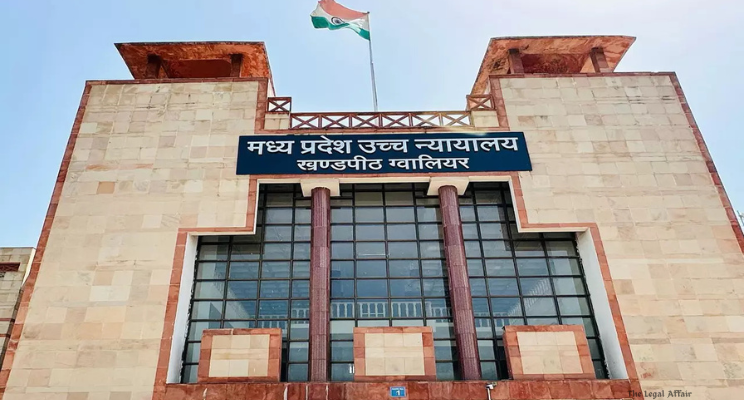
Introduction:
In Mamta Gurjar v. Pooja Kushwah, the Madhya Pradesh High Court delivered a significant ruling that reiterates a critical principle of criminal jurisprudence—police officers cannot seek the protective cover of Section 197 of the CrPC or its corresponding provision, Section 218 of the Bharatiya Nagarik Suraksha Sanhita (BNSS), for acts that bear no reasonable nexus with their official duties, especially when allegations pertain to abuse of authority, custodial violence, unlawful confinement or false implication; this case arose from a chilling series of events narrated by complainant Pooja Kushwah, who alleged that on 12 October 2019, her brother Dhirendra and another man, Devendra Sharma, were assaulted by police personnel near Partwada village and later subjected to brutal custodial violence inside Bhargawan Police Station, where Dhirendra was abused, slapped, beaten with sticks, dragged, tripped and wrongfully confined in a lock-up, and when Pooja reached the police station to inquire about her brother, she too was allegedly beaten, slapped, abused, and even had her dupatta pulled off, with another accused, Ravi Khare, allegedly biting her on her shoulder and mouth, leading to injuries that required hospitalisation; the complaint further narrated that the police personnel not only assaulted Pooja and her brother but also misbehaved with their mother, threatening to ruin her life if she pursued the matter, prompting her to write to the Superintendent of Police, Sheopur, the Home Ministry, and the Human Rights Legal Cell, but without any action forthcoming; based on these allegations, the Trial Court took cognizance of offences under Sections 294, 342, 323 and 506 Part I IPC, following which the accused police officers attempted to shield themselves under Section 218 BNSS—arguing that they could not be prosecuted without prior government sanction—yet both the Trial Court and the Sessions Court rejected this argument, compelling them to approach the High Court; before the High Court, counsel for the police personnel contended that the complaint was not maintainable since their uniforms were torn and bloodstained, allegedly proving that they too were attacked during the incident, insisting that the prosecution was barred without governmental permission, while the complainant’s counsel argued that the acts complained of were clearly illegal, deliberate and outside the ambit of lawful policing, characterising them as custodial violence and abuse of power rather than conduct reasonably connected to any official duty.
Judgement:
Justice Rakesh Kumar Gupta, after examining the complaint, medical reports, statements and case law, elaborated that the protection under Section 197 CrPC or Section 218 BNSS is not absolute, nor is it meant to function as a blanket immunity for police officers who misuse their authority, emphasising the Supreme Court’s consistent position that the central test for attracting such protection is whether the impugned act bears a reasonable connection with the discharge of official duty—meaning whether the act was done by virtue of the office, even if in excess of authority, but always connected to the performance of official functions; the Court unequivocally held that custodial torture, third-degree treatment, abuse, assault, wrongful confinement, false implication, or any action that is manifestly beyond the scope of duty cannot be treated as “official duty”, and therefore cannot invoke the protective sanction requirement; referring to precedents like P.P. Unnikrishnan v. Puttiyottil Alikutty, State of Maharashtra v. Budhikota Subbarao, D.K. Basu v. State of West Bengal, Devinder Singh v. State of Punjab and Dr. S.M. Mansoori v. Surekha Parmar, the Court reiterated that the shield of Section 197 is meant only for acts done in good faith in discharge of official duties, not for atrocities or criminal acts camouflaged as police work, holding that the alleged acts—beating a civilian without provocation, biting a woman complainant, dragging and confining individuals not required for interrogation, hurling abuses, threatening family members, and inflicting injuries amounting to custodial violence—are wholly unrelated to policing duties and therefore cannot attract statutory protection; the Court observed that nothing in the record suggested that the complainant or her brother were accused persons or required for interrogation, establishing that the police actions were neither investigative nor preventive but were prima facie unlawful, arbitrary and personal in nature; rejecting the police personnel’s claim that sanction was mandatory, the Court held that sanction is required only when acts are so inseparably connected with official duty that their omission would amount to dereliction of duty, but here the alleged conduct was not just unrelated but directly violative of constitutional and human rights; the Court therefore concluded that the petitions were devoid of merit, the plea for protection was nothing more than an attempt to evade accountability, and the allegations of custodial violence and wrongful confinement do not even prima facie fall within the scope of official duties; accordingly, the High Court dismissed the petition in entirety, permitting the prosecution to proceed unhindered, marking an important reaffirmation of the principle that police power is not a license for brutality and that statutory protections cannot be weaponised to shield officers from consequences of illegal acts.