


Introduction:
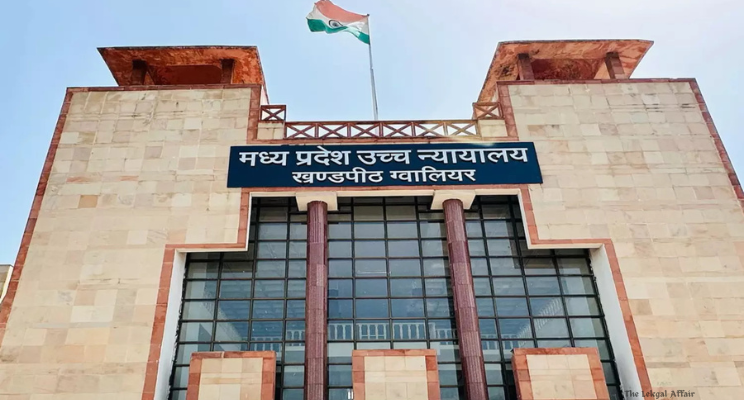
In Badam Batham v. Dinesh [MA-806-2022], the Madhya Pradesh High Court, presided over by Justice Hirdesh, delivered a significant ruling affirming that the right to compensation for loss of consortium arises from the mere subsistence of a legal marital relationship, irrespective of whether the spouses were living together at the time of the incident. The case revolved around the tragic death of an Anganwadi worker, who succumbed to injuries after falling from a negligently driven bus. Her legally wedded husband, though living separately at the time of the accident, approached the Motor Accident Claims Tribunal seeking compensation on the grounds that he was emotionally and financially dependent on the deceased. The Tribunal, however, dismissed his claim by holding that the husband failed to prove that the marital relationship remained intact and relied on the parties’ alleged separation to deny the consortium claim. Aggrieved by this, the husband preferred an appeal before the High Court. The High Court revisited the legal principles surrounding consortium compensation and drew heavily from the Supreme Court’s authoritative ruling in United India Insurance Co. Ltd. v. Satinder Kaur, which clarified that spousal consortium is a compensable head of damages available so long as the marital relationship legally exists, irrespective of cohabitation. The Court emphasized that consortium is not contingent upon physical proximity, daily companionship, or the state of matrimonial harmony at the time of death, but rather on the subsisting legal status between spouses. Taking this view, the Court held that the appellant, being the legally wedded husband, cannot be deprived of the compensation merely because the couple lived separately, and awarded him ₹40,000 toward loss of consortium.
Arguments:
In the appeal, the husband, represented by Advocate Ramesh Prasad Gupta, argued that the Tribunal committed a grave error in denying consortium compensation on unsustainable grounds. He submitted that the Tribunal failed to appreciate that the marital bond between him and the deceased had not been legally dissolved, and their statutory status as husband and wife remained intact on the date of the accident. He further contended that the deceased, being a healthy and working Anganwadi employee, supported him emotionally and financially, and that the Tribunal ignored official Anganwadi records which clearly documented their marital relationship. He argued that separation does not negate emotional dependence or the existence of a legally recognized marital status. The husband further relied on the Supreme Court’s judgment in Satinder Kaur, which held that consortium includes spousal, parental, and filial dimensions, and that spousal consortium is granted based on the continuing legal relationship rather than the quality of domestic life at the time of death. He asserted that the Tribunal’s reasoning, which required proof of cohabitation or an undissolved marriage through additional evidence, imposed an excessive and legally unfounded burden on the claimant. Opposing the appeal, the insurance company, represented by Advocate Rajesh Gupta, supported the Tribunal’s findings. The insurance company contended that the husband was living separately at the time of the accident and failed to demonstrate any real emotional or financial dependence on the deceased. It argued that the separation cast doubt on the genuineness of the consortium claim and therefore justified the Tribunal’s denial. The insurer also suggested that the claimant had not produced sufficient documentary evidence to prove the subsistence of the marriage beyond mere assertions. According to the insurer, the separation weakened the causal connection between the accident and the claimed mental suffering or loss of companionship, suggesting that consortium compensation was unwarranted. Nonetheless, the appellant countered these arguments by stressing that legal marriage, not cohabitation, forms the foundation for consortium rights, and the insurer’s approach attempted to introduce conditions not supported by law.
Court’s Judgement:
Justice Hirdesh, after evaluating the arguments and reviewing the legal framework, held that the Tribunal erred in rejecting the husband’s consortium claim. The Court underscored that the legal position governing consortium is firmly established by the Supreme Court in United India Insurance Co. Ltd. v. Satinder Kaur, wherein the apex court expanded and clarified the concept of consortium compensation. The Supreme Court held that spousal consortium embodies compensation for loss of companionship, love, affection, aid, protection, cooperation, and comfort that the surviving spouse would have continued to enjoy had the deceased lived. The High Court emphasized that this right flows from the existence of a legally recognized marriage, not the physical or emotional closeness between the spouses at any given point. The High Court observed that the Tribunal placed undue weight on the couple’s separation and failed to appreciate that the marriage was never legally dissolved. The Anganwadi records submitted by the claimant confirmed the marital relationship, and the insurance company failed to produce any material disproving the same. The Court reiterated that even if the spouses had been living separately, the legal status of the marriage remained, and that alone is sufficient to trigger the entitlement to consortium compensation. Relying on Satinder Kaur, the Court noted that consortium must be granted irrespective of whether the relationship was harmonious or strained, or whether the parties resided under the same roof. It rejected the Tribunal’s reasoning that separation undermined the claim and clarified that legal subsistence of marriage is the determining factor. Consequently, the High Court held the appellant entitled to ₹40,000 toward loss of consortium and modified the Tribunal’s award accordingly. The judgment reinforces the principle that consortium compensation is a legal entitlement grounded in marital status and cannot be withheld on moral, emotional, or subjective grounds such as the state of relationship or physical separation at the time of death.