


Introduction:
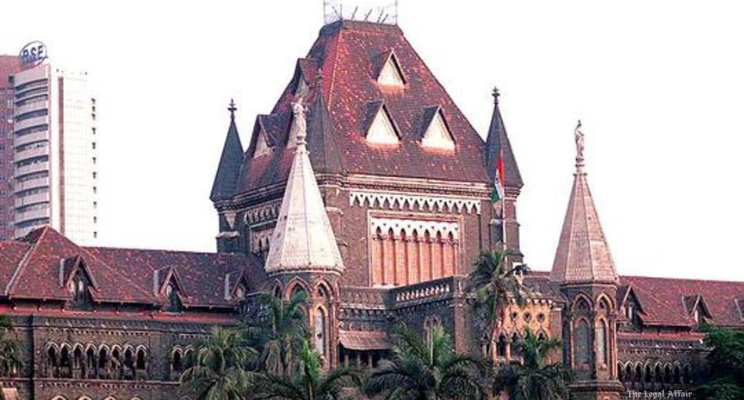
The present controversy arose in writ petitions filed by the Brihanmumbai Municipal Corporation challenging an interlocutory order passed by the Industrial Court in proceedings initiated by the Mumbai Mahanagarpalika Karyalayeen Karmachari Sanghatana, a representative employees’ union. The dispute centred on a circular dated 05 September 2025 through which the Corporation sought to discontinue the long-standing practice of granting one or two additional wage increments to employees who had acquired Diplomas in Local Self Government (LSGD) and LGS, including those who obtained such qualifications even after 29 August 2000. The Industrial Court, while entertaining a complaint alleging unfair labour practice, stayed the operation of the circular and directed continuation of the prevailing practice pending final adjudication. Aggrieved by this interim protection, the Corporation invoked the writ jurisdiction of the Bombay High Court, contending that the Industrial Court had overstepped its jurisdiction and virtually granted final relief at the interim stage. Justice Amit Borkar, after examining the statutory scheme of Section 9-A of the Industrial Disputes Act, 1947 and Item 8 of the Fourth Schedule thereto, dismissed the writ petitions and upheld the interim order, observing that a discretionary concession granted repeatedly over decades through formal administrative approvals and published circulars may crystallise into a customary concession or service condition, and its withdrawal without notice would amount to a change in service conditions attracting the mandatory requirement of statutory notice.
Arguments on Behalf of the Petitioning Corporation:
The Corporation argued that the grant of additional increments to employees acquiring LSGD and LGS diplomas was never a statutory entitlement nor a contractual right forming part of the service rules. According to it, the benefit originated as a policy decision taken in administrative wisdom to incentivise employees to enhance their qualifications and thereby improve efficiency in municipal governance. It was submitted that such increments were extended from time to time through circulars as a matter of discretion and administrative policy, and no employee had an enforceable legal right to demand them as a matter of course. The Corporation emphasised that the circular dated 05 September 2025 merely prospectively discontinued the grant of further increments for qualifications acquired after a particular date; it did not withdraw increments already granted nor did it reduce wages drawn by any employee. Hence, there was no adverse financial consequence in respect of past entitlements. The Corporation further contended that Section 9-A of the Industrial Disputes Act would apply only where there is a change in conditions of service concerning matters specified in the Fourth Schedule, and that discontinuance of a discretionary incentive could not be equated with withdrawal of a customary concession. It was urged that Item 8 of the Fourth Schedule, which refers to “withdrawal of any customary concession or privilege or change in usage,” contemplates concessions that have attained the force of established practice recognised as binding, not policy incentives granted at will. According to the Corporation, merely because a benefit had been extended for several years did not convert it into a binding service condition immune from modification. It also argued that the Industrial Court’s interim order effectively granted the union the very relief sought in the complaint by directing continuation of the increments, thereby pre-empting the final adjudication. Such an order, it was submitted, amounted to judicial overreach and warranted interference under writ jurisdiction. The Corporation stressed that managerial prerogative includes the authority to revise incentive schemes in accordance with administrative exigencies and financial considerations, and that compelling continuation of a discontinued policy would undermine fiscal discipline and governance autonomy.
Arguments on Behalf of the Employees’ Union:
The union, on the other hand, argued that the additional increments for LSGD and LGS diploma holders were not isolated or sporadic acts of generosity but part of a consistent and structured service practice spanning decades. It pointed out that the benefit had been sanctioned by formal resolutions, communicated through official circulars, and uniformly implemented across the establishment. Employees had pursued additional qualifications in legitimate expectation of receiving increments, shaping their career progression and financial planning around this established pattern. The union contended that the repeated and systematic grant of increments had imbued the concession with the character of a customary privilege within the meaning of Item 8 of the Fourth Schedule. Consequently, any prospective withdrawal constituted a change in service conditions. The union emphasised that Section 9-A mandates that before effecting any change in conditions of service relating to matters specified in the Fourth Schedule, the employer must issue notice in the prescribed manner and observe the statutory waiting period. In the present case, no such notice had been issued, nor was there any attempt at consultation or compliance with statutory procedure. The union argued that even if increments already granted were protected, the discontinuance altered the framework governing entitlement to increments for similarly situated employees and thus changed the service pattern. The union also defended the Industrial Court’s interim order, asserting that it merely preserved status quo ante by staying the circular pending adjudication. It did not declare the circular illegal nor grant final relief; rather, it prevented irreparable prejudice to employees who might otherwise be denied increments during the pendency of proceedings. The union maintained that absence of interim protection would render the complaint infructuous, as employees acquiring qualifications during the pendency would lose monetary benefits permanently.
Court’s Analysis and Findings:
Justice Amit Borkar commenced the analysis by examining the statutory framework of Section 9-A of the Industrial Disputes Act, 1947. The provision prohibits an employer from effecting any change in the conditions of service applicable to any workman in respect of matters specified in the Fourth Schedule without giving notice in the prescribed manner and observing the mandatory waiting period. The purpose of the provision is to ensure that employees are not confronted with unilateral alterations affecting service conditions without prior intimation and opportunity for industrial dialogue. Item 8 of the Fourth Schedule specifically enumerates “withdrawal of any customary concession or privilege or change in usage” as a matter requiring notice. The Court observed that the phrase “customary concession” must be interpreted in light of industrial jurisprudence recognising that practices consistently followed over long periods may acquire normative force. The Court reasoned that while an employer undoubtedly retains discretion to introduce incentives or concessions, the legal character of such concessions may evolve over time depending on the manner and consistency of their implementation. A one-time or sporadic benefit would not ordinarily constitute a customary concession. However, where a discretionary concession is granted repeatedly, approved by competent administrative authorities, formalised through resolutions, communicated via circulars, and uniformly acted upon for decades, it may assume the character of a service condition embedded in the employment framework. In such circumstances, employees reasonably perceive the benefit as part of the service pattern rather than a transient largesse. The Court rejected the narrow construction suggested by the Corporation that only benefits expressly codified in statutory rules could qualify as customary concessions. Industrial law, it observed, acknowledges the dynamic interplay between formal regulations and established practices. Usage and long-standing custom may supplement written rules and become integral to service conditions. The Court further held that prospective discontinuance of the increments altered the normative structure governing entitlement to wage progression for employees acquiring additional qualifications. Even if past increments were safeguarded, the framework determining eligibility for future increments was materially changed. Such alteration squarely fell within the ambit of Item 8 of the Fourth Schedule. The Court emphasised that Section 9-A is attracted not merely when wages are reduced but whenever there is a change in conditions of service concerning specified matters. Withdrawal of a customary concession need not entail retrospective deprivation; prospective discontinuance is sufficient to trigger statutory notice. Addressing the argument that the Industrial Court had granted final relief, the High Court observed that interim protection maintaining status quo does not amount to final adjudication. The impugned order neither invalidated the circular nor conclusively determined rights; it merely stayed its operation pending resolution of the complaint. In industrial disputes, interim measures are often necessary to prevent fait accompli situations that could render adjudication illusory. The Court found no jurisdictional error, perversity, or manifest illegality in the Industrial Court’s approach. Consequently, the writ petitions were dismissed, with a clarification that the Industrial Court would decide the complaint on merits independently and without being influenced by prima facie observations in the interim order.