


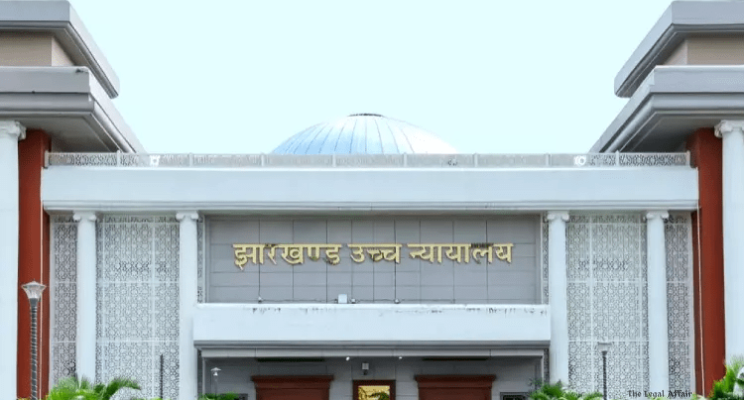
Introduction:
In Arbind Sharan v. Bihar College Service Commission and Others, C.W.J.C. No. 657 of 2001, the Jharkhand High Court was confronted with a challenge that sought to unsettle academic appointments made nearly twenty-five years earlier on the ground of alleged violation of the reservation policy. The matter was heard by a Single Judge Bench of Justice Sanjay Kumar Dwivedi, who was called upon to examine whether recommendations made by the Bihar College Service Commission in February 2000, and appointments that followed, could be quashed after such a long lapse of time. The petitioner had approached the Court seeking quashing of the Commission’s recommendation dated 14 February 2000, a direction for his own appointment as Lecturer in Physics in J.M. College, Bhurkunda, and a mandamus for strict enforcement of the reservation policy. The case raised important questions about delay, settled rights, equities in service jurisprudence, and the extent to which courts should interfere with appointments that have crystallised and continued uninterrupted for over two decades. Against the backdrop of abolition of the Bihar College Service Commission and unavailability of old records, the Court was required to balance the petitioner’s grievance with the principle of finality and stability in public employment.
Arguments on Behalf of the Petitioner:
The petitioner asserted that he was fully qualified for appointment as Lecturer in Physics, having passed his M.Sc. in Physics in First Class from Magadh University, and that he had duly applied pursuant to Advertisement No. 24 of 1994 issued by the Bihar College Service Commission. He contended that he was called for interview in January 1999 and was subsequently recommended by the Commission in February 2000. Despite this recommendation, no appointment order was issued in his favour, compelling him to make repeated representations before the college authorities, the Director of Higher Education, Government of Bihar, and even the National Commission for Scheduled Castes and Scheduled Tribes. The petitioner argued that while his recommendation remained unimplemented, other candidates were appointed in violation of the reservation policy, thereby depriving him of his rightful appointment. He maintained that the Commission and the State authorities failed to adhere to constitutional and statutory mandates concerning reservation, and that such non-compliance vitiated the entire selection process. According to the petitioner, the Court ought to correct this illegality by quashing the impugned recommendations and directing his appointment, irrespective of the time that had elapsed, since constitutional violations cannot be legitimised merely by passage of time. The petitioner thus urged the Court to prioritise strict enforcement of reservation norms over considerations of delay or inconvenience to those already appointed.
Arguments on Behalf of the State and the Intervenor:
The State of Bihar resisted the writ petition by pointing out the practical and legal difficulties involved in reopening appointments made decades earlier. It was submitted that the Bihar College Service Commission had been abolished in 2007 and that the relevant records pertaining to the selection process were no longer available with the Directorate of Higher Education. The State argued that in the absence of complete records, it would be neither feasible nor fair to reassess the selection process or disturb appointments that had attained finality long ago. The intervenor, who had already been appointed as Lecturer in Physics on the recommendation of the Commission, asserted that he was a necessary and proper party, as any adverse order would directly affect his vested rights and livelihood. It was contended that the appointments were made on the basis of one plausible interpretation of the applicable advertisements and reservation norms, and that such interpretation had been acted upon by the competent authority. The intervenor emphasised that he and other appointees had been continuously serving for over twenty-five years, contributing to the academic institution and building their entire careers on the strength of these appointments. It was argued that unsettling such long-standing appointments would be grossly inequitable, contrary to settled principles of service law, and destructive of institutional stability. Both the State and the intervenor urged the Court to dismiss the writ petition on grounds of delay, laches, and overwhelming equities in favour of the existing appointees.
Court’s Judgment:
After examining the pleadings and materials on record, the Jharkhand High Court declined to interfere with the impugned appointments and dismissed the writ petition. The Court noted that multiple advertisements had been issued by the Bihar College Service Commission and that the petitioner had applied pursuant to Advertisement No. 24 of 1994. However, the Court found that in respect of Advertisement No. 1418 of 1994, only one post had been advertised, and therefore, the question of applying the reservation policy did not arise in the manner suggested by the petitioner. Crucially, the Court emphasised that the private respondents had already been working on their respective posts for more than twenty-five years. Justice Sanjay Kumar Dwivedi observed that where one possible and plausible view had been taken by the Commission and acted upon by making recommendations and appointments, it would be wholly unjust and inequitable for the Court to now compel a reversal. The Court underscored that service jurisprudence places great value on stability and finality, particularly where appointments have stood the test of time and employees have continued in service for decades without interruption. Disturbing such appointments at a belated stage, the Court held, would amount to penalising individuals who were not at fault and who had legitimately relied on the decisions of the competent authorities. The equities, according to the Court, clearly lay in favour of the appointees who had served for over two decades, and not in reopening old disputes that would cause more injustice than correction. In strong terms, the Court held that directing a “U-turn” after twenty-five years would be impermissible and unjust, and accordingly dismissed the writ petition.