


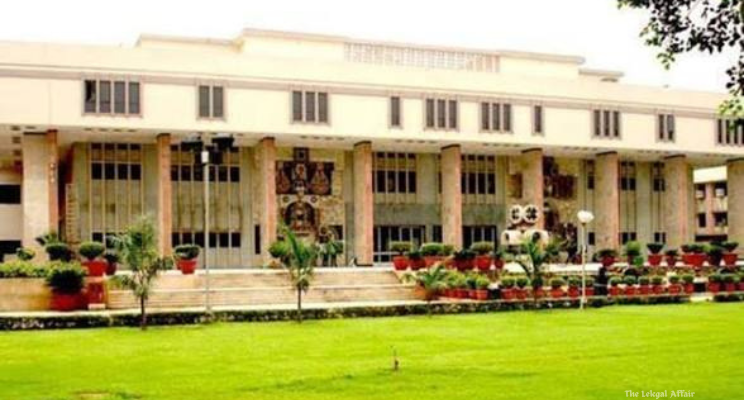
Introduction:
In a ruling that reiterates the constitutional boundaries between judicial review and executive policymaking, the Delhi High Court declined to entertain a public interest litigation seeking the formulation of a comprehensive compensation and employment policy for victims of terror attacks in the national capital. The case, South Asian Forum For People Against Terror v. Union of India & Others, raised emotionally compelling concerns regarding the plight of families who have lost their loved ones in acts of terrorism, yet the Court ultimately held that the reliefs sought fell squarely within the domain of policy formulation, which is the prerogative of the executive.
The matter was heard by a division bench comprising Chief Justice D K Upadhyaya and Justice Tejas Karia. The petitioner, a civil society organization advocating against terrorism, approached the Court with a plea highlighting the absence of a uniform and structured policy for providing compensation, rehabilitation, and employment benefits to the families of victims of terror attacks in Delhi.
The petition gained contextual relevance in light of recent incidents, including references made during the hearing to attacks such as the Red Fort attack, which brought to the forefront the vulnerabilities faced by victims’ families. The petitioner contended that despite the gravity of such incidents, there exists no standardized framework at either the Union or the State level to ensure consistent and equitable support to affected families.
The case thus raised a fundamental question: whether constitutional courts, exercising jurisdiction under Article 226, can direct the government to frame policies in areas where no explicit statutory framework exists, particularly when such policies concern social welfare and compensation. The Court’s response to this question sheds light on the limits of judicial power in matters involving governance and public administration.
Arguments of the Parties:
The petitioner organization advanced its case on humanitarian as well as constitutional grounds. It was argued that victims of terror attacks, and their families, suffer irreparable loss, not only in terms of life and limb but also in terms of economic stability and social security. In such circumstances, the State has a moral and constitutional obligation to ensure that these families are adequately compensated and rehabilitated.
Appearing for the petitioner, Senior Advocate Ramesh Gupta submitted that there is currently no uniform policy in place, either at the level of the Union Government or the Delhi Government, that governs the grant of compensation or employment benefits to the families of victims of terror attacks. This absence of a structured framework, it was argued, leads to inconsistency and arbitrariness in the manner in which relief is provided.
The petitioner further contended that the right to life under Article 21 of the Constitution extends beyond mere survival and encompasses the right to live with dignity. When individuals are killed in terror attacks, their families are often left without financial support or means of livelihood. In such cases, the State must step in to ensure that the fundamental rights of these families are not rendered illusory.
In addition to compensation, the petitioner sought directions for providing concessions in public employment to the survivors and family members of victims. It was argued that such measures would not only provide economic relief but also serve as a form of recognition of the sacrifices made by victims of terrorism.
To support its case, the petitioner pointed out that certain states, such as Goa, have framed guidelines or policies providing for compensation and rehabilitation in similar circumstances. It was argued that the absence of such a policy in Delhi highlights a gap that requires urgent attention and intervention.
On the other hand, the respondents, including the Union of India and the Delhi Government, resisted the plea by emphasizing the distinction between enforceable legal rights and matters of policy discretion. It was argued that while courts have the power to enforce existing rights, they cannot compel the executive to create new rights or policies, particularly in areas involving budgetary allocation and administrative priorities.
The respondents maintained that the formulation of policies relating to compensation and employment benefits involves complex considerations, including financial constraints, administrative feasibility, and competing priorities. Such decisions, it was argued, fall within the exclusive domain of the executive and are not amenable to judicial direction.
The State further submitted that individuals or organizations seeking such policy interventions have the option of making representations to the competent authorities, who can then consider the matter in accordance with law. Judicial intervention at this stage, it was contended, would amount to encroachment upon the functions of the executive.
Court’s Judgment:
The Delhi High Court, while acknowledging the seriousness of the concerns raised by the petitioner, declined to entertain the PIL on the ground that the reliefs sought pertained to policy formulation, which lies beyond the scope of judicial review under Article 226.
At the outset, the Court drew a clear distinction between the enforcement of existing rights and the creation of new rights. It observed that while courts are empowered to enforce legal and constitutional rights, they cannot direct the government to formulate policies or legislate in a particular manner. The bench remarked that the prayers made in the petition were essentially administrative in nature and required the exercise of policy discretion by the executive.
The Court posed a pertinent question during the hearing: whether it could direct the government to frame a specific policy in the absence of an existing legal framework. In answering this question in the negative, the Court emphasized that such directions would amount to overstepping the constitutional boundaries that separate the judiciary from the executive.
The bench further observed that all the prayers made in the writ petition lie within the “realm of policy decision,” which is primarily the prerogative of the government. This observation reflects a well-established principle of constitutional law, namely the doctrine of separation of powers, which mandates that each organ of the State must function within its designated sphere.
Importantly, the Court did not express any opinion on the merits of the petitioner’s claims. It neither endorsed nor rejected the need for a policy on compensation and employment benefits for victims of terror attacks. Instead, it confined itself to the question of maintainability and jurisdiction, holding that the issue must be addressed by the executive through appropriate administrative processes.
At the same time, the Court ensured that the petitioner was not left without a remedy. It granted liberty to the petitioner to make a detailed representation to the competent authorities of the Union and Delhi Governments within a period of two weeks. The Court directed that such representation be considered expeditiously and that an appropriate decision be taken in accordance with law.
This aspect of the judgment reflects a pragmatic approach, where the Court refrains from issuing direct mandates but facilitates engagement between citizens and the executive. By directing the authorities to consider the representation, the Court ensures that the issue receives due attention without compromising the principles of constitutional governance.
The decision also underscores the limits of public interest litigation as a tool for judicial intervention. While PIL has been instrumental in expanding access to justice and addressing systemic issues, courts have consistently cautioned against its misuse in matters that require policy decisions. The present case serves as a reminder that not all social or administrative issues can be resolved through judicial directions.
In conclusion, the Delhi High Court’s ruling reaffirms the principle that courts cannot step into the shoes of policymakers, even in cases involving compelling humanitarian concerns. While the plight of victims of terror attacks undoubtedly warrants attention, the responsibility for framing and implementing appropriate policies rests with the executive. The Court’s role, in such cases, is limited to ensuring that the process remains fair, lawful, and responsive to the needs of the people.