


Introduction:
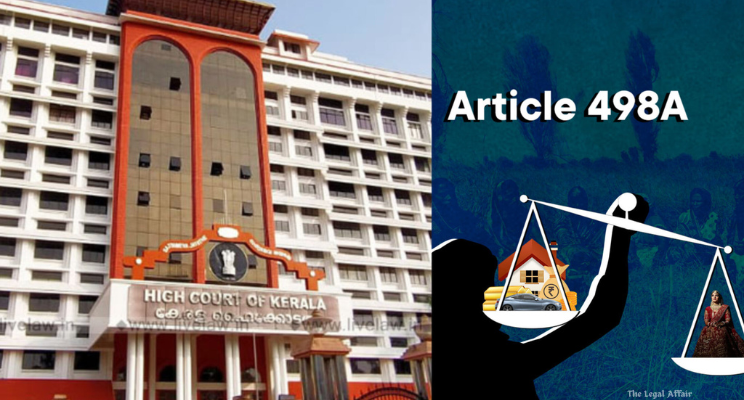
In a recent landmark decision, the Kerala High Court addressed the scope of Section 498A of the Indian Penal Code (IPC), clarifying its applicability in cases involving live-in relationships. The case, X v State of Kerala (CRL.MC NO. 2654 OF 2024), saw the Court considering whether a person in a live-in relationship could be prosecuted under Section 498A for the offence of cruelty. The petitioner, represented by Advocates T. Madhu, C. R. Saradamani, Renjish S. Menon, Vrinda T. S., and Aiswarya Jayapal, sought to quash criminal proceedings initiated against him by his live-in partner, alleging mental and physical harassment. Public Prosecutor Sanal P. Raj represented the State in this case.
Arguments of Both Sides:
The petitioner’s counsel argued that the relationship between the petitioner and the complainant was a live-in relationship rather than a legally recognized marriage. They contended that for an offence under Section 498A IPC, a valid marital relationship is required. They supported their argument by citing precedents such as Unnikrishnan @ Chandu v. State of Kerala (2017) and Narayanan v. State of Kerala (2023), which underscored that Section 498A IPC applies only to individuals within a legal marriage. The counsel asserted that since the petitioner and the complainant were not legally married, the petitioner could not be prosecuted under this provision.
Conversely, the State’s Public Prosecutor contended that the allegations made by the complainant, if proven true, warranted a criminal investigation and prosecution under Section 498A. The State’s argument focused on the severity of the allegations and the need to address the grievances of the complainant through legal proceedings.
Court’s Judgment:
Justice A. Badharudeen delivered the judgment in this case, addressing the core issue of whether a person in a live-in relationship can be prosecuted under Section 498A of the IPC. The Court meticulously examined the legal definitions and requirements under Section 498A, emphasizing that the term ‘husband’ within this section refers to a legally married partner. Citing the Supreme Court’s decision in Shivcharan Lal Verma and Another v. State of Madhya Pradesh (2002), the Court reaffirmed that a valid marital relationship is essential for prosecuting someone under Section 498A.
Justice Badharudeen observed that Section 498A IPC is specifically designed to address cruelty inflicted by a ‘husband’ or ‘relative’ of the husband, which inherently presupposes a legal marriage. The Court analyzed the statutory interpretation of ‘husband’ and concluded that the term does not extend to a live-in partner lacking legal marital status. Consequently, since the petitioner was not legally married to the complainant, the Court found that the allegations of cruelty under Section 498A could not stand.
The Court further reviewed previous judgments and legal interpretations, reinforcing that Section 498A’s applicability is confined to cases involving legal marriages. Justice Badharudeen’s interpretation of ‘husband’ excluded live-in partners from the purview of this section, thus quashing the criminal proceedings against the petitioner. The Court’s decision underscored that the scope of Section 498A is limited to those in legally recognized marital relationships.