


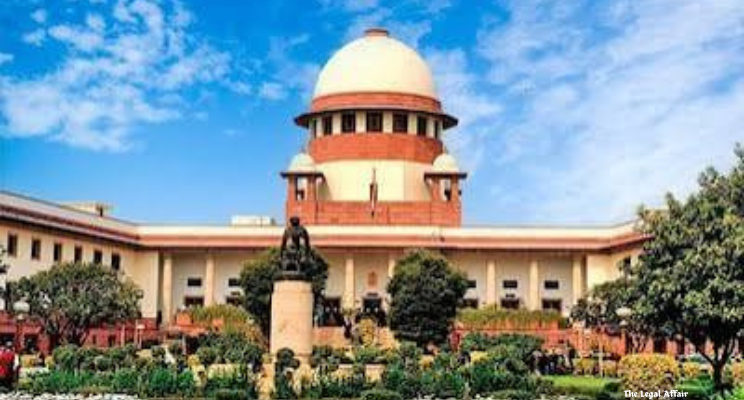
Introduction:
In Vinay Raghunath Deshmukh versus Natwarlal Shamji Gada and Another, the Supreme Court of India addressed a significant question concerning landlord-tenant disputes and procedural law—whether legal heirs of a deceased landlord can amend an eviction suit to include additional grounds of bona fide requirement arising after the landlord’s death. The case arose from an eviction suit initially filed by the original landlord seeking eviction of the tenant on the ground of bona fide requirement for himself and his family members. However, the suit was dismissed by the trial court on the ground that the landlord had failed to establish a concrete plan regarding the use of the premises for the alleged need.
During the pendency of the appeal against the trial court’s dismissal, the original landlord passed away. His legal heirs, including his wife and children, were brought on record and sought to amend the plaint to include additional grounds of bona fide requirement. They contended that they required the premises for establishing an advocate’s chamber for the widow and a medical clinic for one of the heirs. The appellate court allowed the amendment, observing that the additional grounds were consistent with the original plea of bona fide requirement and did not introduce any adverse or contradictory claim.
Aggrieved by this decision, the tenant approached the Bombay High Court under Article 227 of the Constitution, arguing that the amendment amounted to introducing a new case altogether. The High Court accepted this contention and interfered with the appellate court’s decision, prompting the legal heirs to approach the Supreme Court. The central issue before the Court was whether the right to seek eviction on the ground of bona fide need survives the death of the landlord and whether legal heirs can amend the plaint to incorporate subsequent developments reflecting their own bona fide requirements.
Arguments on behalf of the Appellants (Legal Heirs of the Landlord):
The appellants strongly contended that the High Court had erred in law by refusing to recognize the continuity of the cause of action after the death of the original landlord. They argued that the eviction suit was not based solely on the personal need of the deceased landlord but also encompassed the requirement of his family members. Therefore, the death of the landlord did not extinguish the cause of action but rather transferred the right to pursue the remedy to his legal heirs.
It was submitted that the amendment sought was not an attempt to introduce a completely new or inconsistent case but was instead a natural extension of the original plea of bona fide requirement. The appellants emphasized that the additional grounds—establishing an advocate’s chamber for the widow and a medical clinic for one of the heirs—were consistent with the family’s need for the premises and fell within the broader scope of the original pleadings.
The appellants further argued that procedural law, particularly Order VI Rule XVII of the Code of Civil Procedure, allows for amendments to pleadings when such amendments are necessary for determining the real controversy between the parties. They highlighted that courts are empowered to take into account subsequent events that have a material bearing on the rights of the parties. Denying the amendment would lead to multiplicity of proceedings, as the legal heirs would be compelled to file a fresh suit based on their own needs.
Reliance was placed on the landmark judgment in Pasupuleti Venkateswarlu v. The Motor & General Traders, wherein it was held that courts can and should take cognizance of subsequent events to ensure that the relief granted is meaningful and in accordance with the current realities. The appellants argued that their case squarely fell within this principle, as their bona fide requirements arose after the death of the original landlord and were directly relevant to the relief sought.
Additionally, the appellants contended that the High Court had exceeded its supervisory jurisdiction under Article 227 by re-evaluating the merits of the case and substituting its own view for that of the appellate court. They maintained that the appellate court had exercised its discretion judiciously and within the bounds of law, and there was no jurisdictional error warranting interference.
Arguments on behalf of the Respondent (Tenant):
The respondent-tenant opposed the appeal by arguing that the amendment sought by the legal heirs fundamentally altered the nature of the original suit. It was contended that the eviction suit was initially based on the personal bona fide requirement of the original landlord, and with his death, that requirement ceased to exist. According to the respondent, the legal heirs could not simply substitute their own needs in place of the deceased landlord’s requirement without initiating a fresh cause of action.
The respondent emphasized that allowing such an amendment would effectively permit the appellants to introduce a completely new case under the guise of an amendment. It was argued that the additional grounds—such as setting up an advocate’s chamber and a medical clinic—were distinct and independent from the original plea and therefore could not be incorporated into the existing suit.
The respondent also contended that the principles governing amendments to pleadings require that such amendments should not cause prejudice to the opposite party or fundamentally change the nature of the suit. In this case, the amendment would significantly alter the scope of the dispute and deprive the respondent of the opportunity to adequately contest the new claims.
Furthermore, the respondent defended the High Court’s intervention under Article 227, arguing that the appellate court had committed an error in allowing the amendment without properly considering its implications. It was submitted that the High Court was justified in exercising its supervisory jurisdiction to correct this error and prevent injustice.
The respondent reiterated that the cause of action based on bona fide requirement is inherently personal and cannot survive the death of the individual who initially asserted it. Therefore, the amendment sought by the appellants was legally untenable and rightly rejected by the High Court.
Judgment:
The Supreme Court, in a well-reasoned judgment authored by Justice Atul S. Chandurkar, allowed the appeal and set aside the decision of the Bombay High Court. The Court held that the amendment sought by the legal heirs could not be refused merely on the ground that it was introduced after the death of the original landlord, provided it was consistent with the original cause of action and based on subsequent developments having a material bearing on the case.
At the outset, the Court clarified that while it is a general principle that the rights of parties are to be determined based on the circumstances existing at the commencement of the litigation, this principle is not absolute. The Court emphasized that subsequent events that materially affect the rights and entitlements of the parties can and should be taken into consideration to ensure that justice is effectively administered.
The Court relied on the precedent set in Pasupuleti Venkateswarlu v. The Motor & General Traders, which recognized the importance of taking note of subsequent developments in order to mould the relief appropriately. The Supreme Court observed that procedural law is intended to facilitate justice and should not be applied in a rigid or technical manner that defeats substantive rights.
In the present case, the Court noted that the original eviction suit was based on the bona fide requirement of the landlord and his family. This foundational aspect of the case remained unchanged, even after the death of the landlord. The additional grounds introduced by the legal heirs were found to be consistent with the original plea and did not constitute a departure from the basic nature of the suit.
The Court rejected the respondent’s argument that the cause of action had ceased to exist upon the landlord’s death. It held that the requirement of the family members was an integral part of the original claim and that the legal heirs were entitled to continue the proceedings and assert their own bona fide needs.
Importantly, the Court observed that refusing to allow the amendment would result in unnecessary multiplicity of litigation, as the legal heirs would be compelled to file a fresh suit to assert their claims. Such an outcome would be contrary to the principles of judicial economy and efficiency.
The Supreme Court also addressed the scope of the High Court’s jurisdiction under Article 227. It reiterated that the supervisory jurisdiction is limited to ensuring that subordinate courts act within their authority and do not commit jurisdictional errors. The High Court cannot act as an appellate court and re-examine the merits of the case or substitute its own judgment for that of the lower court.
In this case, the Court found that the appellate court had exercised its discretion in a lawful and reasonable manner while allowing the amendment. There was no jurisdictional error or violation of statutory provisions that would justify interference by the High Court. By re-evaluating the merits and setting aside the appellate court’s order, the High Court had exceeded its jurisdiction.
The Supreme Court concluded that the amendment sought by the appellants was valid and necessary for determining the real controversy between the parties. It held that the legal heirs were entitled to incorporate additional grounds of bona fide requirement arising from subsequent events, as long as such grounds were consistent with the original pleadings.
Accordingly, the Court allowed the appeal, set aside the judgment of the High Court, and restored the order of the appellate court permitting the amendment to the plaint.