


Introduction:
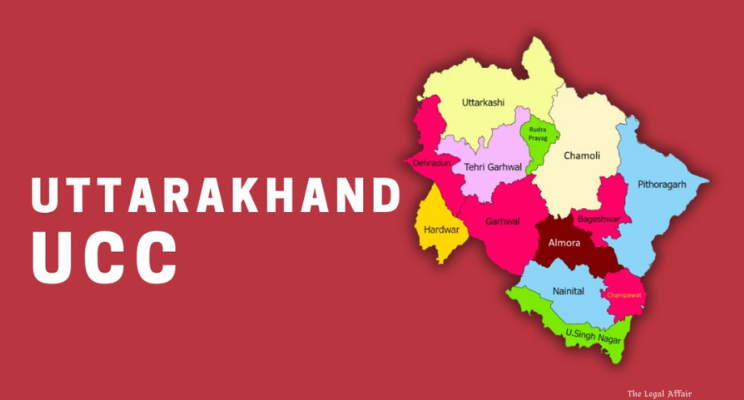
In a significant move, a Public Interest Litigation (PIL) has been filed before the Uttarakhand High Court, challenging the recently implemented ‘Uniform Civil Code Uttarakhand 2024.’ The PIL, which comes shortly after the Uttarakhand Government’s rollout of the Uniform Civil Code (UCC) on January 27, 2024, raises concerns over several provisions within the code, especially those relating to marriage, divorce, and live-in relationships. The petition is spearheaded by a practising advocate who argues that these provisions violate fundamental rights enshrined under the Constitution of India, including the Right to Privacy, the Right to Life, and the autonomy of individuals in deciding matters related to marriage and choosing their partners. Uttarakhand has become the first state in India to implement the Uniform Civil Code after its Assembly passed the Uttarakhand Uniform Civil Code Bill in 2024, marking a momentous shift in the state’s legislative landscape. The petitioner specifically challenges parts of the UCC about the Hindu Marriage Act’s applicability to Muslim and Parsi communities, along with its implications on live-in relationships. The plea argues that certain provisions are discriminatory, overly restrictive, and fail to respect the customs and practices of minority communities.
Arguments of the Petitioner’s Side:
The petitioner’s main contention revolves around the UCC’s encroachment on citizens’ fundamental rights. One of the key aspects of the challenge is Section 3(1)(g) of the Hindu Marriage Act, which defines prohibited relationships in the context of marriage. The petitioner argues that the provision is being unfairly imposed on Muslim and Parsi communities, disregarding their own customs and religious texts. The complaint claims that marriage between certain prohibited relations is not forbidden under the Holy Qur’an or the Parsi Marriage and Divorce Act 1936. According to the petition, these provisions are a violation of Article 25 of the Indian Constitution, which guarantees the right to freely profess, practice, and propagate one’s religion.
Further, the plea claims that the UCC imposes an unreasonable restriction on marriage registration in cases where prohibited relationships are allowed by custom. Specifically, Section 4(iv) allows for marriage registration between individuals in prohibited relationships only if it is not contrary to public policy or morality. The petitioner contends that this qualification is arbitrary, as it sets unnecessary restrictions on personal autonomy and infringes on the right to marry according to one’s customary practices.
On the issue of live-in relationships, the petition argues that Section 4(b) of the UCC provides that only a man and woman who cohabit in a shared household may be considered as being in a live-in relationship. The petitioner contends that this provision excludes individuals from the LGBTQ+ community, thereby engaging in discriminatory practices. The petition also highlights the ambiguity in the definition of live-in relationships, particularly the failure to define a minimum cohabitation period before a relationship qualifies as a live-in relationship. The petitioner argues that this vagueness leaves individuals open to arbitrary legal treatment, including the imposition of penalties for non-compliance with the UCC’s requirements.
Moreover, the plea highlights the provision concerning the registration of live-in relationships, where one individual can report the other to the Registrar, leading to a summary inquiry. The petition claims that this grants excessive powers to the Registrar, potentially violating Article 14 (equality before the law) and Article 21 (protection of life and personal liberty) of the Constitution of India.
Additionally, the plea raises concerns about the UCC’s definition of “residents,” claiming that the law applies not just to Uttarakhand’s permanent residents but also to individuals from other states who reside in Uttarakhand for a defined period. This broad definition could potentially create legal complications and result in unfair treatment of non-residents.
Arguments of the Respondent’s Side:
On the other hand, the state government defends the implementation of the Uniform Civil Code, arguing that it aims to ensure equality and justice by unifying civil laws governing marriage, divorce, and live-in relationships across all communities. The government asserts that the UCC seeks to eliminate discriminatory practices that may have persisted due to religious and personal laws, particularly concerning women. The government argues that the code aligns with constitutional principles by promoting uniformity and the protection of fundamental rights across diverse communities.
The state’s counsel also points to the necessity of a unified legal framework to manage personal matters like marriage and divorce, as it would reduce confusion, legal disputes, and inconsistencies in the application of laws. The government stresses that the provisions on marriage, divorce, and live-in relationships have been framed to ensure justice for all citizens, regardless of their religious or cultural background. Regarding the application of the Hindu Marriage Act to Muslims and Parsis, the state claims that the law does not seek to eradicate or ignore customary practices but instead aims to ensure uniformity in essential matters like marriage registration.
Regarding live-in relationships, the government argues that the provisions are framed to address concerns of legality, social security, and accountability, especially where issues of property rights or inheritance may arise. It maintains that the code is not discriminatory but is designed to ensure a stable and predictable framework for relationships that may otherwise lack legal recognition.
Court’s Judgment:
As of the current proceedings, the Uttarakhand High Court has not yet delivered a judgment on the PIL. However, the petition has brought to light several critical issues surrounding the implementation of the Uniform Civil Code in the state. The Court is expected to deliberate on whether the UCC provisions infringe upon the fundamental rights of citizens, particularly those related to privacy, autonomy, and equality. The Court will also consider whether the law’s imposition of restrictions on certain community practices, including marriage between prohibited relationships, violates constitutional protections guaranteed under Articles 14, 15, and 25.
The Court’s judgment will likely hinge on whether the provisions of the UCC, particularly those related to live-in relationships and marriage registration, strike a reasonable balance between the state’s interest in uniformity and the rights of individuals to freely practice their religion and customs. The judgment will also consider whether the imposition of provisions governing live-in relationships, marriage registration, and the concept of “resident” is consistent with the Constitution’s guarantees of equality and privacy.