


Introduction:
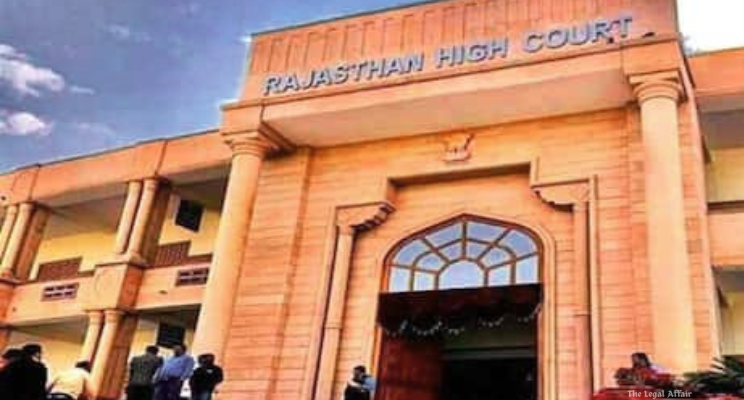
In Deepa Ram Meghwal v. State of Rajasthan & Others and Batch (S.B. Criminal Writ Petition No. 1344/2025), the Rajasthan High Court undertook a critical examination of the alarming prevalence of extra-constitutional diktats issued by Khap Panchayats and similar informal bodies. The case arose from a batch of petitions alleging grave violations of individual rights, including social boycott, coercive monetary demands, and mental harassment inflicted by self-styled community authorities. Presiding over the matter, Justice Farjand Ali delivered a strongly worded judgment that not only condemned such practices but also recognized the urgent need for systemic reform. The Court observed that Khap Panchayats, though lacking statutory recognition, have increasingly assumed the role of parallel adjudicatory bodies, issuing binding diktats that severely impact the lives and liberties of individuals. Highlighting the constitutional implications of such actions, the Court emphasized that these practices are in direct conflict with fundamental rights guaranteed under Part III of the Constitution. In light of these concerns, the Court issued a series of comprehensive directions to the State Government, including the formulation of a policy framework and Standard Operating Procedure (SOP) to address and prevent such unlawful practices.
Arguments by the Petitioners:
The petitioners, including Deepa Ram Meghwal and others, approached the High Court alleging systematic abuse of power by Khap Panchayats and similar caste-based assemblies. They contended that these bodies, despite having no legal authority, routinely interfere in personal and social matters, imposing arbitrary and coercive sanctions on individuals and families.
One of the primary grievances raised by the petitioners was the imposition of social boycott orders. These orders effectively ostracized individuals from their communities, denying them access to essential social and economic interactions. The petitioners argued that such practices amounted to a gross violation of human dignity and basic civil rights.
The petitioners also highlighted instances of forced monetary exactions, where individuals were compelled to pay substantial sums as penalties for alleged violations of community norms. These demands, often backed by threats of social exclusion, were described as coercive and exploitative.
Another significant issue raised was the suppression of personal autonomy, particularly in matters of marriage. The petitioners pointed out that Khap Panchayats frequently intervened in cases of inter-caste or inter-religious marriages, issuing diktats that penalized individuals for exercising their right to choose a life partner. Such interference, they argued, was not only unlawful but also deeply regressive.
The petitioners contended that these practices violated fundamental rights guaranteed under Articles 14, 15, and 21 of the Constitution. They argued that the State had failed to take adequate steps to prevent such violations, resulting in a regulatory vacuum that allowed these practices to persist.
Relying on the Supreme Court’s decision in Shakti Vahini v. Union of India, the petitioners urged the Court to direct the State to implement preventive, remedial, and punitive measures to curb the activities of Khap Panchayats. They also sought the formulation of a comprehensive legal framework to address the issue effectively.
Arguments by the Respondents (State):
The State of Rajasthan, while acknowledging the concerns raised by the petitioners, submitted that existing legal provisions under the Indian Penal Code and other statutes were sufficient to address instances of unlawful conduct, including threats, coercion, and violence.
The respondents argued that the State machinery, including law enforcement agencies, was actively engaged in maintaining law and order and taking action against offenders. They contended that the issue did not necessarily require a separate legislative framework, as existing laws could be invoked to deal with such situations.
However, the State also conceded that there were practical challenges in addressing these issues, particularly in rural areas where social structures and community dynamics often complicate enforcement efforts. The respondents acknowledged that greater coordination among authorities and increased awareness could help in tackling the problem more effectively.
While resisting the suggestion of judicial overreach into policy-making, the State indicated its willingness to consider appropriate measures to strengthen the existing framework and ensure better implementation of legal provisions.
Court’s Judgment:
The Rajasthan High Court, in a detailed and emphatic judgment, held that the practices of Khap Panchayats and similar bodies are wholly unconstitutional and cannot be tolerated in a society governed by the rule of law.
The Court began by drawing a clear distinction between constitutionally recognized Panchayats and Khap Panchayats. While the former are legitimate institutions of local self-governance, the latter are informal, caste-based bodies with no legal authority. The Court observed that Khap Panchayats have, over time, transformed into extra-constitutional power centers, issuing diktats that encroach upon individual freedoms.
Justice Farjand Ali noted that such practices strike at the very core of constitutional values, particularly the rights to equality, non-discrimination, and personal liberty. The Court emphasized that any attempt by non-state actors to impose sanctions or restrictions on individuals is fundamentally incompatible with the Constitution.
The Court elaborated on the violation of specific constitutional provisions. It held that Article 14 is breached when individuals are subjected to discriminatory treatment through social boycott. Article 15 is violated when such actions are based on caste, religion, or other prohibited grounds. Most importantly, Article 21 is infringed when individuals are denied their right to live with dignity and make personal choices, including the choice of a life partner.
Referring to the Supreme Court’s judgment in Shakti Vahini, the Court reiterated that Khap Panchayats have no authority to interfere in matters of marriage or personal relationships. It described honour killings and similar acts as barbaric manifestations of regressive social control.
The Court also highlighted the existence of a legal vacuum in effectively addressing such practices. While certain actions may fall within the ambit of existing criminal laws, many aspects of social boycott and coercive practices do not squarely fit within the strict ingredients of these offences. This gap, the Court observed, necessitates a comprehensive legal and policy framework.
In response to these concerns, the Court issued a series of directions aimed at both immediate enforcement and long-term reform:
Authorities at various levels, including District Magistrates and Superintendents of Police, were directed to strictly implement the guidelines laid down in Shakti Vahini, failing which they could face contempt proceedings.
The State was directed to appoint Nodal Officers at the district level to monitor and respond to such incidents, ensuring coordination among various authorities.
A centralized mechanism was to be established for maintaining data on such cases, enabling better analysis and response.
Independent and time-bound investigation of pending cases was mandated, with a clear timeline of 90 days for completion.
The State Government was directed to formulate a comprehensive policy addressing prevention, prohibition, and redressal of such practices.
A Standard Operating Procedure (SOP) was to be developed, outlining clear protocols for handling complaints, registering FIRs, protecting victims, and ensuring accountability.
The Court also urged the State to consider enacting a dedicated legislation to explicitly criminalize the issuance and enforcement of social boycott orders and similar diktats.
In conclusion, the Court disposed of the petitions while expressing hope that the State would take proactive steps to address this serious issue and uphold the constitutional rights of its citizens.