


Introduction:
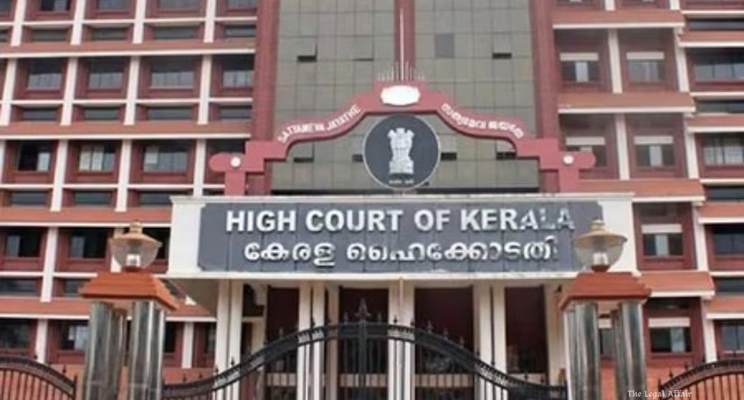
The Kerala High Court, while hearing a review petition in Rahul K T v St. Stephen’s Malankara Catholic Church, RP No. 1394 of 2025 in WP(C) No. 22750 of 2018, strongly expressed displeasure over the continued installation of unauthorized boards, banners, hoardings, flags and festoons in public spaces across the State despite repeated judicial directions declaring such installations illegal and punishable, the matter was considered by Justice Devan Ramachandran, who had earlier disposed of the main writ petition by issuing categorical directions that no unauthorized display materials could be erected on public roads, footpaths, traffic junctions or any other public place, and that violators would be liable for fines and penal consequences, however, during the hearing of the review petition filed in connection with the same issue, the Court was confronted with fresh material placed by the amicus curiae, Advocate Harish Vasudevan, highlighting that large numbers of illegal boards and flags continued to appear in public spaces, particularly in Thiruvananthapuram District, and that such installations were even obstructing pedestrian footpaths and zebra crossings, thereby directly endangering public safety and violating constitutional principles protecting the right to life and free movement, the Court recalled that in earlier hearings it had already flagged the failure of the K SMART Grievance System in ensuring timely removal of illegal hoardings and had directed authorities to adopt a WhatsApp based citizen reporting mechanism similar to the one used by the Local Self Government Department for waste management complaints, and yet, despite these corrective directions, the situation on the ground appeared unchanged, prompting the Court to remark that the continued tolerance of illegal displays was shocking and disturbing, and that the idea of a progressive and people centric governance model, often referred to as Nava Kerala, could not remain a slogan on paper but had to be reflected in everyday administrative discipline and civic responsibility.
Arguments:
The amicus curiae, Advocate Harish Vasudevan, placed before the Court a detailed report documenting multiple instances of fresh installations of illegal boards and flags in Thiruvananthapuram District, submitting that these were not isolated or accidental violations but systematic and widespread, indicating either administrative apathy or deliberate non enforcement of court directions, it was argued that such unauthorized installations not only violate municipal laws and court orders but also seriously infringe upon pedestrian rights, particularly when flags and boards are placed on footpaths, near zebra crossings and at traffic intersections, thereby forcing pedestrians to walk on roads and exposing them to traffic hazards, the amicus also reminded the Court that in several connected matters, the High Court had emphasized the need to protect pedestrian infrastructure and had even directed the creation and maintenance of functional footpaths as a matter of constitutional obligation under Article 21, and therefore, allowing political, religious or commercial entities to occupy these spaces amounted to a direct assault on the dignity and safety of ordinary citizens, it was further submitted that similar violations had been reported from other parts of the State including Kochi, suggesting that the problem was not confined to a single municipal jurisdiction but reflected a broader culture of disregard for public property and court orders, on behalf of the Thiruvananthapuram Corporation, Advocate Subin Chakravarthy submitted that the Corporation was taking steps to address the problem and that once complaints were received, notices had been issued to persons responsible for unauthorized installations, it was stated that action had already been initiated in several cases and that the Corporation would look into the specific instances highlighted by the amicus and file a detailed response, counsel also sought time to place on record the factual position regarding the number of boards and flags installed and the steps taken for their removal, while the State and other local authorities were represented by several counsel including the Additional Advocate General and Government Pleaders, the core defence put forward was that enforcement mechanisms were in motion and that the authorities were not deliberately ignoring court orders, however, the Court was not satisfied with mere assurances and observed that repeated statements of intent without visible change on the ground could not be accepted as compliance, the Court also noted that previous reports had shown that hundreds of boards in Kochi were removed only after significant delay, raising doubts about the sincerity and efficiency of enforcement processes, and therefore, the Court indicated that systemic accountability was required rather than episodic removal drives prompted only after judicial scrutiny.
Judgment:
Justice Devan Ramachandran, while refraining from passing coercive orders at this stage, made strong oral observations underscoring that the continued presence of unauthorized boards and flags even after repeated judgments and explicit directions of the Court was nothing short of surprising and distressing, the Court observed that allowing such installations to persist reflects either unwillingness or inability on the part of authorities to enforce constitutional and statutory mandates, both of which amount to systemic failure, the Court reiterated that public spaces are meant for public use and not for private display of power, influence or propaganda, and that pedestrian rights, particularly at footpaths and zebra crossings, cannot be compromised under any circumstances, recalling that in earlier matters it had directed authorities to ensure operational footpaths precisely to prevent citizens from being pushed onto busy roads, the Court stressed that the growing culture of usurping public spaces by individuals, political groups, religious institutions or commercial entities must change, and that development cannot be measured merely by infrastructure projects but by civic discipline and respect for common spaces, making a broader societal observation, the Court remarked that the concept of Nava Kerala must move from policy documents into the mindset of citizens and administrators alike, and that public order and urban dignity cannot coexist with visual pollution and physical obstruction of public pathways, the Court also accepted the submission of the Corporation seeking time to file a detailed response, noting that facts were yet to be fully established and therefore it would refrain from making further adverse findings at this stage, however, it issued clear directions that the responses to be filed by the Corporations must specifically disclose the number of boards and flags installed, the action taken for their removal, the timeline of such action, and the mechanisms adopted to prevent recurrence, the Court also referred to earlier reports showing delayed removal in Kochi and directed that both Corporations must place full compliance details on record, the matter was thus kept pending with a clear warning that the Court would not hesitate to intervene more firmly if administrative inaction continued, the order therefore stands as a strong reaffirmation of judicial intolerance towards encroachment of public spaces and a reminder that governance is judged not by policy promises but by day to day enforcement of basic civic norms, reinforcing the idea that constitutional courts will actively safeguard pedestrian rights and public access against both private encroachment and administrative lethargy.