


Introduction:
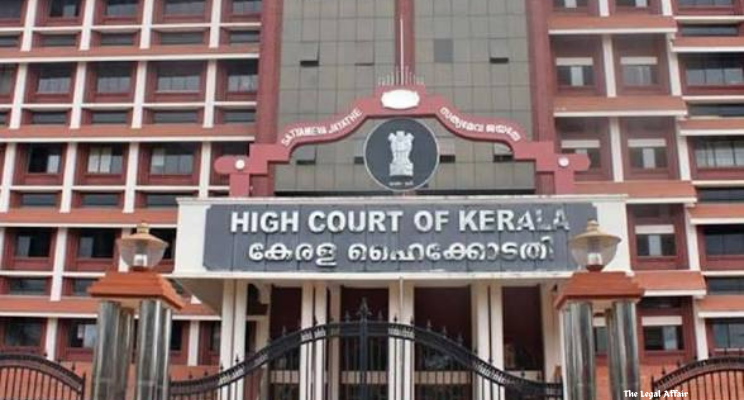
The Kerala High Court has refused to terminate criminal proceedings against three accused persons in the long-pending 2013 gold smuggling case connected with the Cochin International Airport, holding that the prosecution materials disclose sufficient prima facie grounds to require them to face trial. The Court made it clear that at the stage of considering a discharge application, the court is not expected to conduct a detailed examination of the evidence as though it were deciding the guilt or innocence of the accused after trial. Where the materials disclose the ingredients of the alleged offences or generate a strong suspicion regarding the involvement of the accused, the criminal proceedings should ordinarily be allowed to continue.
Justice A. Badharudeen delivered the judgment while considering three criminal revision petitions filed by C. Madhavan, Dr. S. Anil Kumar and Ahmed Suhail, arrayed respectively as accused Nos. 1, 8 and 11. The petitioners challenged the common order of the Additional Special Court (SPE/CBI)–II, Ernakulam, which had rejected their applications seeking discharge from the criminal case. The High Court, after examining the prosecution records and the rival submissions, declined to interfere with the Special Court’s decision.
The case concerns an alleged large-scale gold smuggling operation through Cochin International Airport in 2013. According to the prosecution, approximately 56 kilograms of gold, valued at around Rs. 17.86 crores, were smuggled through the airport. The alleged activity resulted in a loss of approximately Rs. 1.83 crores towards customs duties and cess payable to the Government of India.
The prosecution case assumes particular significance because the principal allegation concerns misuse of official position within the customs administration. Accused No. 1, C. Madhavan, was allegedly working at the Air Cargo Complex and was holding additional charge of the Air Intelligence Unit of Customs as well as administration-related responsibilities. The prosecution alleges that he abused his official position and entered into a criminal conspiracy with other accused persons to facilitate the movement of smuggled gold into India through the airport.
It is alleged that the conspiracy was implemented by ensuring that persons involved in the smuggling operation were able to enter or move through the airport without undergoing the customs checks that would ordinarily apply. According to the prosecution, officers posted by the first accused were used to facilitate the smooth passage of the alleged smugglers. The prosecution further alleges that illegal gifts were received by the accused persons in return for providing assistance in the smuggling operation.
The accused have been alleged to have committed offences under the Indian Penal Code, including Sections 201, 210B and 420, as well as offences under Sections 7, 12, 13(2) and 13(1)(d) of the Prevention of Corruption Act. The allegations therefore combine offences concerning criminal conduct and cheating with allegations of abuse of public office and corrupt gratification.
The three accused sought discharge primarily on the ground that the prosecution materials did not disclose sufficient evidence to establish their involvement. They also relied upon their alleged exoneration in departmental proceedings. Their contention was that the departmental inquiry had not found sufficient grounds to proceed against them and that such exoneration supported their claim that the allegations forming the basis of the criminal case were unfounded.
The prosecution opposed the discharge applications, maintaining that the standard applicable to departmental proceedings is different from the standard governing criminal prosecution. According to the prosecution, a person may be exonerated in a departmental inquiry and nevertheless face criminal prosecution where the criminal case is supported by independent materials. Departmental exoneration, therefore, could not automatically result in termination of the criminal proceedings.
The central issue before the High Court was consequently whether the prosecution materials, when examined at the limited stage of discharge, disclosed a prima facie case or at least raised a strong suspicion sufficient to justify a full trial.
The Court answered the question against the petitioners. It found that the prosecution records contained prima facie material concerning the alleged offences and held that the Special Court had correctly refused to discharge the accused. It further directed the Special Court to proceed with the trial and endeavour to conclude it within six months.
Arguments of the Parties:
The petitioners challenged the rejection of their discharge pleas on the principal ground that the prosecution had failed to place sufficient material demonstrating their involvement in the alleged gold smuggling conspiracy. Their submission was that criminal proceedings should not be permitted to continue merely because allegations had been made against them, particularly where the available material did not, according to them, establish the basic ingredients of the offences alleged.
The petitioners argued that the allegations against them lacked the necessary prima facie foundation. They contended that the prosecution materials, properly examined, did not establish a sufficient connection between them and the alleged smuggling operation. In their view, the continuation of the prosecution would amount to subjecting them to a prolonged criminal trial without adequate material capable of supporting the charges.
A significant part of their case concerned the departmental proceedings. The accused relied upon the fact that they had been granted a clean chit or otherwise exonerated during departmental inquiry. According to them, the findings in the departmental proceedings supported their contention that the allegations concerning their conduct were not established.
The petitioners sought to use this departmental outcome as a significant circumstance supporting discharge. Their argument, in substance, was that when the same broad allegations had been examined departmentally and had not resulted in adverse findings, the criminal prosecution should not be permitted to continue in the absence of stronger independent material.
The petitioners also urged the High Court to examine whether the Special Court had correctly appreciated the available material. They challenged the conclusion that a prima facie case existed and sought interference in revision with the order refusing discharge.
The prosecution, represented by Special Public Prosecutor Sreelal N. Warrier, strongly opposed the revision petitions. It maintained that the accused were attempting to invite the Court to undertake an assessment of the evidence at a stage when such detailed scrutiny was impermissible.
The prosecution emphasised the distinction between the stage of framing or sustaining charges and the final stage of determining guilt. At the discharge stage, the court is not required to decide whether the prosecution will ultimately succeed. The relevant inquiry is whether the materials collected during investigation disclose the ingredients of the offences alleged or raise a strong suspicion that the accused may have committed them.
According to the prosecution, the records contained sufficient material connecting the petitioners with the alleged conspiracy and acts of facilitation. The allegations concerned the misuse of official responsibilities at a sensitive airport facility and the alleged provision of assistance to persons involved in transporting gold without proper customs checks.
The prosecution also disputed the legal significance attributed by the petitioners to their departmental exoneration. It argued that departmental proceedings and criminal proceedings operate in different spheres and serve different purposes. A departmental inquiry examines service-related misconduct, whereas a criminal prosecution determines whether the accused committed offences punishable under criminal law.
Therefore, according to the prosecution, the outcome of the departmental inquiry could not automatically erase or neutralise the materials collected during a criminal investigation.
The prosecution further contended that the allegations involved serious economic and corruption-related offences and that terminating the proceedings at the threshold would prevent the prosecution from placing its evidence before the trial court. Where the investigation has yielded material raising a strong suspicion, the proper course is to permit the trial to proceed and allow the prosecution and defence to test their respective cases through evidence.
The prosecution consequently supported the Special Court’s order rejecting discharge and urged the High Court to exercise its revisional jurisdiction sparingly.
The competing arguments thus required the High Court to balance two important considerations. On one hand, an accused person should not be subjected to a criminal trial where the prosecution materials are wholly insufficient to disclose any offence. On the other hand, the discharge stage cannot become a substitute for a full-fledged trial when the record contains material raising a strong suspicion requiring evidence to be tested.
The Court ultimately accepted the latter approach.
Court’s Judgment:
Justice A. Badharudeen dismissed the three criminal revision petitions and upheld the order passed by the Additional Special Court (SPE/CBI)–II, Ernakulam, rejecting the discharge applications of the accused.
The High Court began its consideration by examining the nature and scope of the jurisdiction exercised by a court at the stage of discharge. The Court reiterated the settled legal position that a discharge application is not an occasion for conducting a mini-trial. The court must examine the prosecution materials to determine whether the basic ingredients of the alleged offences are prima facie disclosed.
The Court held that the relevant test is whether the prosecution records disclose the commission of the alleged offences or, at the very least, give rise to a strong suspicion concerning the involvement of the accused. Where such strong suspicion exists, the criminal proceedings should ordinarily proceed to trial.
The Court relied upon the recent decision in R. Balachandran v. State of Kerala (2026) while explaining this principle. The reliance on the precedent reinforced the distinction between a genuine absence of material and a situation in which the prosecution has placed sufficient material to warrant examination through evidence.
The High Court explained that the purpose of the discharge stage is to prevent criminal proceedings from continuing where the allegations are wholly unsupported. At the same time, the provision cannot be used to terminate a prosecution prematurely when the record contains material capable of supporting the allegations at trial.
This approach reflects an important structural principle of criminal procedure. A trial is the forum in which witnesses are examined, documents are proved, contradictions are tested and the prosecution’s case is subjected to the full scrutiny of the defence. If the prosecution materials already disclose a strong suspicion, prematurely stopping the proceedings would prevent that evidentiary process from taking place.
The Court specifically distinguished between “mere suspicion” and “strong suspicion”. A mere suspicion, standing alone, is insufficient. But where the materials generate a strong and reasonable suspicion that the accused may have committed the offences alleged, the matter should ordinarily proceed to trial.
The distinction is important because the discharge jurisdiction is not intended to determine whether conviction is certain or even whether conviction is more likely than acquittal. The question is whether there is sufficient material to justify putting the accused to trial.
Applying that standard to the present case, the High Court examined the allegations against the petitioners and the materials collected by the prosecution. It found that prima facie material existed concerning the alleged commission of the offences.
The allegations against the first accused were particularly serious. The prosecution alleged that, while occupying official positions at the Air Cargo Complex and holding additional responsibilities in the Air Intelligence Unit and administration, he misused his position to facilitate the movement of smuggled gold through the airport.
The alleged method of operation was not merely passive negligence. According to the prosecution, the first accused had arranged for the alleged smugglers to move through the airport without customs checking by utilising officers posted by him. The prosecution further alleged that illegal gifts were received in connection with the assistance provided.
At the discharge stage, the Court was not required to determine whether these allegations would ultimately be proved beyond reasonable doubt. That determination belongs to the trial court after evidence is recorded.
The presence of prosecution material supporting these allegations was therefore sufficient to cross the threshold necessary for continuation of the proceedings.
The Court also rejected the petitioners’ reliance on their exoneration in departmental proceedings as an independent ground for discharge. It made clear that a clean chit in a departmental proceeding does not, by itself, extinguish criminal liability.
This aspect of the judgment is legally significant. Departmental proceedings and criminal prosecutions may arise out of substantially similar factual circumstances, but they are not identical proceedings. Their purposes, procedures and standards of proof are different.
A departmental proceeding primarily concerns whether an employee has committed misconduct warranting disciplinary action under service rules. A criminal proceeding, on the other hand, concerns whether the accused has committed an offence recognised and punishable by criminal law.
Consequently, an administrative or departmental finding cannot automatically dictate the result of a criminal prosecution. While such findings may have relevance depending upon the circumstances and the evidence, they cannot be treated as a conclusive determination of criminal innocence.
The High Court therefore held that the petitioners’ departmental exoneration, by itself, was not a sufficient reason to order discharge.
The Court also emphasised the limited nature of its revisional jurisdiction in the matter. The petitioners were challenging the Special Court’s decision in revision, and the High Court found no absolute illegality or arbitrariness in the impugned order warranting interference.
The Special Court had considered the prosecution materials and arrived at the conclusion that the accused should face trial. Since that conclusion was supported by the material on record and was consistent with the settled principles governing discharge, the High Court declined to substitute its own assessment merely because the petitioners disputed the prosecution’s case.
This restrained approach is important in criminal procedure. Revisional jurisdiction is not ordinarily intended to provide a second opportunity for a detailed appreciation of evidence at a preliminary stage. Unless the lower court’s order suffers from a serious illegality, perversity or arbitrariness, interference is not warranted merely because another view may be possible.
The High Court therefore found that the Special Court had rightly refused to discharge the petitioners.
The Court’s reasoning also reflects the fundamental distinction between a prima facie case and proof beyond reasonable doubt. At trial, the prosecution will bear the burden of establishing the charges in accordance with the applicable standard of proof. At the discharge stage, however, the court is concerned only with whether the prosecution has crossed the threshold necessary to require the accused to face trial.
The Court’s finding of prima facie material should therefore not be misunderstood as a finding of guilt. The judgment does not hold that the petitioners committed the alleged offences. It merely concludes that the prosecution materials are sufficient to warrant judicial examination through a trial.
That distinction safeguards both sides of the criminal justice process. It prevents accused persons from being subjected to baseless prosecutions while also preventing serious allegations from being terminated before the prosecution has had an opportunity to prove its case.
The High Court also took note of the age of the proceedings and directed the Special Court to proceed with the trial and finalise it within six months. This direction reflects the Court’s concern that a criminal case involving serious allegations should not remain pending indefinitely.
A direction for expeditious trial also serves the interests of the accused. Prolonged criminal proceedings can themselves impose a substantial burden on persons facing prosecution, even where they are ultimately acquitted. At the same time, timely conclusion serves the public interest by ensuring that serious allegations are either proved or rejected through a final judicial determination.
The six-month direction therefore seeks to balance the need for prosecution with the accused persons’ right to a reasonably expeditious conclusion of criminal proceedings.
The case is also significant because it concerns alleged corruption and misuse of official authority in connection with customs enforcement. Allegations that officials entrusted with preventing smuggling themselves facilitated the movement of contraband raise serious concerns concerning the integrity of public administration. Nevertheless, the Court correctly confined itself at the present stage to the question of whether there was sufficient material to require a trial.
The High Court’s decision consequently reinforces the principle that the criminal process should neither be prematurely terminated nor unnecessarily prolonged. The discharge stage serves as a judicial filter, but it is not intended to function as a full trial.
Where prosecution records reveal the ingredients of the alleged offences or generate strong suspicion, the appropriate course is to permit the prosecution to lead evidence and allow the accused to challenge that evidence in accordance with law.
In the present case, the Court found that threshold to have been satisfied. The allegations concerning the alleged conspiracy, facilitation of movement through customs without proper checking, misuse of official position and receipt of illegal benefits could not be dismissed at the preliminary stage merely because the accused disputed the prosecution version or had obtained relief in departmental proceedings.
The Court therefore dismissed Criminal Revision Petition Nos. 524 of 2025, 546 of 2025 and 810 of 2025 and left the criminal proceedings intact.
The ruling ultimately conveys a straightforward but important message: a discharge application cannot be converted into a trial on paper. When the prosecution has placed material which, if accepted at its face value, discloses the alleged offences or creates a strong suspicion of the accused’s involvement, the court should ordinarily allow the case to proceed.
At the same time, the judgment preserves the accused’s right to contest every allegation during trial. The finding of prima facie material is not a declaration of guilt, and the prosecution will still have to establish its case through legally admissible evidence.
The Kerala High Court has therefore maintained the procedural balance between preventing baseless prosecutions and ensuringthat serious allegations are not prematurely buried. By refusin