


Introduction:
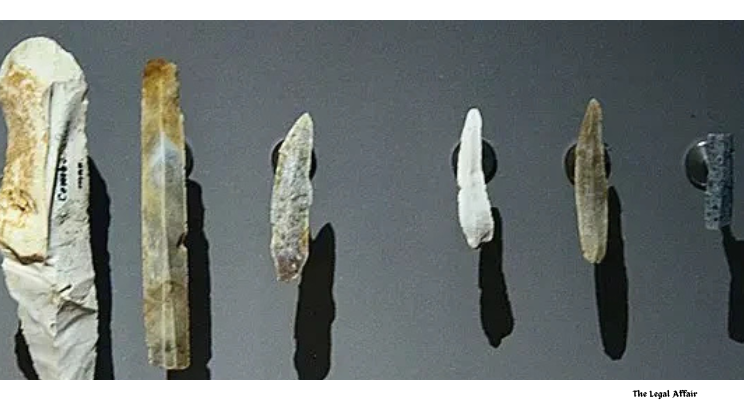
In a recent ruling, the Kerala High Court held that a stone could be treated as a weapon of offence likely to cause death under Section 324 of the Indian Penal Code (IPC), depending on its nature, size, sharpness, and manner of use. The case, *Vinil v State of Kerala* (CRL.MC No. 5158 of 2020), dealt with a petitioner accused of hurling a stone at the de facto complainant, causing injury. The petitioner sought to quash the FIR and the final report against him, which alleged offences under Sections 324 (voluntarily causing hurt by dangerous weapon or means), 294(b) (obscene acts and songs), and 506(i) (criminal intimidation) of the IPC. The Court declined the petitioner’s request, stating that the determination of whether a stone could be considered a weapon under Section 324 IPC should be left to the trial court to assess based on evidence, including the characteristics of the stone and how it was used.
Petitioner’s Arguments:
The petitioner, represented by Advocates C.A. Chacko and C.M. Charisma, contended that the FIR and final report against him should be quashed, as there was no prima facie case made out under Section 324 IPC. He argued that a rift between him and the de facto complainant, who were neighbors, had led to the filing of countercases against each other. While the de facto complainant’s final report had been quashed regarding Sections 324, 294(b), and 506(i) IPC, the complainant was only tried for an offence under Section 323 (voluntarily causing hurt). Based on this, the petitioner claimed that the same approach should be applied in his case, with only the charge under Section 323 being sustained.
The petitioner further submitted that the stone he allegedly threw at the complainant could not be considered a dangerous weapon under Section 324 IPC. He argued that the injury inflicted—an abrasion on the complainant’s hand—was minor and did not warrant charges under Section 324, which pertains to voluntarily causing hurt by a dangerous weapon or means likely to cause death. Therefore, the petitioner requested the Court to quash the FIR and final report, allowing him to avoid prosecution under Sections 324, 294(b), and 506(i) IPC.
Respondent’s Arguments:
The prosecution, represented by Advocate L. Rajesh Narayan and Senior Public Prosecutor Renjith George, opposed the petitioner’s plea. They argued that the FIR and final report established a prima facie case under Section 324 IPC, as the petitioner had thrown a stone at the complainant, causing injury. The prosecution maintained that the nature, size, and manner of using the stone could make it a dangerous weapon under Section 324, depending on the evidence presented during the trial. They highlighted that the complainant had suffered an injury as a result of the stone-throwing incident and that the petitioner’s threat to kill the complainant further strengthened the case for criminal intimidation under Section 506(i) IPC.
The prosecution also referred to previous rulings that emphasized the need to consider various factors such as the size, sharpness, and use of an object in determining whether it qualifies as a dangerous weapon. They argued that the trial court was the appropriate forum to assess the evidence and decide whether the stone in question met the criteria for a weapon likely to cause death.
Court’s Judgment:
The Kerala High Court, presided over by Justice A. Badharudeen, carefully examined the facts of the case and the applicable legal provisions. The Court referred to Section 324 IPC, which deals with voluntarily causing hurt by dangerous weapons or means, and noted that the provision includes instruments likely to cause death. The Court also referenced the recently enacted Section 118 of the Bharatiya Nyaya Sanhita (BNS), which is analogous to Section 324 IPC.
The Court’s ruling hinged on the nature, size, sharpness, and manner of using the stone in the alleged assault. Justice Badharudeen cited earlier judgments, such as *Mathai v. State of Kerala* (2005) and *Dasan v. State of Kerala* (2014), which established that the determination of whether an object is a dangerous weapon depends on the facts and circumstances of each case. The Court observed that the characteristics of the stone and how it was used to cause injury are essential considerations in deciding whether it qualifies as a weapon under Section 324 IPC.
Justice Badharudeen stated, “A stone would also come within the purview of a weapon of the offence likely to cause death, depending upon the nature of the stone, the size and sharpness of the said stone and how the stone was used in the process of assault for inflicting injury.” The Court concluded that the trial court must consider these factors during the trial to determine whether the stone was a weapon of offence likely to cause death.
Furthermore, the Court emphasized that at this stage of proceedings, it could not be held prima facie that no offence under Section 324 IPC was attracted. Since the prosecution had alleged that the injury was caused by the accused using a stone, it would be inappropriate to quash the FIR and final report without assessing the evidence.
The Court held that, based on the allegations and the circumstances of the case, there were sufficient grounds to proceed with the trial. Justice Badharudeen refused to quash the FIR and final report, ruling that the trial court would be the appropriate forum to determine, based on the evidence, whether the stone used by the petitioner met the criteria for a dangerous weapon under Section 324 IPC.
The Court further remarked that the petitioner’s reliance on the quashing of charges against the de facto complainant in the counter case did not provide sufficient grounds to quash the charges against him. The two cases, though related, had distinct facts and circumstances, and the Court held that each case must be evaluated on its own merits.
In conclusion, the Kerala High Court ruled that the petitioner’s plea to quash the FIR and final report was not sustainable, as prima facie offences under Sections 324, 294(b), and 506(i) IPC were made out. The matter was left for the trial court to assess during the trial, based on the nature of the stone and the manner of its use in causing injury.
Conclusion:
In this notable decision, the Kerala High Court reaffirmed that a stone, depending on its characteristics and use, could be considered a weapon of offence likely to cause death under Section 324 IPC. The ruling emphasizes the importance of considering the nature, size, sharpness, and method of use of an object in determining whether it qualifies as a dangerous weapon. The Court refused to quash the FIR and final report against the petitioner, stating that the trial court must decide based on evidence whether the stone used in the assault met the criteria for a weapon likely to cause death. This ruling clarifies that objects not typically regarded as dangerous weapons, such as stones, can still attract charges under Section 324 IPC if they are used in a manner that causes significant harm or threatens life.