


Introduction:
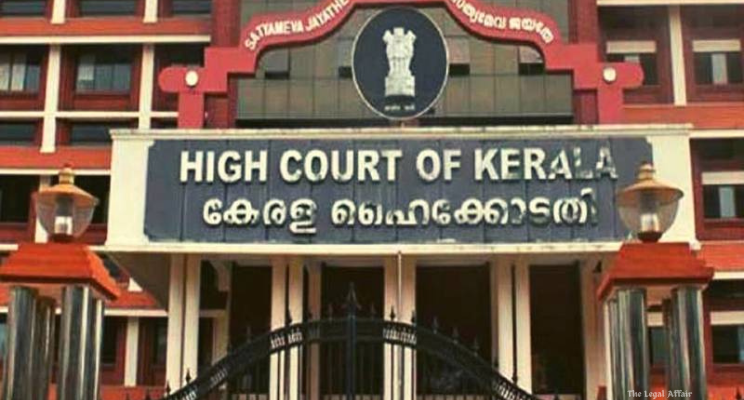
In the case of A.K. Rajendran v. State of Kerala (Crl.A. No.1473 of 2006; 2025 LiveLaw (Ker) 632), the Kerala High Court, per Justice A. Badharudeen, delivered a significant judgment clarifying that High Courts do not possess the authority to reduce a sentence for a criminal offence below the minimum punishment prescribed by a statute. The Court observed that any such act would amount to judicial legislation, overstepping into the legislative domain. The ruling was grounded in the Supreme Court’s decision in Dashrath v. State of Maharashtra, which reaffirmed the constitutional limitation on judicial powers concerning statutory minimum sentences. The appeal before the Kerala High Court was filed by A.K. Rajendran, a Village Assistant, challenging his conviction and sentence passed by the Special Judge under Sections 7 and 13(1)(d), read with Section 13(2), of the Prevention of Corruption Act, 1988 (PC Act). He was sentenced to four and five years of rigorous imprisonment, respectively, along with fines of ₹50,000 each. The prosecution alleged that the appellant had demanded and accepted a bribe of ₹25,000 to avoid reducing the compensation payable for land acquired for the Cochin International Airport. However, the appellant claimed innocence, asserting that he was a scapegoat for higher officials and that the transaction was misinterpreted.
Arguments of the Appellant:
The appellant, represented by advocates R. Anil, Delvin Jacob Mathews, George Philip, and Raju Radhakrishnan, contended that the fundamental ingredients required to establish the offences under the PC Act — namely, demand and acceptance of illegal gratification — were not proved beyond reasonable doubt. It was submitted that the alleged demand was not made by him but by the Deputy Collector (Land Division) and the Special Tahsildar, who were the actual beneficiaries. Although these officers were initially named in the FIR, they were later excluded from the final charge sheet. Subsequently, when PW1 (the complainant) reiterated in court that these officers had demanded the bribe, they were re-arrayed as accused by the Special Judge but later discharged by the High Court, leaving the appellant as the sole accused. The appellant emphasized that his role was limited to accepting an amount which he believed to be related to a “chitty” (local savings group) transaction, not a bribe. He further argued that mere acceptance of money, without a proved demand, cannot attract Section 7 or Section 13(1)(d) of the PC Act. The defence relied heavily on the principle that “demand is sine qua non” for a conviction under these provisions. The appellant also relied on precedents such as Neeraj Dutta v. State (NCT of Delhi), wherein the Supreme Court had emphasized the need to establish demand and voluntary acceptance through clear, credible evidence. Additionally, he sought modification of the sentence by invoking parity with Pounammal K. v. State [2025 KHC 6718], wherein the Supreme Court had modified the sentence to the period already undergone. He urged that the Court could exercise leniency under Article 142 of the Constitution to meet the ends of justice, especially considering the long pendency of the case and his age.
Arguments of the Respondent:
On the other hand, the prosecution, represented by Senior Public Prosecutor Rekha S., strongly opposed the appellant’s contentions. It was submitted that the evidence on record conclusively established both the demand and acceptance of the illegal gratification. The prosecution relied on the testimony of PW1, who consistently maintained that the appellant had demanded ₹25,000 during an inspection of the land and reiterated the demand at his office. The prosecution also referred to the trap proceedings, wherein the appellant was apprehended with ₹15,000 — the balance amount of the demanded bribe — in his possession. The tainted currency notes were recovered, and chemical tests confirmed the presence of phenolphthalein powder, corroborating the acceptance. The prosecution emphasized that the demand need not always be express and could be inferred from the circumstances. Further, the prosecution refuted the applicability of Article 142, pointing out that such extraordinary powers are vested only in the Supreme Court and not the High Courts. Citing Dashrath v. State of Maharashtra, the prosecution asserted that reduction of sentence below the statutory minimum would amount to usurpation of legislative powers and was constitutionally impermissible. It was argued that the Prevention of Corruption Act prescribes minimum punishments to uphold public integrity, and courts must adhere strictly to legislative intent.
Court’s Observations and Findings:
After hearing both sides, Justice A. Badharudeen undertook a detailed analysis of the evidence, legal principles, and precedents. The Court first addressed the issue of whether the prosecution had proved the essential elements of “demand” and “acceptance.” Referring to Neeraj Dutta v. State (NCT of Delhi) and Sunil Kumar K. v. State of Kerala [2025 KHC 983], the Court reiterated that demand and acceptance of illegal gratification are the sine qua non for establishing guilt under Sections 7 and 13(1)(d) of the PC Act. However, it clarified that an express demand is not always necessary — even tacit or circumstantial evidence of demand and subsequent acceptance can suffice if corroborated by credible material. The Court observed that PW1’s testimony was consistent, and during cross-examination, he reaffirmed that the appellant demanded ₹25,000 and later accepted ₹15,000 during the trap. Thus, the foundational facts necessary to raise a presumption under Section 20 of the PC Act were satisfied. The Court also noted that the recovery of tainted notes and positive phenolphthalein test further corroborated the charge. Addressing the appellant’s contention regarding delay in FIR registration, the Court held that the one-day delay was trivial and adequately explained since the trap was conducted in one district and the FIR registered in another.
The High Court then turned to the pivotal issue of sentencing. The appellant’s counsel had urged the Court to take a lenient view, citing the Supreme Court’s power to modify sentences under Article 142, as seen in Pounammal K.. However, Justice Badharudeen categorically held that High Courts have no authority analogous to Article 142. He referred to Dashrath v. State of Maharashtra, where the Supreme Court had clearly ruled that even the Apex Court cannot, in the absence of compelling constitutional grounds, reduce a sentence below the statutory minimum, as it would amount to “legislation by the judiciary.” The Court observed that the minimum sentences prescribed under Sections 7 and 13(2) of the PC Act reflect legislative policy to deter corruption, and judicial interference in this domain would violate the separation of powers. Hence, the High Court ruled that it could not reduce the punishment below the statutory threshold, emphasizing judicial restraint and fidelity to legislative will.
Justice Badharudeen noted that although the appellant had suffered a prolonged legal battle spanning over two decades, this by itself could not justify dilution of the statutory minimum. Nevertheless, acknowledging mitigating circumstances such as the passage of time and the appellant’s personal situation, the Court held that the sentence imposed by the trial court could be modified only to the minimum prescribed under the statute, not below it. The Court thus partly allowed the appeal — affirming the conviction but reducing the punishment to the statutor
y minimum.