


Introduction:
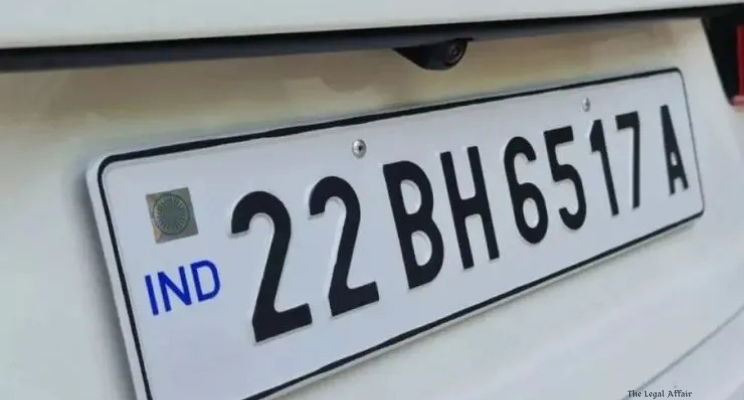
The Kerala High Court delivered a crucial verdict in the case of Harish Kumar KP v Union of India, addressing the applicability of motor vehicle tax rates for vehicles registered under the Bharat (BH) series. Justice Dinesh Kumar Singh held that the Central Government cannot prescribe tax rates for BH series vehicles, as motor vehicle taxation falls within the exclusive legislative competence of the States under the Constitution. The case arose from a series of writ petitions filed by vehicle owners aggrieved by the Kerala Motor Vehicle Department’s demand for State-prescribed motor vehicle taxes before registering vehicles under the BH series.
Arguments of the Petitioners:
The petitioners contended that the BH registration system introduced by the Central Government under Rule 51B of the Central Motor Vehicles Rules (Twentieth Amendment) 2021 was designed to streamline the movement of vehicles across States. They argued that the tax rates prescribed under Rule 51B were intended to ensure uniformity and fairness in taxation for individuals frequently relocating due to employment, particularly defence personnel, central and state government employees, and employees of organizations operating in multiple states. The petitioners asserted that the Kerala Motor Vehicle Department’s insistence on payment of State-specific taxes undermined the objective of the BH registration system, which was to eliminate the procedural hassle of re-registration and differential taxation when shifting between states.
They further argued that the tax rates specified by the Centre were binding on the States under the Motor Vehicles Act and that the refusal to register vehicles under the BH series without charging additional taxes violated their rights and defeated the intent of the Central Government’s initiative. The petitioners sought a declaration that the Kerala Motor Vehicle Department’s actions were unconstitutional and that the Central Government’s prescribed tax rates for BH series vehicles should prevail.
Arguments of the Respondents:
The Kerala Motor Vehicle Department, represented by the Special Government Pleader, contended that taxation of motor vehicles falls exclusively under the legislative competence of the States as per Article 246, read with Entry 57 of List II of the Seventh Schedule of the Constitution. They argued that the Central Government, while empowered to frame principles for taxation under Entry 35 of List III, could not prescribe specific tax rates, as this would infringe on the States’ autonomy.
The respondents maintained that the State’s authority to levy taxes on motor vehicles was governed by the Kerala Motor Vehicle Taxation Act, 1976 and that the tax rates specified under Rule 51B(2) of the Central Motor Vehicles Rules were constitutionally unenforceable. They emphasized that while the principles for taxation could be laid down by the Centre, the actual rates must be determined by the States.
Court’s Findings and Judgment:
The Kerala High Court meticulously examined the legislative framework governing motor vehicle taxation. It highlighted the distinction between the Centre’s authority to lay down principles under Entry 35 of List III and the States’ exclusive power to impose and determine taxes under Entry 57 of List II. The Court held that while the Central Government could specify principles for BH series taxation under sub-rules (1) and (3) of Rule 51B, it could not prescribe enforceable tax rates under sub-rule (2), as this would encroach upon the States’ domain.
The Court ruled that sub-rule (2) of Rule 51B, which prescribed specific tax slabs for BH series vehicles based on invoice price, was constitutionally invalid and unenforceable. It affirmed that States were free to levy taxes on BH series vehicles at rates determined under their respective legislations. However, it clarified that the principles laid down under sub-rules (1) and (3) regarding the structure and calculation of BH series taxes must be followed by the States.
The Court directed the Kerala Motor Vehicle Department to register the petitioners’ vehicles under the BH series but subject to the payment of taxes as per the rates specified in the Kerala Motor Vehicle Taxation Act, 1976. This ensured that the principles of uniformity in taxation were adhered to while upholding the States’ constitutional authority.