


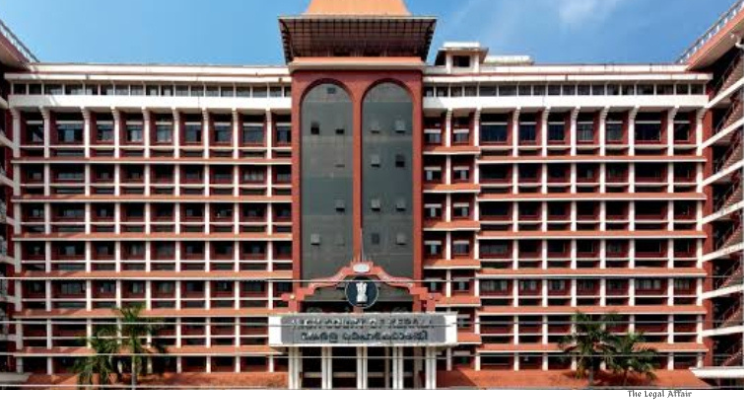
Introduction:
In the case titled The Regional Director, ESI Corporation and Another v. M/S L&T Tech Park Ltd. and Another [2025 LiveLaw (Ker) 556, Ins. App No 3 of 2014], the Kerala High Court delivered a significant ruling clarifying the scope of “employee” under Section 2(9)(ii) of the Employees’ State Insurance Act, 1948. Justice M.A. Abdul Hakhim dismissed the appeal filed by the Employees’ State Insurance Corporation (ESIC) and upheld the decision of the Employees’ Insurance Court which had directed refund of excess contributions exceeding ₹26 lakh to L&T Tech Park Ltd. The issue before the Court revolved around whether workers engaged in pre-operative or preliminary interior fit-out works fall under the statutory definition of “employee” and are entitled to benefits under the ESI Act. The case arose when Tata Consultancy Services Ltd. (TCS) contracted L&T Tech Park Ltd. in 2007 to carry out extensive interior works at its premises in Kochi, which were necessary before TCS could commence operations in April 2008. During the course of execution, TCS deducted ₹23,68,666 from L&T’s contract value and remitted it to the ESI Corporation as contribution, followed by an additional sum of ₹2,76,354 pursuant to a further demand. L&T sought a refund on the ground that such contributions were not payable since construction workers engaged in fit-out works are exempt under the ESI Corporation’s own circular dated June 14, 1999. When the Corporation refused the refund, L&T approached the Employees’ Insurance Court, which in 2013 ruled in its favour. The ESIC, aggrieved by this decision, appealed to the Kerala High Court, which considered whether Section 2(9)(ii) covered such workers.
Arguments of the Appellants:
The Employees’ State Insurance Corporation, represented by its counsel, contended that TCS was the “principal employer” under Section 2(17) of the ESI Act and L&T was the “immediate employer” within the meaning of Section 2(13). They argued that the workers engaged in the interior fit-out works fell squarely within Section 2(9)(ii), which brings within the definition of “employee” persons employed through an immediate employer to work on the premises of a factory or establishment or under the supervision of the principal employer on tasks that are part of, preliminary to, or incidental to the business of the establishment. According to the Corporation, the fit-out works were undoubtedly preliminary or incidental to the operations of TCS, as the company could not have commenced its IT business in Kochi without completion of the interior works such as installation of ceilings, flooring, and cabling. Therefore, the contributions were legally payable.
The appellants further contended that the circular dated June 14, 1999, identified as Instruction No. 4/99, which exempted construction site workers from the provisions of the ESI Act, was not applicable in the present case. They submitted that the exemption contemplated in the circular was intended for workers in the unorganised sector engaged in large-scale construction projects, whereas the interior fit-out works undertaken by L&T for TCS were directly connected to establishing a commercial IT establishment. Hence, these works could not be excluded. The Corporation also emphasized that the ESI Act is a beneficial legislation with a broad welfare objective, and courts should interpret the provisions expansively to extend the coverage of insurance benefits to as many workers as possible. The ESIC asserted that the High Court must prevent employers from circumventing statutory obligations by labeling essential pre-operational activities as construction or fit-out works.
Additionally, the appellants argued that TCS had deducted the contribution amounts from L&T’s contract and remitted them to the Corporation. Therefore, it was not open for L&T to later claim a refund of the contributions. They highlighted Regulation 40 of the ESI (General) Regulations, 1950, which prescribes a limitation period for applications seeking refund of contributions. Since L&T had not directly remitted the amounts but rather TCS had done so, the refund claim was not maintainable under Regulation 40. In their view, allowing such refund claims would create an unworkable situation where contractors could avoid contributions after the amounts had already been collected and deposited by the principal employer. The appellants also rejected the Employees’ Insurance Court’s finding that retaining the contributions would amount to unjust enrichment by the Corporation. They argued that contributions once paid into the statutory fund form part of a pool for the benefit of insured employees and cannot be refunded except under strict statutory provisions.
Arguments of the Respondents:
The respondents, L&T Tech Park Ltd., represented by senior counsels, strongly opposed the appeal and defended the Employees’ Insurance Court’s order. They argued that the entire premise of the ESIC’s case was flawed because during the period when the fit-out works were executed, TCS’s Kochi unit had not yet commenced operations. The business of the establishment only began on April 2, 2008, after completion of the works. Therefore, there was no “establishment” in existence to which such works could be described as preliminary or incidental under Section 2(9)(ii). They contended that the ESI Act contemplates a functioning establishment or factory where employees carry out tasks related to its business; workers engaged before commencement, on construction or pre-occupancy fit-out works, cannot be brought within this scope.
The respondents further submitted that Instruction No. 4/99 issued by the ESI Corporation itself categorically exempted construction site workers from coverage under the Act. They emphasized that interior fit-out works, such as laying cables, installing flooring and ceilings, and making a space ready for occupation, are construction-related in nature and hence fall within the exemption. Clause 3 of the Instruction carved out an exception for construction workers engaged directly in a covered factory by the principal employer, but that clause was inapplicable here because TCS’s Kochi premises was not a factory. The respondents highlighted that the ESI Corporation could not selectively apply its own circulars and deny the benefit of exemption when the facts clearly supported it.
The respondents also argued that TCS had no role in supervising the works. The supervision contemplated under Section 2(9) requires real-time, continuous oversight of work activities by the principal employer. In this case, the works were carried out by L&T and its subcontractors independently, and TCS’s role was limited to post-completion inspection and acceptance. Mere acceptance or rejection of completed works cannot amount to “supervision” under Section 2(9). They contended that to extend coverage in such cases would distort the statutory framework and expand liability beyond legislative intent.
On the issue of refund, the respondents contended that even though TCS had remitted the contributions, it had done so using L&T’s funds, deducting the amounts from the contract value. Therefore, L&T was the party that actually bore the financial burden and had the right to seek refund. They relied on the principle laid down in Deputy Director v. BPL Cellular Ltd., where the Court had held that mistaken contributions cannot be retained by the Corporation to its unjust enrichment. They also argued that Regulation 40, which prescribes time limits for refund claims, applies only to the person who has directly remitted the contribution. Since the contribution was remitted by TCS, Regulation 40 did not bar L&T’s claim. Denying refund in such circumstances would not only be inequitable but also legally untenable.
The respondents also rebutted the Corporation’s contention that the Kochi unit of TCS was an extension of its existing covered units in Mumbai or Vismaya. They pointed out that inspection reports clearly confirmed that the Kochi unit was a separate entity with no financial or functional integrality with the other units. Therefore, the argument of extension of coverage could not be sustained.
Court’s Judgment:
After carefully examining the rival submissions, the Kerala High Court dismissed the appeal of the ESI Corporation and upheld the Employees’ Insurance Court’s ruling in favour of L&T Tech Park Ltd. Justice M.A. Abdul Hakhim held that workers engaged in pre-operative or preliminary interior fit-out works do not fall within the definition of “employee” under Section 2(9)(ii) of the ESI Act. The Court observed that the interior works in question were executed prior to April 2, 2008, the date on which TCS’s Kochi unit commenced operations. Since no establishment was in existence during the execution of works, such activities could not be categorized as “preliminary” or “incidental” to the work of an establishment. The statutory definition contemplates a connection to the functioning of an existing establishment, which was absent here.
The Court also rejected the ESIC’s contention that supervision by TCS brought the workers within the ambit of Section 2(9). It held that the works were carried out by L&T and its subcontractors, and TCS’s role was confined to post-completion inspection. Supervision, as envisaged under the Act, requires direct control over the manner and process of work, not mere acceptance after completion. Therefore, the requirement of supervision was not satisfied.
On the applicability of Instruction No. 4/99, the Court noted that the circular exempted construction site workers from coverage under the Act due to the peculiar nature of their employment. The exception clause relating to workers engaged directly in a factory was inapplicable because TCS’s premises was not a factory. Hence, the workers in question were entitled to exemption.
The Court also found no merit in the ESIC’s claim that TCS’s Kochi unit was an extension of its other units. Inspector reports confirmed that the Kochi unit was distinct and operated under a different scheme, without financial or functional unity with the Mumbai corporate office or the Vismaya unit.
On the question of refund, the Court ruled that L&T was entitled to seek refund even though TCS had remitted the contributions. Since TCS remitted the contributions on behalf of L&T, using L&T’s funds, it would be unjust to deny L&T the right to recover the amounts once liability under the Act was negated. The Court further held that Regulation 40’s limitation provisions applied only to the party directly remitting the contributions, which was TCS in this case. As L&T was not the direct remitter but the party bearing the financial burden, its refund claim was not barred by Regulation 40. Retaining the contributions in such circumstances would unjustly enrich the Corporation.
In conclusion, the Court dismissed the appeal and confirmed that workers engaged in pre-operative interior fit-out works are not employees under Section 2(9)(ii) of the ESI Act, and thus contributions for them were not payable. The ruling reaffirmed that coverage under the ESI Act must be interpreted in accordance with statutory language and cannot be stretched to include workers who were never intended to be covered.