


Introduction:
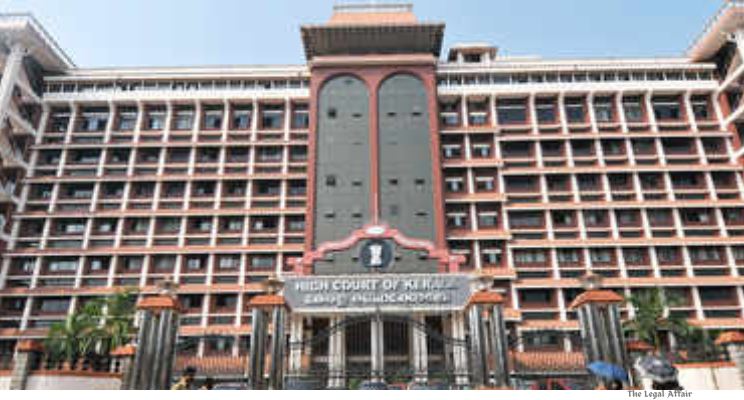
In a significant ruling, the Kerala High Court has held that a male child who has attained majority cannot claim maintenance from their father under the provisions of the Protection of Women from Domestic Violence (DV) Act, Section 125 of the Criminal Procedure Code (CrPC), and Section 20(3) of the Hindu Adoption and Maintenance Act. Justice P.G. Ajithkumar delivered the judgment, emphasizing that none of these provisions entitle a male child who has reached adulthood to continue receiving maintenance from his father. The case revolved around a petition filed by a father challenging the orders requiring him to pay maintenance to his sons even after they had attained majority.
Arguments:
Petitioner’s Arguments:
The revision petitioner, the father, contended that his two sons, now aged 18 and 22, had attained majority and were therefore not entitled to maintenance. He argued that the provisions of the DV Act, Section 125 of CrPC, and Section 20(3) of the Hindu Adoption and Maintenance Act do not support the payment of maintenance to a male child after attaining adulthood. The petitioner highlighted that the DV Act defines a child as a person below 18 years of age, and thus maintenance should only be payable to minors. He sought the court’s intervention to set aside the appellate court’s order, which had upheld the trial court’s decision to continue maintenance payments to his sons even after they became adults.
Respondents’ Arguments:
The respondents, comprising the wife and the two sons, argued that the appellate court’s decision to continue maintenance was justified. They contended that the DV Act and other relevant laws did not explicitly restrict the payment of maintenance to children after they attained majority. The respondents emphasized that the need for financial support could continue beyond the age of 18, particularly if the children were pursuing higher education or were otherwise unable to support themselves. They maintained that the appellate court’s interpretation of the law was in line with the spirit of providing necessary support to children, irrespective of their age.
Court’s Judgment:
The Kerala High Court, after examining the arguments and relevant provisions, ruled in favor of the petitioner, setting aside the appellate court’s order. Justice P.G. Ajithkumar, in his judgment, meticulously analyzed the provisions of the DV Act, CrPC, and the Hindu Adoption and Maintenance Act to determine the scope of maintenance entitlement.
Key Points of the Judgment:
- Definition of Child under the DV Act: The court referred to Section 2(b) of the DV Act, which defines a child as a person below 18 years of age. Justice Ajithkumar emphasized that this definition is crucial in determining the eligibility for maintenance under Section 20(1)(d) of the DV Act. The court noted that Section 20(1)(d) provides for monetary relief to the aggrieved person and her children, but the term “children” is controlled by the definition in Section 2(b).
- Maintenance under CrPC and Hindu Adoption and Maintenance Act: The court observed that Section 125 of CrPC allows for maintenance to a minor child, irrespective of gender. Similarly, under the Hindu Adoption and Maintenance Act, Section 20 provides maintenance to children, including a major unmarried daughter who is unable to maintain herself. However, there is no provision for maintenance to a male child who has attained majority.
- Appellate Court’s Error: Justice Ajithkumar highlighted the appellate court’s error in extending maintenance beyond the age of majority. The court pointed out that the appellate court did not consider the definition of a child under Section 2(b) of the DV Act. The judgment underscored that once a male child attains the age of 18, he ceases to be a child under the DV Act and therefore loses the entitlement to maintenance.
- Obligation Limited to Minority: The court reaffirmed that the petitioner’s obligation to pay maintenance to his sons was only until they reached the age of majority. Beyond this age, the laws cited do not mandate continued financial support.
- Practical Implications: The judgment acknowledged the practical implications of its decision, particularly for families relying on maintenance for educational and other needs of their children. However, it reiterated that the legal provisions clearly limit maintenance to minors and do not extend this obligation to adult male children.
Conclusion:
In conclusion, the Kerala High Court’s ruling clarifies that adult male children are not entitled to maintenance under the DV Act, CrPC, or the Hindu Adoption and Maintenance Act. The judgment provides a clear interpretation of the relevant provisions, emphasizing the legal limits of maintenance obligations. This decision has significant implications for similar cases, providing a precedent for the interpretation of maintenance laws in India.