


Introduction:
The Kerala High Court has questioned the State Government’s use of the term “DJ party” to restrict activities at bar hotels that have been permitted to operate until 3 a.m. under the amended Foreign Liquor Rules. The Court observed that a regulatory restriction must be based on clear and certain terms, particularly when its enforcement may result in penalties or curtail activities otherwise permitted under a licence.
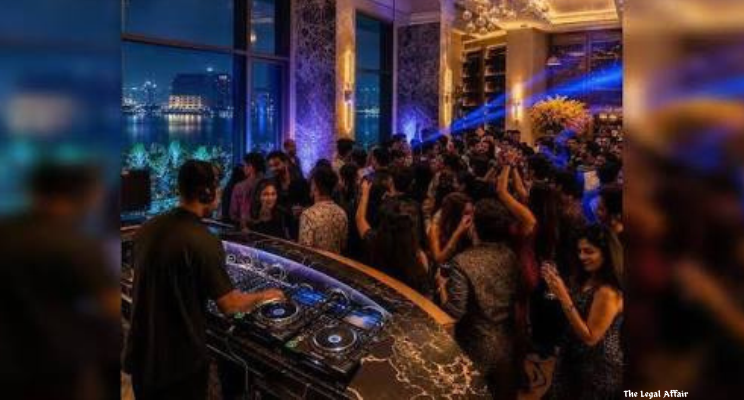
A Division Bench of Justice Devan Ramachandran and Justice Basant Balaji raised these questions while hearing an appeal filed by the State against a Single Judge’s decision setting aside police notices that restricted the operation of the Kochi Radisson Blu hotel beyond midnight and prohibited DJ parties after 11 p.m.
The dispute arose following an amendment to the Foreign Liquor Rules on February 13, 2026, which enabled certain licensed bar hotels to operate until 3 a.m. The hotel concerned had received permission to remain open during the extended hours. According to the State, however, the extended operating permission had been accompanied by concerns about law-and-order problems and alleged drug-related activities taking place under the guise of late-night DJ parties.
The police issued notices restricting the hotel’s operations beyond midnight and curtailing DJ parties after 11 p.m. The hotel challenged these restrictions, contending that the authorities could not reduce the operating hours permitted under the amended Rules without legally sustainable grounds.
Earlier, the Single Judge had accepted the challenge and set aside the police restrictions. The Court had observed that DJ-ing was not a prohibited art form and that people participating in such events had a fundamental right to assemble peacefully. It had also recognised that a holder of an FL-3 bar hotel licence had the fundamental right to carry on a lawful business, while residents living nearby had an equally important right to live without noise pollution.
The Single Judge had therefore sought to balance the competing rights of the hotel, its customers and nearby residents. It held that the police could not curtail the operating hours granted under the Rules unless special grounds justified such action.
The State appealed against this decision, arguing that the restrictions were necessary in view of the law-and-order problems allegedly associated with late-night gatherings and drug-related activities. During the appeal, Additional Advocate General P.A. Mohammed Shah submitted that illegal drug transactions were taking place under the cover of DJ parties and that the hotel licence authorised the sale of liquor, not the organisation of such events.
The Division Bench, however, questioned the legal and practical meaning of the expression “DJ party”. It asked whether the restriction would apply only when a disc jockey controlled the music or whether it would also cover piped music, ordinary entertainment and dancing events. The Court emphasised that a vague expression could not be used as the basis for imposing restrictions or penalties without clarity about the conduct actually prohibited.
The Bench also examined the explanatory note accompanying the amendment to the Foreign Liquor Rules. It noted that the extended operating hours were intended to promote activities such as meetings, exhibitions, tourism, destination weddings and international conferences. The Court questioned whether these purposes were exhaustive or merely illustrative and whether the explanatory note could be used to narrow the permission granted by the operative rule.
Importantly, the Bench did not dismiss the State’s concerns about drug abuse or the difficulties faced by the police in maintaining law and order at night. It expressly acknowledged the demanding nature of police duties and emphasised that the authorities were fully empowered to take legally permissible measures against drug-related activities. At the same time, it indicated that strict regulation, rather than an uncertain or blanket prohibition, could provide a more legally sustainable response.
The appeal was not finally decided during the hearing. The Bench posted the matter to November 16 for further consideration and issued an interim clarification that the earlier Single Judge judgment would not prevent the police from enforcing law and order through legally necessary and permissible measures, including maintaining vigilance against drug and substance abuse.
The proceedings therefore raised an important question about the limits of police powers in regulating licensed establishments. While the State has a duty to prevent illegal activities and protect public order, restrictions imposed on businesses must have a clear legal basis and must not unnecessarily interfere with permissions granted under the applicable rules.
Arguments of the Parties:
Appearing for the State, Additional Advocate General P.A. Mohammed Shah, assisted by Government Pleader Renoy Vincent, defended the police restrictions and emphasised the law-and-order concerns arising from late-night gatherings. The State argued that the problem was not simply the presence of music or entertainment at licensed bar hotels, but the alleged use of DJ parties as a cover for illegal drug transactions and other unlawful activities.
The Additional Advocate General submitted that the bar hotel had been granted permission to serve liquor under its licence, but that this did not necessarily authorise it to conduct DJ parties. According to the State, the permission to operate until 3 a.m. should not be interpreted as an unrestricted right to organise every form of entertainment during those hours.
The State also referred to the amendment to the Foreign Liquor Rules dated February 13, 2026. It submitted that the issue had become more prominent after the amendment and the grant of extended operating permissions to several hotels. The Additional Advocate General informed the Court that permission to operate until 3 a.m. had been granted to 33 hotels in March 2026.
The State’s concern was that people were arriving in Kochi from outside the city during late-night hours, particularly around 10 p.m., and that law-and-order problems were arising in connection with these gatherings. It argued that the police had to address the consequences of such activities and could not ignore the possibility of drug transactions taking place under the cover of entertainment events.
The Additional Advocate General also clarified that the State was not opposed to DJ parties as an activity in itself. Its concern, he submitted, was the alleged unlawful conduct taking place in and around the premises where such parties were organised. The State therefore maintained that the police restrictions were intended to address public-order concerns rather than impose a general prohibition on music or entertainment.
The State’s submissions also prompted the Court to examine whether the police were distinguishing between different forms of entertainment. The Bench asked whether the restrictions would apply where there was no disc jockey but music was played through a sound system, or where customers were permitted to dance without a DJ. The Additional Advocate General responded that the concern was not the terminology alone, but the illegal activities allegedly associated with late-night gatherings.
On behalf of the hotel, Advocate Anand Kalyanakrishnan, assisted by advocates S. Rajeev, C. Dheeraj Raja, V. Vinay, M.S. Aneer and Libin Varghese, defended the Single Judge’s order. The hotel’s position was that it had received permission under the amended Rules to operate until 3 a.m. and that the police could not curtail those hours through notices without a legally sustainable basis.
The hotel also sought to address the State’s concerns about drugs and other prohibited substances. Anand Kalyanakrishnan assured the Court that his client took care to screen and scrutinise persons entering the premises to ensure that customers or guests were not carrying drugs or other substances.
The hotel thus maintained that it was taking preventive steps to ensure that unlawful activities did not occur at its premises. Its position was that the existence of a licence permitting extended operating hours could not be rendered meaningless through restrictions based on an uncertain expression such as “DJ party”.
The earlier Single Judge order had also recognised that the issue involved competing legal interests. On one side was the hotel’s right to conduct a licensed business and the customers’ right to assemble peacefully. On the other was the right of residents in the vicinity to live without noise pollution and the State’s responsibility to maintain public order.
The hotel relied on the fact that the amended Rules permitted certain establishments to operate until 3 a.m. It therefore opposed the police notices that effectively curtailed the benefit of that permission. The respondents’ position was that the police could enforce laws against drugs, noise violations and other unlawful conduct, but could not impose an uncertain restriction that went beyond what the law permitted.
Court’s Judgment:
The Division Bench of Justice Devan Ramachandran and Justice Basant Balaji examined the State’s appeal by focusing on the relationship between the extended operating permission under the Foreign Liquor Rules and the police restrictions imposed on DJ parties.
At the outset, the Bench questioned the State about the meaning of the expression “DJ party”. Justice Devan Ramachandran observed that the term was uncertain and required clarification before it could be used as the basis for restricting activities at a licensed establishment. The Court pointed out that a disc jockey is essentially a person who controls or plays music, but the presence of a DJ does not necessarily determine the nature or legality of an event.
The Bench asked whether the restriction would apply only when a disc jockey was physically present or whether it would also cover situations involving piped music. It further questioned whether an establishment could permit a dancing event in which customers participated without any DJ being involved.
These questions went to the heart of the dispute. If the police intended to prohibit a particular form of entertainment because it was associated with unlawful activities, the restriction had to identify the prohibited conduct with sufficient precision. A vague expression could create uncertainty about what establishments were permitted to do and what conduct could attract police action.
The Court observed that the State’s communication used the expression “no DJ party” without clearly explaining its scope. It expressed difficulty with using an uncertain term to impose definite restrictions or penalties. The Bench emphasised that when the authorities enforce a law or regulation against an individual or business, the restriction must be clear enough to identify the conduct being regulated.
The Court’s concern was not that the State lacked the authority to address drug-related activities. On the contrary, the Bench expressly acknowledged the importance of the police in maintaining public safety and preventing substance abuse. Its concern was that such objectives had to be pursued through legally certain and proportionate measures.
The Bench then examined the effect of the amendment to the Foreign Liquor Rules dated February 13, 2026. Under the amended framework, certain licensed bar hotels had been permitted to operate until 3 a.m. The Court asked the State how it could allow an establishment to remain open until that hour while simultaneously restricting activities associated with the extended operating period without identifying the precise legal basis for doing so.
The Court observed that if the State intended to prevent establishments from operating or conducting certain activities after a particular hour, it had to consider the relationship between that policy and the permission granted under the Rules. A licence permitting extended hours could not be interpreted in a manner that rendered the permission ineffective through an unclear administrative restriction.
During the hearing, the Additional Advocate General submitted that the amendment had resulted in increased late-night activity and that the police were facing law-and-order challenges. The Court acknowledged these concerns but questioned the assumption that drug-related activities occurred only after midnight or during DJ parties. It observed that drugs could be dealt with at any time of the day and that restricting one form of entertainment would not necessarily eliminate unlawful activity.
The Bench reasoned that if illegal activities were taking place under the cover of DJ parties, simply prohibiting such parties might shift the activities elsewhere rather than address their underlying causes. The Court therefore indicated that effective regulation and enforcement could be more useful than a blanket prohibition based on an uncertain category of entertainment.
The Bench also examined the explanatory note accompanying the amendment to the Foreign Liquor Rules. The note referred to the purpose of permitting extended operating hours, including the promotion of meetings, exhibitions, tourism, destination weddings and international conferences.
The Court questioned whether these activities were intended to constitute an exhaustive list or whether they were merely examples of the purposes for which the extended permission had been introduced. In this context, it considered the principle of ejusdem generis, under which general words following specific words may, in appropriate circumstances, be interpreted by reference to the same category as the specific words.
The Bench indicated that it would have to examine whether the activities listed in the explanatory note were exclusive or illustrative. It also pointed out that the explanatory note was not itself a statutory definition. The operative provision of the Rules granted permission to keep the bar open until 3 a.m., and the State’s interpretation could not be based solely on an explanatory note without examining the actual language of the rule.
The Court further questioned the State’s position that it had no objection to the sale of liquor during the extended hours but opposed the presence of young people attending late-night parties. It asked how the authorities could distinguish between permitted activities and prohibited entertainment without a clear legal definition.
The Bench’s questions reflected a broader concern about the limits of administrative discretion. A licensing authority may prescribe conditions, and the police may enforce laws relating to public order, drugs and noise pollution. However, restrictions must be supported by the relevant statutory framework and must be expressed with sufficient certainty to enable the affected persons to understand what is permitted and what is prohibited.
The Court also addressed the State’s concerns about the practical difficulties of policing at night. Justice Ramachandran acknowledged that maintaining law and order during late-night hours was demanding and that police personnel had responsibilities that continued while the public was resting. The Bench emphasised that the police should not be treated as adversaries, recognising their essential role in protecting citizens and maintaining public safety.
The Court stated that the police must be supported in their efforts to eliminate drugs and substance abuse. However, it suggested that where unlawful activities were taking place under the guise of parties, the authorities should consider imposing personal liability on the persons responsible for organising or permitting such events. The Court observed that individuals who facilitated such activities should not be allowed to escape responsibility while the restrictions were imposed broadly on an entire category of entertainment.
The hotel, meanwhile, assured the Court that customers entering its premises were screened and scrutinised for drugs and other substances. This assurance was placed on record as part of the hotel’s response to the State’s allegations. The Court did not treat the assurance as a final determination that no unlawful activity could occur at the premises; rather, the issue remained part of the broader dispute requiring further consideration.
After hearing the parties, the Bench observed that the matter required detailed examination because it involved the distinction between prohibition and restriction. It indicated that the State’s objective of preventing drug abuse was legitimate, but the method adopted to achieve that objective had to remain within the law.
The Court accordingly posted the appeal for further hearing on Monday, November 16, 2026. It did not finally decide the State’s appeal or conclusively determine the legality of every aspect of the police restrictions.
However, the Bench issued an important interim clarification concerning the effect of the Single Judge’s order. It stated that the declarations, findings and directions in the impugned judgment would not prevent the police from enforcing law and order through every legally necessary and permissible measure. This included maintaining appropriate vigilance over activities that could be harmful to public safety, particularly drug and substance abuse.
The interim clarification was significant because it ensured that the Single Judge’s order would not be interpreted as restricting the police from taking lawful action against illegal activities at the hotel or elsewhere. The police retained their authority to investigate, prevent and act against drug-related offences and other violations in accordance with law.
At the same time, the Court’s observations made clear that the existence of a legitimate public-order objective does not automatically validate every restriction imposed in its name. The authorities must identify the conduct they seek to regulate and rely on a legally sustainable basis for doing so. Where a restriction affects a licensed business and the activities permitted under its licence, the language and scope of that restriction must be sufficiently clear.
The proceedings also bring into focus the need to balance several competing interests. Licensed establishments must be able to operate within the permissions granted under the applicable rules. Customers have interests in lawful entertainment and peaceful assembly. Residents living nearby are entitled to protection from noise pollution and disturbances. The State, meanwhile, has a duty to prevent drug abuse and maintain public order.
The High Court’s approach indicates that these interests need not be addressed through an absolute choice between unrestricted late-night entertainment and a blanket prohibition. A legally sound regulatory framework can permit lawful activities while imposing enforceable safeguards against drugs, noise violations and other unlawful conduct.
The appeal remains pending for further consideration, and the Court’s interim order should not be mistaken for a final ruling on the validity of the police notices or the scope of the amended Foreign Liquor Rules. Its central message at this stage is that effective policing and legal certainty must operate together. The State can take strong measures against drug-related activities, but restrictions on licensed establishments must be clearly defined, legally authorised and directed towards the conduct that genuinely requires regulation.