


Introduction:
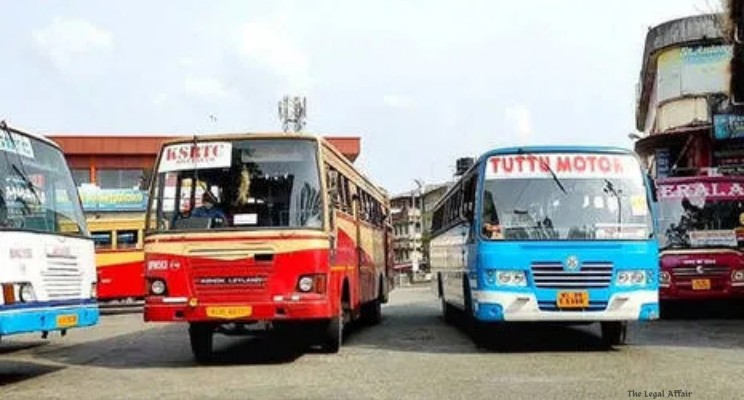
In the case, Suo Motu v. Union of India Represented by the Secretary (Road, Transport, and Highways) [WP(C) 25158/2024 & Connected Cases], the Kerala High Court scrutinized a government order dated December 28, 2024, allegedly exempting Kerala State Road Transport Corporation (KSRTC) buses from adhering to road safety standards. A Division Bench comprising Justice Anil K. Narendran and Justice Muralee Krishna S. sought instructions from the state government and the learned Standing Counsel for KSRTC regarding the exemptions granted, especially concerning modified buses such as the “Munnar Royal View” double-decker tourism bus and other KSRTC buses operating under unsafe conditions. The Court expressed concerns over the extensive modifications violating the Central Motor Vehicle Rules (CMVR) and AIS-008 safety standards, emphasizing the potential risk to public safety.
Arguments of Both Sides:
The learned Standing Counsel for KSRTC and the Special Government Pleader defended the government order under Rule 334 of the Kerala Motor Vehicles Rules, which allowed KSRTC to install multi-colour LED lights in passenger compartments, window glasses, and wheel arches of its buses, specifically for tourism purposes. They argued that these modifications were aimed at enhancing the tourism experience, particularly in destinations like Munnar. Additionally, they sought time to provide an affidavit detailing the rationale behind the exemptions and the measures in place to ensure safety compliance. They also contended that KSRTC, being a state-run entity, requires special considerations to boost tourism and facilitate public transport.
Conversely, the Court expressed concerns about the safety implications of such exemptions. It referred to instances of KSRTC buses flouting AIS-008 guidelines, such as the “Munnar Royal View” bus fitted with multi-colour LED lights and a Sabarimala road bus operating with a single headlight at night. The Court observed that such extensive modifications compromise the driver’s vision and endanger other road users. Highlighting violations of the CMVR, the Court noted that unauthorized lighting and exhaust systems emitting loud sounds and thick smoke posed significant road safety risks. The Court reiterated its previous directions for stricter compliance with the Motor Vehicles Act, particularly during the Sabarimala season when road traffic is heavy, and warned against the promotion of unsafe modifications by vloggers.
Court’s Judgment:
The Kerala High Court took a stern stance on the matter, underscoring the importance of adhering to road safety standards to safeguard public lives. The Court observed visuals of the modified KSRTC buses and noted glaring violations of AIS-008 and CMVR provisions. It pointed out that extensive use of multi-colour LED lights, particularly on double-decker buses, could obstruct the driver’s vision and distract drivers of oncoming vehicles, thereby increasing the likelihood of accidents. Similarly, the operation of buses with compromised headlights was deemed a blatant disregard for road safety.
The Court sought comprehensive affidavits from the KSRTC and the government, demanding clarity on the circumstances under which the December 28, 2024, government order was issued. It questioned the rationale behind invoking Rule 334 of the Kerala Motor Vehicles Rules to exempt KSRTC buses from adhering to safety regulations. The bench also directed the state government to provide a detailed explanation of the safety measures in place to mitigate risks associated with such modifications. The Court scheduled the next hearing for January 31, 2025, emphasizing the need for a balanced approach that considers the importance of road safety while addressing the operational needs of KSRTC.
The bench reiterated its commitment to enforcing road safety norms and ensuring compliance with the Motor Vehicles Act. It warned against the dangers posed by unauthorized modifications and the promotion of such practices through social media platforms. Citing previous actions taken against extensively modified vehicles and vloggers, the Court emphasized that any compromise on safety standards is unacceptable.