


Introduction:
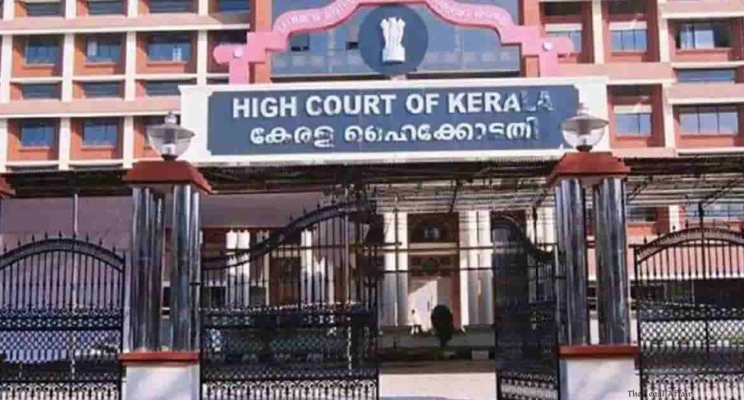
In the case of Adv. Rajesh Vijayan v. Bar Council of India and Another (WP(C) 36545/2025), the Kerala High Court presided over by Justice N. Nagaresh raised significant concerns over the Bar Council of India’s (BCI) recent decision to increase the nomination fee for State Bar Council elections from ₹5,000 to ₹1,25,000—a staggering 2400% hike. The Court, expressing deep apprehension about the impact of such a decision on democratic participation within the legal fraternity, questioned, “Who will be able to contest?” This sharp remark came as part of the Court’s interim proceedings, during which it directed that the status quo be maintained regarding the issuance of notifications for the State Bar Council elections until the matter was fully heard and decided. The controversy arose following the Supreme Court’s direction on September 24, 2025, that State Bar Council elections across the country be concluded by January 31, 2026. Pursuant to this direction, the BCI issued a circular on September 25, calling for the constitution of election committees to initiate the process. However, it also imposed an unprecedented hike in the nomination fee, a move that triggered widespread discontent among lawyers across India, particularly among junior advocates and those from modest financial backgrounds who viewed the decision as discriminatory and exclusionary.
Arguments:
The petitioner, Advocate Rajesh Vijayan, through his counsel, Senior Advocate Santhosh Mathew assisted by a team of advocates including Shinto Mathews Abraham, Arun Thomas, Veena Raveendran, and others, argued that the BCI’s decision was arbitrary, unreasonable, and violative of the principles of equality enshrined in Article 14 of the Constitution of India. The petitioner contended that the exorbitant increase in the nomination fee had no rational basis and effectively restricted the right of lawyers from economically weaker sections to contest elections to the State Bar Council. He further submitted that the BCI had justified this fee hike on the ground that the enrollment fee for new advocates was reduced pursuant to Supreme Court directions. However, the petitioner argued that there was no legal or logical nexus between reducing enrollment fees and drastically increasing the nomination fee for elections. Such an administrative decision, he claimed, violated the democratic spirit of the Bar Council Act, which envisions fair and inclusive representation of all sections of the legal profession. The petitioner also pointed out that the BCI’s circular, issued on September 25, had imposed the fee without any prior consultation with State Bar Councils or the legal community, thereby breaching the principle of transparency and accountability. It was emphasized that the very purpose of having elected State Bar Councils was to ensure grassroots representation of lawyers, and the new policy would exclude the majority of practicing advocates who could not afford to pay ₹1,25,000 merely to file a nomination. Such a move, it was argued, would disproportionately favor the wealthy, senior advocates, or politically connected individuals, leading to monopolization of power within Bar institutions and marginalizing younger lawyers.
On the other hand, the Bar Council of India, represented by Counsel Rajit (Standing Counsel for BCI) and Advocate M. U. Vijayalakshmi (Standing Counsel for BCK), sought time to obtain instructions and clarify the rationale behind the decision. They maintained that the BCI, being the apex regulatory body for legal education and profession in India, had the authority to prescribe such fees as part of its administrative powers under the Advocates Act, 1961. The respondents were likely to argue that the increased nomination fee was intended to streamline the election process, deter frivolous candidatures, and ensure that only serious candidates with genuine intent to serve the Bar contested the elections. It was also anticipated that the BCI might justify the decision as part of an effort to compensate for reduced enrollment revenue after the Supreme Court’s order, ensuring financial sustainability of Bar operations. However, the counsel could not immediately present a detailed defense as the Court granted time for them to take instructions from the BCI leadership.
Judgement:
Justice N. Nagaresh, while acknowledging the BCI’s authority, emphasized that such decisions must be guided by principles of reasonableness, fairness, and inclusion. The Court noted that any policy that potentially restricts democratic participation must withstand the scrutiny of constitutional equality and proportionality. The Court’s oral observation, “Who will be able to contest?” captured the underlying concern—that the fee hike could transform Bar Council elections from a democratic exercise into an elitist event accessible only to a privileged few. The judge further remarked that the purpose of Bar Council elections was to ensure equal opportunity for all practicing advocates, irrespective of their economic status. Therefore, the imposition of such a prohibitive fee would amount to indirectly disqualifying a large section of the Bar, particularly those practicing in smaller towns and rural areas where income levels are significantly lower.
The Kerala High Court’s order maintaining status quo effectively froze the implementation of the BCI’s circular concerning the election notification until further hearing. This means that the BCI cannot proceed with the issuance of election notifications or collect the increased nomination fee until the matter is resolved. The Court scheduled the next hearing for October 15, 2025, granting the BCI time to respond with a detailed explanation. The interim order reflects the Court’s commitment to protecting democratic integrity within professional institutions and ensuring that administrative actions by regulatory bodies do not undermine fundamental rights.
The case holds broader implications beyond the State of Kerala, as the BCI’s circular applies uniformly across all State Bar Councils. Therefore, any judicial pronouncement in this matter could set a precedent affecting the conduct of Bar elections nationwide. If the Court ultimately finds the BCI’s decision to be unconstitutional or arbitrary, it could direct the rollback of the fee hike and potentially mandate guidelines to prevent similar arbitrary changes in the future. On the other hand, if the Court upholds the BCI’s authority, it may lay down conditions ensuring transparency, proportionality, and consultation before implementing such decisions.
The debate also raises crucial questions about accessibility, representation, and fairness within India’s legal profession. Bar Council elections play a vital role in shaping policies concerning legal education, welfare of advocates, disciplinary proceedings, and professional ethics. Excluding economically weaker advocates from contesting would not only undermine democratic participation but also distort the representative character of these institutions. The case therefore resonates with the broader struggle for democratization within the legal fraternity, echoing concerns raised in earlier disputes where the judiciary intervened to protect the inclusivity of professional bodies.
Furthermore, this case may reignite discussions on the need for judicial oversight of the BCI’s administrative decisions. While the BCI is a statutory body entrusted with self-regulation of the legal profession, courts have consistently held that its actions must conform to constitutional principles and cannot be arbitrary or discriminatory. The Kerala High Court’s intervention serves as a reminder that autonomy must coexist with accountability, and decisions affecting the rights of advocates must be subject to judicial scrutiny when they infringe upon the foundational values of equality and fairness.
The Court’s remarks have also generated significant attention among lawyers and Bar associations across the country. Many have welcomed the interim relief, arguing that the judiciary’s intervention was essential to prevent an economic barrier to democratic participation. Several junior advocates, particularly those practicing outside metropolitan areas, have voiced concern that the fee hike, if implemented, would permanently exclude them from contesting elections or participating in Bar governance. Legal commentators have described the Kerala High Court’s stance as a reaffirmation of the constitutional ideal that democracy must remain inclusive and participatory at every institutional level.
The Kerala High Court’s handling of this issue also demonstrates the judiciary’s proactive role in preserving the balance between autonomy and fairness within professional regulatory frameworks. By ordering the BCI to maintain status quo and by questioning the proportionality of the fee hike, the Court has signaled that any policy, even if framed by a statutory body, must withstand the test of reasonableness and should not undermine the broader public interest it seeks to serve. The case will be crucially watched when it returns for hearing on October 15, 2025, as it may determine whether the judiciary will compel the BCI to revise or withdraw its controversial decision.
Ultimately, the outcome of this case will likely shape how democratic elections are conducted within Bar Councils across India and influence future governance reforms within the legal profession. The Kerala High Court’s interim observations reflect a broader judicial philosophy—that equality before the law must translate into equality of opportunity within the institutions that uphold the law.