


Introduction:
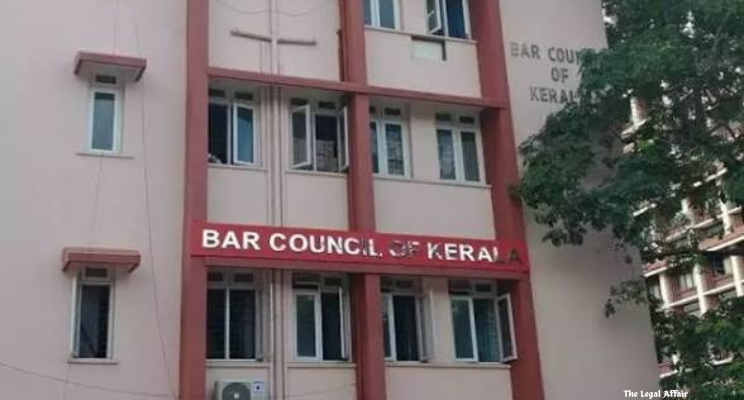
The Kerala High Court has strongly criticised the manner in which the Bar Council of Kerala and the committees then managing its affairs attempted to bring about the removal of its Secretary by manipulating records and creating an impression that her resignation had already been accepted before she withdrew it. In Simy S. v. Bar Council of Kerala and Others, W.P.(C) No. 2772 of 2026, Justice Ziyad Rahman A.A. held that the petitioner was entitled to withdraw her resignation under the applicable Kerala Service Rules and directed the authorities to permit her to resume her duties.
The case concerned Simy S., who was serving as Secretary of the Bar Council of Kerala. She had submitted a resignation letter in circumstances which, according to her, were brought about by pressure exerted by members of the committees managing the Bar Council. The dispute subsequently centred on whether her resignation had been validly accepted before she submitted a letter withdrawing it.
The controversy acquired a serious dimension because the petitioner alleged that the records relating to the resignation had been manipulated after the event to defeat her right to withdraw the resignation. The High Court, after examining the circumstances surrounding the alleged acceptance, found substantial material supporting the allegation and described the conduct of the concerned respondents as a “calculated, fraudulent attempt” involving manipulation of records and concoction of documents.
The Bar Council of Kerala is a statutory body entrusted with important responsibilities concerning the legal profession in the State. The Court therefore viewed the alleged manipulation particularly seriously, observing that such conduct could not reasonably be expected from an institution responsible for maintaining professional standards and protecting the interests of members of the legal profession.
The petitioner had initially submitted her resignation after an incident concerning the recording of the proceedings of a committee meeting. For the purpose of preparing minutes, she had recorded the meeting on her mobile phone. She was subsequently made to believe that such recording constituted an improper or illegal act and that disciplinary or other action could be initiated against her. According to the petitioner, the circumstances placed her under considerable pressure, resulting in the submission of her resignation.
However, the petitioner did not intend to permanently relinquish her post. On the very next day, she submitted a communication withdrawing her resignation. Her case was that the resignation had not been validly accepted by the competent authority before the withdrawal was communicated.
The respondents, however, took a different position. They claimed that the then Chairman of the Bar Council had accepted the resignation and that this acceptance had subsequently been ratified by the committees managing the Council. On that basis, the petitioner was informed that her resignation had already taken effect and that her subsequent attempt to withdraw it could not be accepted.
The petitioner challenged this position before the High Court. She contended that the Chairman did not possess independent authority to accept her resignation on behalf of the Bar Council. According to her, the Bar Council or the competent committee was the authority empowered to deal with her appointment and resignation.
The petitioner further relied upon the terms of the bond executed in connection with her appointment, under which the Kerala Service Rules were made applicable to her service. Rule 23 of Chapter III, Part I of the Kerala Service Rules became central to the dispute because it regulates resignation and its withdrawal.
The petitioner argued that a resignation does not automatically become effective merely because an employee submits a resignation letter. The applicable rules require acceptance by the competent authority and relieving of the employee from service. Until those conditions are fulfilled, the resignation remains capable of being withdrawn in accordance with the Rules.
The High Court was therefore required to determine not merely whether a document purporting to accept the resignation existed, but whether the person who made the alleged acceptance possessed the legal authority to do so and whether the acceptance had actually taken place before the petitioner withdrew her resignation.
The Court also examined the factual circumstances surrounding the alleged endorsement of acceptance. The resignation had allegedly been sent to the residence of the then Chairman on the evening of January 7, 2026, after the relevant committee meeting. The petitioner disputed the circumstances in which the alleged endorsement was said to have been made.
The Court found the chronology and physical circumstances significant. The Bar Council office and the Chairman’s residence were approximately 75 kilometres apart. The meeting had concluded at around 8.30 p.m., yet an endorsement was allegedly made on the resignation on the same evening. The Court also noted the absence of corresponding entries in the inward and outward registers.
These circumstances, when considered together, raised serious doubts about the authenticity and timing of the alleged acceptance. The Court ultimately concluded that the petitioner had withdrawn her resignation before it was validly accepted by a competent authority.
The judgment consequently deals with two interconnected issues: the legal effect of resignation under the Kerala Service Rules and the limits of the authority exercised by the Chairman of the Bar Council. It also addresses the much more serious question of whether statutory bodies can rely upon manipulated records to defeat the legal rights of their employees.
Arguments of the Parties:
The petitioner, Simy S., challenged the communications through which she was informed that her resignation had been accepted and that her subsequent withdrawal of the resignation had been rejected. She argued that the entire process was legally defective because the person who purportedly accepted her resignation lacked the authority to do so.
The petitioner’s principal contention was that the Bar Council of Kerala was the authority responsible for her appointment and that the Chairman, acting individually, could not substitute himself for the competent authority. The Chairman was only one member among the persons involved in the management of the Bar Council and had not been granted any special or specific power enabling him to make a binding decision regarding the petitioner’s resignation.
According to the petitioner, even assuming that the Chairman had personally endorsed the resignation letter, such an endorsement could not amount to lawful acceptance unless it was made by the competent authority under the governing rules.
The petitioner also relied upon the terms governing her appointment. She pointed out that the bond executed at the time of her appointment expressly incorporated the Kerala Service Rules. This was significant because Rule 23 of Chapter III, Part I of the KSR provides the legal framework concerning resignation and its withdrawal.
The petitioner argued that under the Rule, resignation becomes effective only after the competent authority accepts it and the employee is relieved from service. A resignation submitted by an employee is, in this sense, an offer to relinquish service rather than an act that automatically terminates the employment relationship.
She therefore contended that she retained the right to withdraw the resignation before it was validly accepted and acted upon. Since she had submitted her withdrawal on the very next day, the withdrawal preceded the alleged ratification relied upon by the respondents.
The petitioner also challenged the factual authenticity of the alleged acceptance. She submitted that the endorsement said to have been made by the Chairman on the resignation letter was itself doubtful. The surrounding circumstances, including the timing of the alleged endorsement and the absence of corresponding entries in official registers, were relied upon to contend that the record had subsequently been manipulated.
The petitioner further maintained that the resignation itself had been obtained in circumstances involving pressure. The dispute arose after she recorded a committee meeting on her phone for the purpose of preparing the minutes. She was allegedly told that recording the proceedings was impermissible and that action could be taken against her. According to her, the resignation was therefore not a voluntary and final relinquishment of her post.
The respondents, including the Bar Council and its then office bearers, resisted the petition. They contended that the Chairman had accepted the resignation when it was sent to his residence on the evening of January 7, 2026. Their position was that the subsequent ratification by the committees managing the Council validated the decision.
The respondents also disputed the petitioner’s understanding of who constituted the competent authority. They pointed out that the regular term of the Bar Council had expired and that three committees were then managing its affairs. These included the Executive Committee, Enrolment Committee and Committee of Office Bearers. According to the respondents, because the petitioner had been appointed after the expiry of the regular term of the Council, the committees were the relevant appointing authority and possessed the power to accept her resignation.
The respondents therefore argued that the resignation had been validly accepted and subsequently ratified. Once the committees had approved the decision, according to their case, the petitioner could no longer withdraw the resignation.
They also contended that the decision whether to accept or reject a resignation rested with the competent authority and that the petitioner could not claim an absolute right to continue in office after the resignation had been accepted.
The person subsequently appointed to replace the petitioner also opposed the relief sought. The replacement appointee disputed the applicability of the Kerala Service Rules to the petitioner’s service and contended that the KSR could not automatically govern employment under the Bar Council.
This raised an additional legal issue concerning the source of the petitioner’s right to withdraw her resignation. If the KSR did not apply, the respondents argued, the petitioner could not rely upon Rule 23 to contend that her withdrawal was legally binding.
The respondents therefore urged the High Court to uphold the communications by which the petitioner was informed of the acceptance of her resignation and the rejection of her withdrawal. Their position was that the resignation had already been acted upon and that the appointment of her replacement had created a further reason for refusing to restore her to the post.
The High Court consequently had to balance these competing positions by examining the applicable service rules, the structure and authority of the committees managing the Bar Council, the validity of the Chairman’s alleged acceptance and the factual circumstances surrounding the creation and movement of the resignation document.
Court’s Judgment:
Justice Ziyad Rahman A.A. allowed the petition and quashed the two communications issued by the Bar Council concerning the petitioner’s resignation. The Court concluded that the resignation had not been validly accepted before it was withdrawn and that the petitioner was therefore entitled to resume her position as Secretary.
A central part of the judgment concerned the authority of the then Chairman. The Court examined the structure under which the Bar Council was being administered at the relevant time and noted that the affairs of the Council were being managed by three committees constituted for that purpose.
The Court found that the Chairman was only one member of those committees and had not been entrusted with any independent or specific power enabling him to make a decision on behalf of the committees. His personal acceptance of the resignation therefore could not automatically be treated as an acceptance by the competent authority.
The Court made it clear that even if, for the sake of argument, the Chairman had accepted the resignation, such acceptance could not possess the legal effect attributed to it by the respondents. An individual office bearer cannot exercise a statutory or institutional power unless that power has actually been conferred upon him.
This finding was particularly important because the respondents attempted to rely upon the subsequent ratification of the Chairman’s decision. The Court held that the initial act of acceptance could not be transformed into a valid decision merely by describing it as subsequently ratified where the relevant legal authority and procedure had not been satisfied.
The Court then turned to Rule 23 of Chapter III, Part I of the Kerala Service Rules. The provision became crucial because it establishes the conditions under which resignation becomes effective and recognises the employee’s ability to withdraw a resignation before those conditions are fulfilled.
The Court found that two essential stages had not been completed in the present case. First, there had been no valid acceptance of the resignation by the competent authority. Second, the petitioner had not been relieved from service pursuant to a valid acceptance.
The Court consequently held that the resignation had not acquired final legal effect when the petitioner submitted her withdrawal.
The Court treated the resignation as an offer to relinquish service rather than an automatic termination of employment. Until the offer is accepted by the competent authority in accordance with the applicable rules and the employee is relieved, the employee retains the ability to withdraw the resignation where the governing service rules permit such withdrawal.
The petitioner had submitted her withdrawal on the very next day. Therefore, on the facts found by the Court, the withdrawal came before the resignation had been validly accepted.
The judgment also rejected the respondents’ attempt to rely upon the alleged endorsement made by the Chairman on the resignation letter. The Court undertook a detailed examination of the surrounding circumstances and found significant reasons to doubt the genuineness and timing of the endorsement.
One circumstance that particularly concerned the Court was the alleged movement of the document after the committee meeting. The meeting had concluded at approximately 8.30 p.m. on January 7, 2026, while the Chairman’s residence at Chavakkad was around 75 kilometres from the Bar Council office.
The Court found the circumstances surrounding the alleged delivery of the document and endorsement on the same evening highly improbable. The physical distance and timing created serious doubt as to whether the endorsement could genuinely have been made in the manner claimed by the respondents.
The absence of entries in the official inward and outward registers further strengthened the Court’s doubts. Such registers ordinarily provide a contemporaneous record of the movement and receipt of official documents. The absence of any corresponding entry was therefore treated as significant.
After considering these circumstances collectively, the Court concluded that the alleged endorsement could not be accepted as a genuine and legally effective act.
The Court went further and strongly criticised the manner in which the records had apparently been handled. It found materials indicating a planned attempt to manipulate documents and create a record that would defeat the petitioner’s right to withdraw her resignation.
The Court described the conduct as a “calculated, fraudulent attempt” involving manipulation of records and concoction of documents. It stated that the respondents had attempted to deny the petitioner’s legitimate rights through unlawful means.
The criticism was especially strong because the first respondent was the Bar Council of Kerala, a statutory institution connected with the regulation and welfare of the legal profession. The Court observed that such manipulation of records was not conduct that could reasonably be expected from a body entrusted with responsibilities relating to a noble profession.
The Court’s remarks serve as a reminder that statutory bodies are subject to a high standard of institutional accountability. Their decisions must not only be substantively lawful but must also be supported by genuine, contemporaneous and reliable records.
The Court also rejected the proposition that the Chairman’s alleged acceptance could be treated as sufficient simply because the committees later purported to ratify it. The authority to make the original decision must exist in the first place. A subsequent administrative endorsement cannot necessarily cure an act performed without jurisdiction.
This principle assumes particular significance in statutory bodies where powers are distributed among committees and office bearers. An office bearer cannot unilaterally exercise powers belonging to a collective body unless the governing statute, rules or a valid delegation expressly permits such action.
The Court therefore concluded that the petitioner’s resignation remained legally capable of withdrawal when she submitted the withdrawal letter.
The judgment also dealt with the argument concerning the applicability of the Kerala Service Rules. The Court accepted the petitioner’s reliance upon the applicable service conditions and found Rule 23 relevant to determining the legal status of the resignation.
The Court’s reasoning essentially rests upon the distinction between submission of a resignation and its legal acceptance. An employee’s communication expressing an intention to resign does not necessarily terminate service immediately. Where the governing rules require acceptance by the competent authority and relieving from duty, both requirements must be satisfied before the resignation becomes effective.
In the present case, neither requirement had been validly fulfilled before the petitioner withdrew her resignation.
The Court consequently quashed the two impugned communications. The first communication had informed the petitioner that her resignation had been accepted and subsequently ratified. The second communication had rejected her withdrawal of the resignation.
Both communications were found unsustainable because they were founded upon an invalid acceptance and an erroneous rejection of the petitioner’s withdrawal.
The Court further directed the authorities to take necessary steps to enable Simy S. to rejoin her post as Secretary. Since another person had been appointed in the meantime to replace her, the authorities were directed to make the necessary arrangements by relieving the person who had been appointed in her place.
The judgment therefore restored the petitioner’s position and recognised her continuing service relationship with the Bar Council.
The decision carries significance beyond the immediate dispute because it highlights the importance of procedural legality within statutory institutions. A statutory body cannot bypass prescribed procedures merely because an office bearer believes that an administrative decision is necessary or convenient.
The ruling also reinforces the principle that resignation must be considered within the framework of the applicable service rules. Whether an employee can withdraw a resignation depends upon the governing legal regime, but where the rules expressly permit withdrawal before valid acceptance and relieving, the employer cannot defeat that right through an unauthorised or fabricatedacceptance.
The Court’s treatment of the alleged manipulation is