


Introduction:
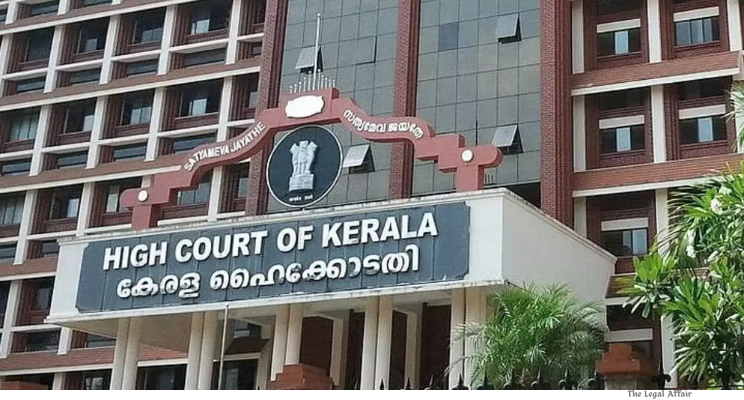
The Kerala High Court in a landmark ruling delivered by Justice P.M. Manoj addressed the critical issue of arbitrary repudiation of medical insurance claims by public sector insurers, specifically the Life Insurance Corporation of India (LIC). The judgment was pronounced in two connected writ petitions filed by Dr. A. M. Muraleedharan against the Senior Divisional Manager, LIC, and another respondent. The case revolved around LIC’s rejection and restriction of claims under its Health Plus Plan (Table 901) for the hospitalization and medical treatment of the petitioner’s wife. The claims were rejected on the ground of “pre-existing illness,” citing a hernia surgery that had been performed nearly a decade before the insurance policy was issued. LIC argued that suppression of medical history justified repudiation and further asserted that health benefits under the plan were tied only to enumerated surgical procedures rather than actual medical expenses. The petitioner, represented by advocates R. Parthasarathy and B. Krishnan, argued that the repudiation was not only arbitrary but also contrary to Section 45 of the Insurance Act, 1938, which bars insurers from questioning policies after two years of issuance, except in cases of fraud. The Court quashed LIC’s repudiation, emphasizing that non-disclosure is material only if it has a direct nexus to the medical condition for which the claim is filed. The Court reaffirmed that health insurance contracts are instruments of social security and that denial of claims on trivial or unrelated grounds not only breaches contractual obligations but also violates the right to life under Article 21 of the Constitution of India.
Arguments of the Petitioner:
The petitioner, Dr. A. M. Muraleedharan, a long-standing policyholder under LIC’s Health Plus Plan (valid until March 31, 2024), contended that the insurer had acted arbitrarily and illegally in repudiating his claims. He highlighted that his policy commenced in 2008, with premiums paid diligently, and the repudiation occurred only after years of regular contributions. His first claim in 2016 for his wife’s hysterectomy, amounting to ₹60,093, was settled for a mere ₹5,600 on the ground that the policy allowed only a pre-determined daily allowance. Subsequently, a second claim of ₹1,80,000 for hospitalization and treatment of his wife for vesicovaginal fistula was outrightly rejected on the basis of alleged non-disclosure of a hernia surgery she underwent in 2006.
The petitioner’s counsel argued that Section 45 of the Insurance Act, 1938, barred LIC from repudiating the policy on such grounds, as more than two years had passed since the policy’s commencement in 2008. The law allows repudiation only in cases of fraud, which was not alleged here. He further stressed that the alleged “pre-existing condition” (hernia surgery in 2006) had no nexus with the present ailment (vesicovaginal fistula), thereby rendering the repudiation wholly unsustainable.
Relying on precedents such as Life Insurance Corporation of India v. Asha Goyal [(2001) 2 SCC 160], the petitioner argued that writ jurisdiction under Article 226 is available when repudiation of insurance claims results in miscarriage of justice, even though insurance disputes are typically contractual. He further emphasized that contracts of insurance are governed by the principle of contra proferentem, meaning any ambiguity in the policy terms must be construed against the drafter, i.e., the insurer. Thus, LIC’s reliance on vague or ambiguous clauses to deny claims was contrary to law.
The petitioner also asserted that denial of medical insurance effectively denies access to healthcare, violating the fundamental right to life under Article 21, as recognized in Paschim Banga Khet Mazdoor Samithi v. State of West Bengal [1996 (4) SCC 37] and Consumer Education and Research Centre v. Union of India [1995 (3) SCC 42]. The petitioner urged the Court to direct LIC to honour the claim without further delay, as its conduct had not only caused financial loss but also immense mental agony.
Arguments of the Respondent (LIC):
The Life Insurance Corporation of India, represented by counsel L. Lakshmy, defended its repudiation on multiple grounds. First, it argued that the Health Plus Plan under which the petitioner had taken the policy was designed to cover only specific enumerated surgical procedures with benefits linked to predetermined allowances, not actual medical expenses. Therefore, according to LIC, the claim was rightly restricted in the first instance and rejected in the second instance as it did not fall within the policy’s scope.
Second, LIC argued that insurance contracts are contracts of uberrima fides (utmost good faith), requiring full disclosure of all material facts by the insured at the time of entering into the contract. The petitioner had failed to disclose his wife’s past medical history, specifically the hernia surgery of 2006. LIC maintained that this omission amounted to suppression of material fact, entitling the insurer to repudiate the claim.
LIC also submitted that insurance is a contractual relationship, and repudiation based on non-disclosure falls squarely within the insurer’s rights. It questioned the maintainability of the writ petition, arguing that such disputes should be resolved in civil courts rather than under Article 226 jurisdiction. The respondent further insisted that the principle of fairness under uberrima fides applies equally to both parties and that suppression by the insured strikes at the root of the insurance contract, thereby justifying repudiation.
Court’s Judgment:
Justice P.M. Manoj, delivering the judgment, set aside LIC’s repudiation orders and allowed the petitioner’s writ petitions. The Court first addressed the maintainability of the writ petition and relied on LIC of India v. Asha Goyal, holding that writ jurisdiction is indeed maintainable where claim repudiation results in miscarriage of justice or breach of natural justice. Thus, the Court had the authority to examine the arbitrariness of LIC’s decision.
On the substantive issues, the Court emphasized that suppression of pre-existing conditions can justify repudiation only if the non-disclosed ailment is material to the risk and has a direct nexus with the condition for which the claim is made. In this case, the non-disclosure of a hernia surgery from 2006 had no nexus whatsoever with the treatment of vesicovaginal fistula in 2016. Therefore, the repudiation was unjustified. The Court stressed that allowing repudiation on such trivial grounds would mean that even unrelated past medical conditions could be used to deny insurance claims, defeating the very object of health insurance.
The Court further invoked Section 45 of the Insurance Act, 1938, which provides that no insurance policy can be questioned on the ground of misstatement after two years of issuance, except in cases of fraud. Since the policy was issued in 2008 and the claims arose in 2016, LIC was statutorily barred from raising the issue of non-disclosure. The Court also highlighted that the legislative intent behind Section 45 is to balance the insured’s duty of disclosure with the need for certainty and finality in insurance contracts, ensuring that insurers cannot escape liability on technical grounds after years of accepting premiums.
Applying the principle of contra proferentem, the Court held that any ambiguity in the policy terms must be construed against the insurer. LIC’s reliance on vague clauses to deny claims was therefore invalid. The Court added that denial of medical claims amounts to denial of treatment and violates the right to life under Article 21. Public sector insurers like LIC, which are entrusted with providing security against unforeseen contingencies, cannot repudiate claims on unsubstantial grounds.
In conclusion, the Court quashed LIC’s orders restricting and rejecting the claims, directed LIC to honour the claims without further delay, and reaffirmed that arbitrary repudiations undermine the very foundation of insurance as a social security mechanism.