


Introduction:
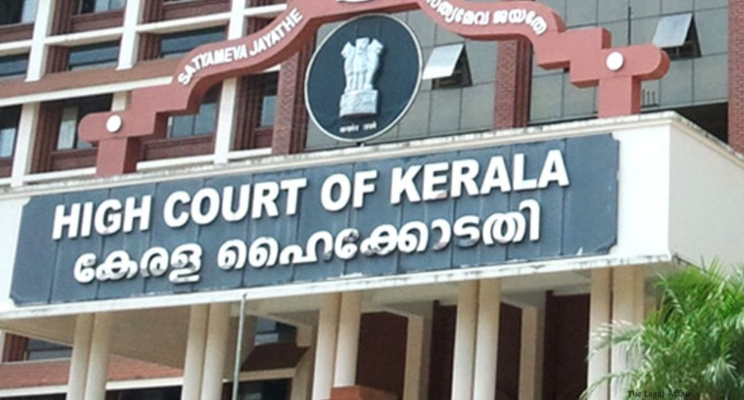
The case of P.S. Vijayakumaran v. Union of India and Ors., WP(C) 32947/2025, citation 2025 LiveLaw (Ker) 550, came before the Kerala High Court where Justice N. Nagaresh dealt with a significant issue concerning the rights of retired government employees who pursue a law degree through evening classes and subsequently seek enrollment as advocates. The petitioner, a retired government employee, had obtained his LL.B. degree in 1994 by attending evening classes and later applied for enrollment with the Bar Council of Kerala. His application, however, was denied on technical grounds related to the mode of study and the classification provided in the enrollment portal. The petitioner was represented by advocates P.V. Uttara and Samah Abdul Majid, while the respondents were represented by Deputy Solicitor General O.M. Shalina, along with counsel Rajit (for the Bar Council of India) and M.U. Vijayalakshmi (for the Bar Council of Kerala). The case raised important questions regarding the validity of law degrees obtained through evening classes prior to 2008, the scope of the Bar Council’s discretion in accepting applications, and the issue of high enrollment fees imposed on retired individuals seeking to enter the legal profession.
Arguments:
The petitioner argued that despite completing a valid LL.B. degree, he was being discriminated against merely because the degree was obtained through evening classes. He emphasized that his degree was earned in 1994, well before the 2008 notification of the Bar Council of India that imposed restrictions on part-time or correspondence courses for legal education. Thus, his qualification could not be invalidated retrospectively. He further pointed out that the Bar Council of Kerala’s enrollment portal did not even provide an option for “evening classes,” leaving him in a situation where he was unable to upload accurate details of his degree. Counsel for the petitioner argued that this technical deficiency should not result in denial of enrollment, as the law recognizes degrees earned before 2008 regardless of the mode of study. In addition, the petitioner challenged the exorbitant enrollment fee demanded from retired employees, relying upon the Supreme Court ruling in Gaurav Kumar v. Union of India, which held that excessive enrollment fees cannot be justified as a barrier to entering the legal profession. He asserted that demanding such a fee from a retired individual, who had already served the government, was arbitrary and unconstitutional. His side thus contended that he should be permitted to enroll as an advocate upon payment of the statutory fee and that the Bar Council should be directed to make its online system more flexible to accommodate candidates like him.
On the other hand, the respondents, particularly the standing counsel for the Bar Council of Kerala, clarified that the petitioner would only need to pay the statutory fee of ₹750 for enrollment, and no exorbitant fee would be demanded in his case. They conceded that while the petitioner studied in evening classes, his degree dated back to 1994, which placed him outside the purview of the 2008 restrictions. Therefore, there was no substantive obstacle to his enrollment. The difficulty, they argued, arose only from the enrollment portal system maintained by the Bar Council, which lacked a separate option for evening classes. To resolve this, the standing counsel suggested that the petitioner could apply under the “part-time” option in the system, which would serve the same purpose and not prejudice his rights. They stressed that the Bar Council had no objection to the petitioner’s enrollment as long as he complied with the minimal statutory requirements, and any apprehension about high enrollment fees was misplaced. The respondents further argued that while administrative challenges exist in updating digital portals, such issues should not be treated as grounds for judicial interference beyond what is necessary. Their position was that the petitioner’s grievance could be resolved smoothly without striking down the system or issuing sweeping directions against the Bar Council.
Judgement:
After hearing both sides, Justice N. Nagaresh delivered a pragmatic judgment that sought to balance fairness with administrative realities. The Court observed that the petitioner had completed his LL.B. degree in 1994, much before the 2008 notification that imposed restrictions on evening and correspondence courses. As such, his degree was valid and recognized, and there was no legal impediment to his enrollment as an advocate. The Court emphasized that a candidate cannot be denied enrollment merely because the online portal lacks an option to specifically classify evening class degrees. Such technical shortcomings in the enrollment system cannot override substantive legal rights. The Court also noted the concession made by the standing counsel for the Bar Council of Kerala that the petitioner would only be required to pay ₹750 as statutory enrollment fees. Relying on this statement, the Court directed that upon payment of this statutory fee, the petitioner should be permitted to enroll as an advocate. To resolve the portal issue, the Court accepted the suggestion that the petitioner could select the “part-time” option while submitting his online application, clarifying that this would not affect the validity of his degree or enrollment status.
In disposing of the petition, the Court underscored that administrative or technical barriers should not become roadblocks for qualified candidates to enter the legal profession, especially when they have earned valid degrees prior to the regulatory changes. It reiterated the importance of ensuring accessibility and fairness in the enrollment process, particularly for retired individuals who seek to contribute to the legal profession after completing their service. The Court also acknowledged the petitioner’s reliance on Gaurav Kumar v. Union of India, recognizing that enrollment fees must be reasonable and not act as a barrier to entry into the legal profession. However, since the Bar Council itself clarified that the petitioner only needed to pay the statutory fee of ₹750, the grievance on that ground no longer survived. The Court, therefore, disposed of the petition with a clear direction that the petitioner could proceed with his enrollment under the “part-time” option and that the Bar Council must accept his application once the statutory fee was paid.
This judgment is significant as it reflects the judiciary’s commitment to ensuring that the legal profession remains accessible and that procedural or administrative hurdles do not deprive individuals of their rights. It also highlights the evolving recognition of degrees obtained through evening classes before the 2008 restrictions, which continue to remain valid. Importantly, it sends a message that the Bar Councils, while maintaining their regulatory authority, must adapt their systems and processes to accommodate diverse candidates, including retired individuals and those with older qualifications. By adopting a practical approach, the Court not only safeguarded the rights of the petitioner but also set a precedent for similar cases where technical deficiencies in portals or arbitrary fee demands may hinder legitimate claims.