


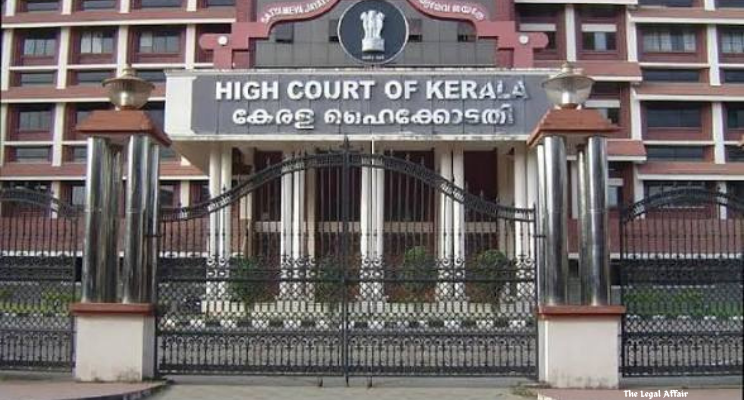
Introduction:
The Kerala High Court has held that Tahsildars are competent to issue legal heirship certificates irrespective of the monetary value of the properties or assets left behind by a deceased person. Justice Bechu Kurian Thomas, in [case name as provided in the record], examined the legal status of the financial ceiling prescribed under paragraph 236 of the Kerala Village Manual and held that the ₹5 lakh limit cannot operate as a legal restriction on the issuance of a legal heirship certificate.
The writ petition arose after the petitioner’s application for a legal heirship certificate was rejected by the revenue authorities. The petitioner’s wife had died while the family was residing in the United States. According to the authorities, the deceased had lived abroad for several years, making it practically difficult for the revenue officials to identify her legal heirs. The rejection of the application eventually brought the petitioner before the High Court.
The dispute, however, raised a broader legal question. Could a person be denied a legal heirship certificate merely because the property or assets involved exceeded the monetary ceiling mentioned in the Kerala Village Manual? More fundamentally, could a provision contained in an administrative manual restrict the authority of a Tahsildar to identify the legal heirs of a deceased person when there was no dispute concerning the succession?
Justice Bechu Kurian Thomas answered the question in the negative. The Court examined the nature and purpose of a legal heirship certificate and distinguished it from documents that determine ownership or succession rights. It emphasised that such a certificate merely identifies the persons who claim to be the legal heirs of the deceased. It does not itself create, transfer or establish title over the deceased person’s property.
The Court also noted an important gap in the existing legal framework. There is no comprehensive codified statutory law in Kerala specifically governing the issuance of legal heirship certificates. While paragraph 236 of the Kerala Village Manual provides an administrative mechanism for issuing such certificates in specified circumstances, it also refers to a financial ceiling of ₹5 lakh. The Court found no rational relationship between the value of the property and the status of an individual as a legal heir.
The judgment is significant because legal heirship certificates are routinely required for administrative and record-related purposes following the death of a person. Government departments, financial institutions and other authorities frequently require such certificates before changing records or recognising persons claiming through a deceased individual. If the revenue authorities were prevented from issuing certificates merely because the value of the estate exceeded ₹5 lakh, persons could be left without a practical administrative mechanism even where there was no dispute regarding who the legal heirs were.
The Court therefore held that the competent Revenue Officer, namely the Tahsildar, can issue a legal heirship certificate under paragraph 236 of the Village Manual irrespective of the value of the property involved. At the same time, it urged the State Government to introduce an appropriate statutory provision or rules to provide a clear legal framework governing the issuance of such certificates.
Arguments of the Parties:
The petitioner approached the Kerala High Court after his application for a legal heirship certificate was rejected by the authorities. His wife had died while the family was residing in the United States, and the authorities had expressed difficulty in identifying her legal heirs because she had lived abroad for a considerable period.
The petitioner’s grievance was essentially that the absence of a legal heirship certificate created an administrative difficulty in dealing with the affairs of the deceased. A legal heirship certificate is commonly required for changing official records and dealing with assets or other matters standing in the name of a deceased person. Without such a certificate, the surviving family members may face considerable practical difficulties even when there is no actual dispute regarding succession.
The petitioner therefore sought the intervention of the High Court against the rejection of his application. The issue ultimately went beyond the individual circumstances of the petitioner because the authorities relied upon the framework contained in the Kerala Village Manual, including the financial ceiling mentioned in paragraph 236.
The State was represented by Government Pleader Anirudh Kadavil. The State authorities maintained their position concerning the difficulties involved in identifying the legal heirs, particularly in view of the fact that the deceased had lived abroad for several years. The case thus required the Court to consider the administrative mechanism available to the revenue authorities and the extent to which the Village Manual governed the issuance of legal heirship certificates.
Paragraph 236 of the Kerala Village Manual contains provisions relating to certificates of succession in specified situations. It also refers to a monetary ceiling of ₹5 lakh. In cases where there is a dispute, the provision contemplates approaching the civil court for appropriate relief, including a Succession Certificate or an Administration Certificate from the Administrator General, depending upon the nature of the assets and circumstances involved.
The State’s position therefore had to be considered against this existing administrative framework. However, the Court was not persuaded that the financial ceiling could be treated as an absolute legal prohibition preventing the Tahsildar from issuing a legal heirship certificate whenever the value of the property exceeded ₹5 lakh.
The distinction between a legal heirship certificate and a certificate determining succession rights was central to the Court’s consideration. The petitioner’s claim was not that the revenue authorities should determine title to the deceased person’s property. Rather, the certificate sought by him was intended to identify the legal heirs for administrative purposes.
This distinction was important because determining who is entitled to inherit property and determining who may be recorded as a legal heir are not necessarily the same exercise. Questions concerning title, competing claims, validity of a Will, or disputes regarding succession may require adjudication by a competent court. But where there is no dispute and the certificate is sought only for routine administrative purposes, the Court found no justification for denying the revenue authority the ability to identify the legal heirs merely because the estate was worth more than ₹5 lakh.
The State’s concern regarding the identification of heirs was also addressed within this framework. The Court recognised that authorities may have to conduct appropriate verification before issuing a certificate, particularly where the deceased lived outside India or where the available records are insufficient. However, such practical difficulties cannot be converted into a permanent legal barrier against the issuance of a certificate.
The Court therefore considered the matter from the perspective of the purpose served by a legal heirship certificate and the absence of a statutory provision establishing the ₹5 lakh ceiling as an absolute limit.
Court’s Judgment:
Justice Bechu Kurian Thomas examined the legal position governing legal heirship certificates in Kerala and began by noting that there is no comprehensive codified statute specifically regulating their issuance. The Kerala Village Manual provides an administrative framework, and paragraph 236 deals with certificates of succession in specified circumstances.
The Court particularly examined the ₹5 lakh ceiling mentioned in that provision. It found that the ceiling could not logically determine whether a person was a legal heir of a deceased individual.
The Court drew a clear distinction between identifying legal heirs and deciding ownership or title over property. A legal heirship certificate does not confer title upon the persons named in it. The rights of individuals in the estate of a deceased person continue to be governed by the applicable law of succession, or by the terms of a valid Will where succession takes place through testamentary disposition.
In other words, merely because a person is mentioned in a legal heirship certificate does not mean that the certificate itself establishes that person’s ownership over every property of the deceased. The certificate serves primarily as an administrative document identifying the persons recognised as legal heirs for relevant purposes.
The Court observed that a legal heirship certificate is generally useful for administrative and record-related purposes. It is commonly relied upon when records concerning the properties or affairs of a deceased person have to be altered or updated.
This aspect was significant because several governmental and private authorities require a legal heirship certificate before carrying out changes following the death of an account holder, property holder, employee or other individual. If revenue authorities could issue such certificates only where the value of the assets remained below ₹5 lakh, an important administrative mechanism would become unavailable in a large number of cases.
The Court therefore examined whether there was any rational connection between the value of property and the identity of a deceased person’s legal heirs. It found none.
The Court observed that it was “curious” that legal heirship was being connected with a financial limit because the status of a person as a legal heir does not change depending upon the value of the estate inherited. A person who is a legal heir of a deceased individual does not cease to be one merely because the deceased owned property worth more than ₹5 lakh.
The Court accordingly held that there could be no rational basis for treating the monetary value of the estate as a determining factor for the issuance of a legal heirship certificate.
This reasoning led the Court to hold that, where there is no dispute, the revenue authorities must be able to issue legal heirship certificates under paragraph 236 of the Village Manual irrespective of the quantum of property involved.
The Court was also careful to preserve the distinction between an administrative certificate and judicial adjudication. It clarified that if a certificate incorrectly includes a person who is not actually a legal heir, the certificate can be challenged before the appropriate forum.
Thus, the judgment does not mean that a legal heirship certificate conclusively determines inheritance rights. It simply recognises the certificate as an administrative instrument for identifying legal heirs. Any substantive dispute over title, succession, competing claims or the validity of a Will remains subject to the applicable law and the jurisdiction of the competent court.
The Court also considered the relationship between legal heirship certificates and Succession Certificates issued under the Indian Succession Act, 1925. It noted that Sections 370 to 374 of the Indian Succession Act deal with Succession Certificates in relation to debts and securities. Such certificates therefore operate in a different field from a general legal heirship certificate.
Similarly, the Court referred to the role of the Administrators General Act, 1963, which operates within its own statutory framework and monetary limitations. These provisions cannot be treated as providing a complete substitute for a general administrative mechanism for identifying legal heirs in every situation.
This distinction revealed a significant gap in the existing system. If the ₹5 lakh ceiling in the Village Manual were treated as an absolute restriction, cases involving property exceeding that value, particularly immovable properties, could fall into a practical grey area. A person could be unable to obtain a routine administrative certificate even though there was no dispute among the persons claiming to be heirs.
The Court was unwilling to accept such an outcome.
It held that the absence of a comprehensive statutory framework cannot result in a situation where individuals are deprived of an effective administrative mechanism for establishing their legal-heir status for routine purposes. Until appropriate legislation or rules are framed, the existing administrative machinery must continue to function in a manner consistent with the purpose of the certificate.
The Court therefore held that the competent Revenue Officer, namely the Tahsildar, is entitled to issue a legal heirship certificate under paragraph 236 of the Kerala Village Manual irrespective of the value or quantum of the property involved.
The ruling effectively removes the ₹5 lakh ceiling as a bar to the issuance of a legal heirship certificate. It does not, however, eliminate the need for verification by the revenue authorities or prevent courts from examining disputed succession claims. Where there is a genuine dispute regarding the identity of heirs or their rights in the estate, the appropriate judicial forum can still be approached.
The Court also urged the State Government to address the larger issue by enacting a proper statutory provision or framing appropriate rules governing the issuance of legal heirship certificates. Such legislation would provide clarity regarding the procedure, verification requirements, evidentiary material and circumstances in which revenue authorities can issue the certificates.
Ultimately, the Kerala High Court disposed of the writ petition with the clarification that the Tahsildar is not prevented from issuing a legal heirship certificate merely because the value of the deceased person’s property exceeds ₹5 lakh.
The judgment therefore establishes an important administrative principle: legal heirship is a matter of status, not a matter of property value. The monetary worth of the deceased person’s estate cannot determine whether the surviving heirs can obtain a certificate identifying them as legal heirs. Questions concerning actual ownership and inheritance rights remain governed by the relevant succession law, while the legal heirship certificate continues to serve its important administrative and record-related function.