


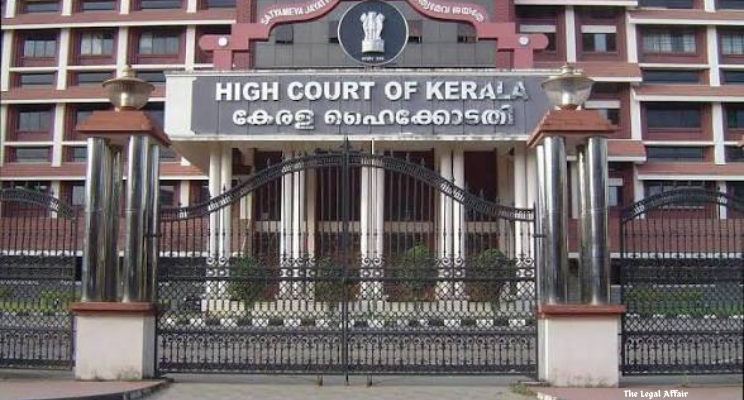
Introduction:
In a matter that has attracted intense public attention due to its intersection with interfaith marriage, personal liberty, criminal law, and allegations under special statutes, the Kerala High Court on May 29 heard anticipatory bail proceedings involving the husband of the woman popularly referred to as the “viral Kumbh Mela star.” The case, titled Moh Farmaan and Another v. State of Kerala and Others, B.A. No. 1644 of 2026, came up before Dr. Justice Kauser Edappagath.
The controversy emerged after the young woman, who became nationally known during the Maha Kumbh celebrations after videos of her selling rudraksha garlands went viral on social media, married Moh Farmaan while residing in Kerala. Earlier, in March 2026, the woman had reportedly approached local authorities in Kerala alleging opposition from her family regarding her relationship and intended marriage to Farmaan, who belongs to a different religion.
Subsequently, the woman’s father filed a complaint before the Madhya Pradesh police alleging that his daughter had been abducted. The complaint eventually led to registration of criminal proceedings against Farmaan. The matter escalated further when the National Commission for Scheduled Tribes (NCST) reportedly observed that the woman was allegedly a minor at the time of marriage and that forged documents may have been used to facilitate the wedding. Following these developments, offences under the Protection of Children from Sexual Offences Act (POCSO Act) were invoked against Farmaan.
During the pendency of the anticipatory bail proceedings before the Kerala High Court, the Madhya Pradesh police informed the Court that an offence under Section 3(2)(v) of the Scheduled Castes and Scheduled Tribes (Prevention of Atrocities) Act, 1989 had also been incorporated against Farmaan. This significantly altered the legal landscape of the case because Section 18 of the SC/ST Act bars the applicability of anticipatory bail under Section 438 of the Criminal Procedure Code in cases involving offences under the Act.
The proceedings before the Kerala High Court therefore raised several important legal questions, including whether an anticipatory bail plea could be entertained by a High Court situated outside the State where the crime was registered, whether the petitioners could amend their pleadings at an advanced stage of proceedings, and whether the incorporation of offences under the SC/ST Act completely barred the maintainability of the anticipatory bail application.
The matter also reflected the broader constitutional tensions between personal liberty and the operation of stringent penal statutes such as the POCSO Act and the SC/ST Act. While the petitioners argued that they were facing threats and hostility because of their interfaith marriage, the State contended that the proceedings involved serious allegations attracting statutory restrictions against grant of anticipatory bail.
At the conclusion of the hearing, the Kerala High Court extended interim protection from arrest granted earlier to the couple till June 2 and reserved orders on the amendment application filed by them.
Arguments of the Parties:
The principal submissions on behalf of the Madhya Pradesh Government were advanced by Additional Solicitor General S.V. Raju, who strongly opposed both the maintainability of the anticipatory bail application and the amendment petition filed by the couple.
At the outset, the ASG informed the Court that the investigating agency had incorporated an offence under Section 3(2)(v) of the Scheduled Castes and Scheduled Tribes (Prevention of Atrocities) Act, 1989 against Farmaan. It was submitted that the woman belonged to a Scheduled Tribe community, whereas Farmaan did not belong to a Scheduled Caste or Scheduled Tribe community. Consequently, the offence attracted the bar contained in Section 18 of the SC/ST Act, which expressly excludes the applicability of anticipatory bail provisions under Section 438 of the Criminal Procedure Code.
The ASG argued that once an offence under the SC/ST Act had been invoked, the anticipatory bail application itself became legally non-maintainable. Referring to the statutory framework, he submitted that Section 3(2)(v) provides enhanced punishment where certain serious offences under the Indian Penal Code are committed against a person belonging to a Scheduled Caste or Scheduled Tribe. Since such allegations had now been incorporated into the case, the Court’s jurisdiction to entertain anticipatory bail stood barred by operation of law.
The State also questioned the maintainability of the plea before the Kerala High Court itself. According to the prosecution, the criminal case had been registered in Madhya Pradesh and therefore any regular anticipatory bail application ought to have been moved before the competent courts within that State. The ASG contended that the petitioners could not invoke the jurisdiction of the Kerala High Court merely because they claimed apprehension or inconvenience in travelling to Madhya Pradesh.
Opposing the amendment application filed by the couple, the ASG argued that the petitioners were attempting to fill lacunae in their original anticipatory bail plea after shortcomings had been pointed out during earlier hearings. According to him, the amendment did not concern subsequent events arising after filing of the petition but related to facts that were already within the knowledge of the petitioners at the time the original plea was drafted.
The ASG submitted that instead of filing a reply to the objections raised by the State, the petitioners had sought to introduce new averments specifically designed to overcome the deficiencies highlighted by the prosecution. Such amendments, he argued, could not be permitted merely to improve the legal foundation of an otherwise defective petition.
It was further argued that the petitioners had made misleading assertions before the Court regarding their inability to approach courts in Madhya Pradesh due to alleged threats. The ASG pointed out that the petitioners had admittedly filed a writ petition before the Madhya Pradesh High Court after filing the anticipatory bail application in Kerala. According to him, this demonstrated that they were fully capable of availing legal remedies before the courts in Madhya Pradesh without any actual physical risk.
The prosecution also stressed that filing of anticipatory bail applications does not necessarily require physical presence within the State where the case is registered. The ASG argued that affidavits and pleadings could easily be sworn and transmitted from another State. Therefore, the petitioners’ argument that they could not safely travel to Madhya Pradesh was, according to the State, legally irrelevant for determining maintainability.
On the other hand, Advocate M. Sasindran, appearing for the couple, defended both the amendment application and the maintainability of the anticipatory bail proceedings before the Kerala High Court.
Counsel for the petitioners argued that the anticipatory bail plea had been filed in Kerala because the couple faced serious threats and hostility owing to their interfaith marriage. Referring to photographs and other materials placed before the Court, the petitioners alleged that extremist elements had publicly insulted and attacked their marriage by burning photographs and engaging in acts of intimidation.
According to the petitioners, the atmosphere of hostility and communal tension made it unsafe for them to travel to Madhya Pradesh. Counsel submitted that even within Kerala they were unable to move freely despite interim protection granted by the Court. It was argued that the apprehension of danger was genuine and formed the very basis for invoking the jurisdiction of the Kerala High Court.
The petitioners also sought to justify the amendment application by relying upon the Supreme Court’s decision in S.R. Sukumar v. S. Sunaad Raghuram (2015). Counsel argued that the settled legal position permits amendments even at advanced stages of proceedings so long as the objective is to secure substantial justice and enable complete adjudication of the dispute.
It was submitted that the powers of the High Court under Section 528 of the Bharatiya Nagarik Suraksha Sanhita are broad enough to permit procedural flexibility where required in the interests of justice. The petitioners maintained that the amendment merely clarified and elaborated existing pleadings rather than introducing wholly new allegations.
Counsel also clarified that although the petitioners had approached the Madhya Pradesh High Court through a writ petition, the affidavit in that proceeding had actually been sworn in Kerala itself. According to the petitioners, this did not negate their apprehension regarding safety concerns associated with travelling physically to Madhya Pradesh.
The petitioners further attempted to portray the prosecution as motivated and retaliatory. They argued that even after interim protection from arrest was granted by the Kerala High Court, additional offences under the Child Marriage Act and the SC/ST Act were incorporated into the case. According to the couple, these actions demonstrated an effort to intensify criminal liability and frustrate their attempts to seek legal protection.
The submissions before the Court therefore reflected a deeply contested dispute involving not only technical questions of criminal procedure but also larger concerns surrounding interfaith marriage, personal liberty, statutory bars under special legislations, and the balance between procedural safeguards and prosecutorial powers.
Court’s Judgment:
At the present stage of proceedings, the Kerala High Court did not finally decide the anticipatory bail plea or conclusively rule upon the maintainability objections raised by the State. However, the hearing before Dr. Justice Kauser Edappagath produced several important observations concerning the legal issues involved.
The Court primarily considered two immediate questions: whether the amendment application filed by the petitioners should be allowed, and whether interim protection granted earlier ought to continue pending further consideration of the matter.
During the hearing, Justice Kauser Edappagath appeared inclined to recognise that the proposed amendments substantially related to clarifications of existing pleadings rather than introduction of entirely fresh claims. While acknowledging the objections raised by the prosecution, the Court observed that there were already sufficient pleadings on record and that the amendment largely sought to incorporate more precise wording and elaboration of the petitioners’ case.
This observation indicated that the Court was conscious of the principle that procedural rules should ordinarily facilitate adjudication on merits rather than obstruct substantive justice through technicalities. At the same time, the Court refrained from immediately allowing the amendment application and reserved orders on the issue after hearing both sides extensively.
An important development during the proceedings was the prosecution’s submission that Section 3(2)(v) of the SC/ST Act had now been added against Farmaan. The Court took note of the argument advanced by the ASG that Section 18 of the SC/ST Act creates a statutory bar against anticipatory bail. Although the Court did not deliver a final ruling on this issue during the hearing, the incorporation of offences under the SC/ST Act clearly emerged as a significant legal hurdle for the petitioners.
The Court also considered the competing submissions regarding jurisdiction and maintainability. While the State maintained that anticipatory bail should ordinarily be sought before courts in Madhya Pradesh where the FIR was registered, the petitioners relied upon alleged threats and safety concerns arising from their interfaith marriage to justify approaching the Kerala High Court.
Without conclusively resolving the jurisdictional dispute at this stage, the Court appeared mindful of the petitioners’ apprehensions regarding personal safety. This became evident when the ASG urged the Court not to extend interim protection from arrest any further. The prosecution argued that the Supreme Court had repeatedly emphasised that interim protection in anticipatory bail matters should remain temporary in nature and not continue indefinitely.
Despite these objections, the Kerala High Court decided to extend interim protection granted to the couple until June 2. However, the Court made it clear that such extension was only temporary and linked to the pendency of the amendment issue and further hearing of arguments.
The Court’s decision to continue interim protection, albeit briefly, reflected a cautious balancing exercise. On one hand, the Court acknowledged the serious statutory objections raised by the State, particularly concerning the SC/ST Act bar. On the other hand, it recognised that immediate withdrawal of protection could potentially expose the petitioners to arrest before their legal contentions were fully considered.
The proceedings also highlighted the increasingly complex legal consequences that arise when multiple special statutes overlap in criminal cases. The incorporation of offences under the POCSO Act, Child Marriage Act, and SC/ST Act collectively transformed the matter from a simple anticipatory bail dispute into a legally sensitive proceeding involving stringent statutory restrictions.
Although no final adjudication was delivered on May 29, the Court’s observations suggest that the upcoming proceedings will likely focus on whether the statutory bar under Section 18 of the SC/ST Act completely excludes the jurisdiction of the High Court to entertain anticipatory bail, and whether extraordinary circumstances relating to personal liberty and safety concerns can justify limited judicial protection despite such restrictions.
The matter therefore remains legally significant not only because of its high-profile factual background but also because it raises important procedural questions regarding inter-state anticipatory bail, amendment of pleadings in criminal proceedings, and the interaction between personal liberty and statutory prohibitions under special criminal laws.
Ultimately, the Kerala High Court’s interim approach demonstrates judicial caution in dealing with emotionally charged and legally complex disputes. By reserving orders on the amendment application while temporarily extending protection, the Court sought to preserve the status quo until a more detailed examination of the maintainability and statutory issues could take place.