


Introduction:
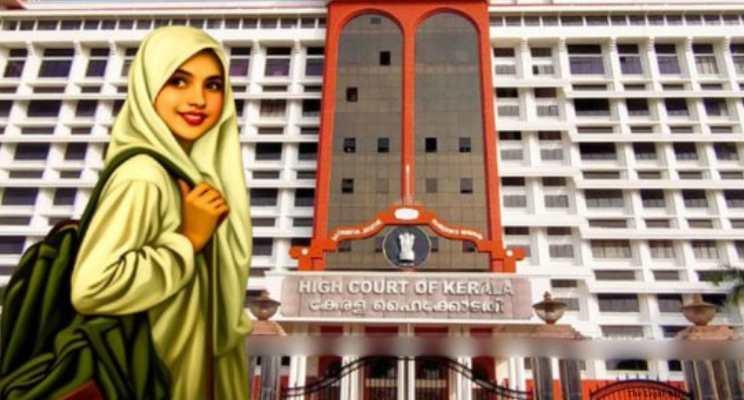
In the matter of Manager, St. Rita’s Public School v. State of Kerala and Ors., the Kerala High Court, through Justice V G Arun, directed the State Attorney to obtain instructions regarding a directive issued by the Deputy Director of Education (DDE), Ernakulam, which asked St. Rita’s Public School—a Christian minority management school affiliated with the Central Board of Secondary Education (CBSE)—to permit a Muslim girl student to attend classes wearing a headscarf. The petition was filed by the school challenging the directive on grounds of jurisdictional overreach and infringement on institutional autonomy. The Court, while refusing to grant an interim stay against the directive, emphasized that no coercive steps could be taken as the school is CBSE-affiliated. The school management had earlier sought police protection following alleged threats and mob intrusion regarding its uniform policy, which had been granted. The petition highlighted that the Kerala Education Department, including the DDE, lacked authority over internal regulations of CBSE schools, which are governed by the Central Board of Secondary Education. The school relied on the 2018 Kerala High Court decision in Fathima Thasneem & Another v. State of Kerala, which upheld that individual rights cannot supersede institutional discipline in uniform matters. The Court’s direction was procedural, requesting the State to furnish instructions while refusing interim relief.
Arguments by the Petitioner:
The petitioners, represented by counsel Bimala Baby, Magi Pavithran, Roshan Shaji, Remya Thomas, and Jasmine Ligy, contended that St. Rita’s Public School, being an unaided minority Christian institution affiliated with CBSE, enjoys autonomy in regulating internal affairs, including uniform policies. The school argued that the DDE’s directive permitting a Muslim girl student to wear a headscarf intruded into the school’s internal governance and infringed upon its rights under the Constitution to administer minority educational institutions. They emphasized that CBSE schools follow centrally prescribed rules, and no state authority, including the Education Department, has statutory powers to alter these rules or override uniform codes.
The counsel further highlighted that enforcing the directive would undermine the secular and inclusive ethos of the institution, potentially creating religious discord and setting a precedent for violations of uniform discipline. They relied on the 2018 ruling in Fathima Thasneem, where the Kerala High Court had affirmed that while individual rights are important, they cannot override institutional discipline in matters of uniforms and internal regulations. The petitioners also contended that coercive enforcement could lead to public unrest, unnecessary confrontation, and potential threats to the safety of students and staff.
The petition sought quashing of the DDE notice, a declaration that the State lacked jurisdiction over CBSE schools, and an interim injunction restraining coercive action against the institution. It was argued that any deviation from the uniform code should be determined by the school management and CBSE, not by State officers acting beyond their jurisdiction. The petitioners underlined the need for protecting the school’s right to maintain discipline, unity, and institutional values.
Arguments by the Respondents:
The State, represented through the State Attorney, contended that the DDE’s directive was issued in the larger interest of promoting inclusivity and accommodating religious practices. The respondents argued that educational institutions must comply with directives aimed at ensuring the rights of individual students to freely practice their religion, in accordance with constitutional guarantees. The State emphasized the importance of balancing institutional discipline with the fundamental rights of students under Articles 25 and 26 of the Constitution, which protect religious freedom.
It was submitted that the directive was not intended to override the school’s policies arbitrarily but to accommodate reasonable requests from students in a manner consistent with their constitutional rights. The State urged the Court to consider that educational institutions operate within a broader framework of statutory and policy obligations, which include fostering inclusivity and equality in access to education. While the school is CBSE-affiliated, the respondents argued that state education officers have a role in monitoring adherence to inclusive policies and ensuring no student is discriminated against on religious grounds.
The respondents requested that the Court ensure compliance with the directive while also maintaining harmony within the school environment. They highlighted that the directive was not coercive and that guidance was issued to facilitate a balance between individual religious rights and institutional rules. The State maintained that instructions should be clarified and followed in consultation with the school management to prevent conflict and uphold constitutional principles.
Court’s Judgment:
The Kerala High Court, through Justice V G Arun, directed the State Attorney to obtain instructions regarding the DDE’s directive allowing a Muslim girl student to attend classes wearing a headscarf. The Court emphasized that no interim relief could be granted, including a stay on the directive, observing that coercive action could not be taken because the school is CBSE-affiliated. Justice Arun remarked that the Court was not passing an order merely for formality but expected the State to furnish precise instructions regarding the matter.
The bench highlighted that CBSE schools fall under central regulatory frameworks and unaided minority institutions enjoy autonomy in determining internal policies, including dress codes. The Court observed that enforcement of the directive without proper instructions could undermine the autonomy of minority educational institutions and potentially create tension among students and staff. The High Court refrained from deciding on the merits of the case at this stage, instead directing the State to clarify its position regarding the jurisdiction of the DDE over CBSE schools.
The Court acknowledged the school’s concerns regarding safety, discipline, and the potential for unrest arising from deviation from uniform codes. It recognized that while students’ fundamental rights to religious expression are protected, these must be harmonized with institutional autonomy and centrally mandated rules governing CBSE schools. The bench refused to grant interim orders, reiterating that no coercive steps can be initiated against the school until the State submits clear instructions. The Court’s approach demonstrated a careful balance between individual rights, institutional autonomy, and administrative oversight.