


Introduction:
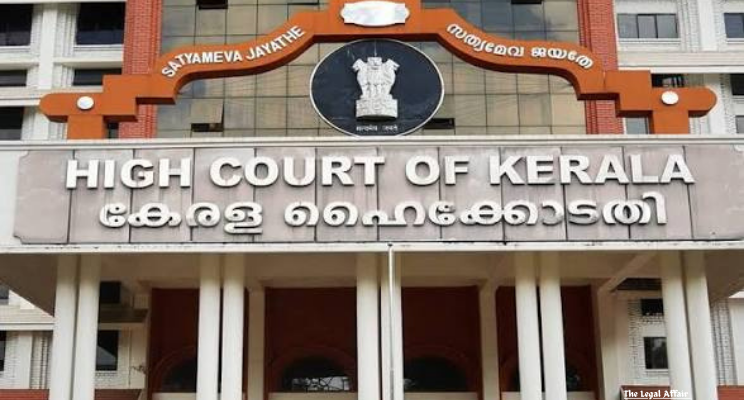
The Kerala High Court, in Adv. K.M. Shajahan v. State of Kerala and Others (WP(Crl.) No. 968 of 2026), passed an important interim order directing the Additional Chief Secretary of the Home Department to take a decision within two weeks on a representation seeking a vigilance enquiry into the alleged irregular appointment of two bodybuilders as Armed Police Inspectors. Justice A. Badharudeen observed that the representation had remained pending before the Home Department for more than two months after being forwarded by the Vigilance and Anti-Corruption Bureau (VACB), warranting judicial intervention to ensure that the competent authority discharged its statutory responsibility without further delay.
The writ petition was instituted by Advocate K.M. Shajahan, who alleged that the appointments of bodybuilders Shinu Chova and Chitharesh Natesan as Inspectors in the Kerala Police Department were made in violation of law and were the result of corruption, abuse of official position and political influence during the tenure of the Left Democratic Front (LDF) Government. According to the petitioner, several senior officials, including the State Police Chief Ravada Chandrasekhar IPS, S. Sreejith IPS, Biswanath Sinha IAS and P. Sasi, played a role in facilitating the appointments, thereby attracting the provisions of the Prevention of Corruption Act and necessitating an independent vigilance enquiry.
The petitioner had earlier submitted a detailed representation dated April 21, 2026 before the Director of the Vigilance and Anti-Corruption Bureau requesting registration of an open enquiry into the alleged misconduct. The VACB subsequently forwarded the complaint to the Government on April 23, 2026 for obtaining the sanction and decision required under the applicable legal framework. However, despite the lapse of more than two months, no decision had been taken by the Home Department regarding the request for a vigilance enquiry.
Apart from the allegations of corruption, the litigation also brought into focus broader questions concerning public appointments under Rule 39 of Part II of the Kerala State and Subordinate Services Rules (KS&SSR), the scope of judicial review over executive appointments, the procedure for ordering vigilance enquiries against senior public officials, and the extent to which constitutional courts may intervene when administrative authorities fail to decide pending representations within a reasonable time.
During the pendency of the proceedings, the High Court had already directed the Principal Secretary (Home) to produce the complete official files relating to the appointments of Shinu Chova and Chitharesh Natesan. In compliance with the earlier order, the Government produced the relevant files before the Court in a sealed cover. The proceedings also witnessed the impleadment of Shinu Chova, who sought to defend the legality of his appointment and place his case before the Court before any adverse observations could be made.
The order, though interlocutory in nature, assumes significance because it underscores the obligation of administrative authorities to act expeditiously on complaints involving allegations of corruption against senior public functionaries while simultaneously maintaining the distinction between judicial scrutiny of administrative action and adjudication of disputed questions relating to appointments.
Arguments of the Parties:
The petitioner, Advocate K.M. Shajahan, contended that the appointments of Shinu Chova and Chitharesh Natesan as Armed Police Inspectors were tainted by illegality, favouritism and political interference. According to the petitioner, the appointments were not ordinary service matters but reflected a larger pattern of abuse of official authority involving influential bureaucrats and political functionaries. It was argued that the material placed before the authorities disclosed sufficient grounds for ordering a vigilance enquiry under the Prevention of Corruption Act and allied legal provisions.
The petitioner maintained that the representation submitted before the Vigilance and Anti-Corruption Bureau had already been forwarded to the Government for necessary action. However, despite the passage of more than two months, the Home Department had failed to take any decision regarding sanction for conducting an open enquiry. Such inaction, it was submitted, defeated the very purpose of vigilance mechanisms intended to ensure accountability and transparency in public administration. The petitioner therefore sought a judicial direction compelling the competent authority to consider the representation within a time-bound period.
The State, represented by the Government Pleader, informed the Court that the representation dated April 21, 2026 had indeed been received by the Vigilance and Anti-Corruption Bureau and had been forwarded to the Government on April 23, 2026 for obtaining the sanction required to proceed with an open enquiry. It was submitted that the representation was presently pending consideration before the Additional Chief Secretary of the Home Department. While not disputing the pendency of the complaint, the State indicated that the matter remained under active consideration by the competent authority.
During the hearing, Shinu Chova sought to intervene in the proceedings through an impleading application. His counsel submitted that since the writ petition directly questioned the circumstances surrounding his appointment, any order passed without hearing him would adversely affect his rights and reputation. Consequently, he requested that he be permitted to participate in the proceedings.
On merits, counsel appearing for Chova defended the legality of the appointment by contending that it had been made in accordance with Rule 39 of Part II of the Kerala State and Subordinate Services Rules. It was argued that the Rules empower the Government, in appropriate circumstances, to make appointments outside the ordinary recruitment process. Therefore, the appointment could not automatically be treated as illegal merely because it did not arise through a conventional recruitment exercise.
During the course of oral exchanges, the Court questioned whether appointments to such posts could be made without conducting a regular recruitment process and whether the Government possessed unrestricted authority to appoint any person of its choice. In response, counsel for Chova referred to the well-known appointment of former Indian football captain I.M. Vijayan under similar circumstances, suggesting that exceptional appointments based on outstanding achievements had historical precedent.
Justice Badharudeen, however, orally distinguished the two situations by observing that I.M. Vijayan had earned national recognition through his extraordinary sporting achievements and had represented the country at the highest level. The Court questioned whether a similar level of distinction or eligibility existed in Chova’s case and sought clarification regarding the basis on which he had been considered for appointment.
Chova’s counsel further submitted that the legality of his appointment was already under challenge before the Kerala Administrative Tribunal (KAT), where the dispute relating to service matters was pending adjudication. It was argued that if any allegation under the Prevention of Corruption Act was to be pursued against senior officials, the appropriate remedy lay before the competent criminal court in accordance with law rather than through collateral proceedings questioning the appointment itself.
It was also pointed out that the Government Order relating to the appointment had been issued in 2019 and that the present challenge had been initiated after a considerable lapse of approximately six years. According to the intervenor, such delay was a relevant factor while examining the maintainability of the allegations.
During the hearing, the Court orally clarified that the principal issue before it was not the legality of the appointment order as such but whether any illegality had attended the process leading to the issuance of that Government Order. The Court also enquired whether Chova had actually joined service after his appointment.
Counsel for Chova informed the Court that although he had joined the training camp pursuant to the appointment, he was subsequently informed during the induction process that he need not continue further. Aggrieved by that action, he had already approached the Kerala Administrative Tribunal, where the matter remained pending consideration.
Court’s Judgment:
Justice A. Badharudeen did not enter into the merits of the allegations concerning corruption or the legality of the appointments at this interlocutory stage. Instead, the Court confined itself to ensuring that the competent executive authority discharged its statutory responsibility by taking a decision on the representation seeking vigilance action.
Recording the submission made on behalf of the State that the complaint had been forwarded by the Vigilance and Anti-Corruption Bureau to the Government as early as April 23, 2026, the Court noted that the representation had remained pending before the Additional Chief Secretary of the Home Department for more than two months without any final decision. The Court observed that prolonged administrative inaction in matters involving allegations against senior public officials could not be permitted to continue indefinitely.
Consequently, Justice Badharudeen directed the Additional Chief Secretary, Home Department, to take an appropriate decision on the representation within a period of two weeks and further ordered that a report regarding such decision be placed before the Court. The direction was intended not to prejudge the merits of the complaint but to ensure that the competent authority considered the request in accordance with law and discharged its statutory obligation within a reasonable period.
The Court also took note of the fact that, pursuant to an earlier judicial direction, the Government had produced the entire files relating to the appointments of Shinu Chova and Chitharesh Natesan before the Court in a sealed cover. Recognising the sensitivity of the documents and the pendency of the proceedings, the Court directed the Registry to preserve the records in safe custody until further orders. This measure ensured that the original records remained protected and available for future judicial scrutiny whenever required.
Another important procedural development was the Court’s decision to allow the impleading application filed by Shinu Chova. Since there was no objection to his participation, Justice Badharudeen permitted him to become a party to the proceedings. The Court orally observed that any person whose rights or interests were likely to be affected by the outcome of the case should be afforded an opportunity of being heard before any adverse findings were recorded. This approach reflects the well-established principle of natural justice embodied in the rule of audi alteram partem, which requires that no person should be condemned without being given a fair opportunity to present his case.
The oral observations made during the hearing also indicated the Court’s attempt to delineate the scope of the present proceedings. Justice Badharudeen clarified that the Court was not presently examining whether the appointment order itself was legally valid. Rather, the focus of the proceedings was whether any illegality, corruption or abuse of official authority had preceded or accompanied the issuance of the Government Order. This distinction is significant because the challenge to the appointment itself was already pending before the Kerala Administrative Tribunal, whereas the present writ petition primarily sought consideration of a vigilance enquiry into the alleged conduct of senior officials.
The Court’s interaction with counsel also highlighted the distinction between exceptional appointments permissible under service rules and appointments allegedly influenced by extraneous considerations. While Rule 39 of the Kerala State and Subordinate Services Rules may permit appointments in exceptional situations, the Court indicated that such power is not immune from judicial scrutiny if allegations of mala fides, arbitrariness or corruption are raised. At the same time, the Court refrained from expressing any conclusive opinion on these issues until the relevant materials were fully examined.
The interim order thus reflects judicial restraint combined with administrative accountability. Rather than embarking upon a factual inquiry into disputed allegations at this preliminary stage, the High Court ensured that the statutory authority entrusted with considering the complaint acted within a defined timeframe. Simultaneously, by preserving the official files and permitting the affected appointee to participate in the proceedings, the Court safeguarded procedural fairness and ensured that all stakeholders would have an opportunity to present their respective cases before any final adjudication.
Accordingly, the Kerala High Court directed the Additional Chief Secretary of the Home Department to decide the pending representation seeking a vigilance enquiry within two weeks, ordered preservation of the sealed records relating to the appointments, allowed the impleading application filed by Shinu Chova, and listed the matter for further consideration on July 17, 2026. The order underscores the constitutional principle that allegations involving public appointments and possible abuse of official power must receive timely administrative consideration while ensuring that the rights of all affected parties are protected through adherence to the principles of natural justice and due process.