


Introduction:
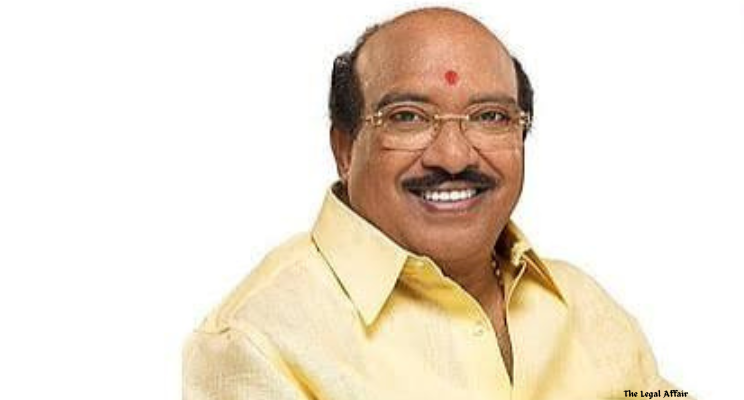
In an important judgment concerning the scope of judicial review over civilian honours, the Kerala High Court declined to interfere with the conferment of the Padma Bhushan upon Sree Narayana Dharma Paripalana (SNDP) Yogam General Secretary Vellappally Natesan, holding that the mere pendency of criminal cases does not constitute a valid ground to invalidate a national honour conferred by the President of India. The decision was delivered by a Division Bench comprising Chief Justice Soumen Sen and Justice Syam Kumar V.M. in Sree Narayana Dharma Prabodhana Sarnrakshna Samithi v. Union of India and Others. The Court dismissed a Public Interest Litigation (PIL) challenging the conferment of the Padma Bhushan upon Natesan, while observing that the statutory framework governing Padma Awards itself provides a mechanism for cancellation of the award if circumstances warrant such action in the future.
The controversy arose after Vellappally Natesan was selected for the Padma Bhushan, India’s third-highest civilian honour, in recognition of his contributions to social service in Kerala. The award was formally conferred by the President of India shortly before the matter came up for consideration before the High Court. The petitioner, Sree Narayana Dharma Prabodhana Sarnrakshna Samithi, questioned the legality of the decision on the ground that Natesan was facing several criminal and vigilance cases, including allegations relating to cheating, misappropriation of funds and the widely discussed Microfinance case.
According to the petitioner, honouring a person against whom multiple criminal proceedings were pending would undermine the dignity and credibility associated with one of the country’s highest civilian honours. It was argued that such a decision violated the constitutional guarantee of equality under Article 14 of the Constitution and eroded public confidence in the process governing national awards. The petitioner accordingly sought a declaration that the conferment of the Padma Bhushan was arbitrary and illegal, together with a direction quashing the award.
The case required the High Court to balance competing constitutional and legal considerations. On one hand was the petitioner’s contention that public honours should not be bestowed upon persons facing serious criminal allegations. On the other hand was the established principle of criminal jurisprudence that every individual enjoys the presumption of innocence until proven guilty by a competent court. The Court was also required to consider the statutory scheme governing Padma Awards, particularly the powers vested in the President to annul or cancel an award in appropriate circumstances.
Ultimately, the High Court concluded that judicial interference was unwarranted at the present stage, particularly in the absence of any conviction against the awardee and in light of the statutory safeguards already available under the governing rules.
Arguments of the Parties:
The petitioner, Sree Narayana Dharma Prabodhana Sarnrakshna Samithi, contended that the conferment of the Padma Bhushan upon Vellappally Natesan was arbitrary, illegal and contrary to the principles underlying national civilian honours. It was submitted that Natesan had been arrayed as an accused in several criminal cases involving allegations of cheating, criminal breach of trust, misappropriation of funds and other offences. Reference was also made to multiple vigilance cases, including the Microfinance case, in which serious allegations had been levelled against him.
According to the petitioner, national honours such as the Padma Bhushan symbolise the highest standards of integrity, public service and moral leadership. Granting such recognition to a person against whom numerous criminal proceedings were pending would diminish the prestige attached to the award and adversely affect public confidence in the selection process. It was argued that the decision suffered from arbitrariness and therefore violated Article 14 of the Constitution.
The petitioner also submitted that the conferment of the award during the pendency of the writ petition raised questions of propriety. Advocate D. Anil Kumar argued that once the challenge to the proposed conferment was pending before the High Court, the Union of India ought to have sought the Court’s permission before proceeding with the formal conferment of the award. It was further contended that the High Court retained the power to restore the previous position by directing status quo ante and setting aside the conferment despite the ceremony having already taken place.
The petitioner further emphasised that one of the prayers in the writ petition sought a declaration that Natesan was ineligible to receive the Padma Bhushan. According to the petitioner, the Court therefore continued to possess jurisdiction to examine the legality of the conferment notwithstanding the fact that the award had already been formally presented by the President.
The Union of India opposed the writ petition and defended the conferment of the award. It submitted that the selection process for Padma Awards involves recommendations examined by a duly constituted committee before being placed before the President of India. The decision to confer the honour is ultimately based upon the subjective satisfaction of the competent authorities after evaluating the contributions made by the proposed awardee in the relevant field.
The Union pointed out that none of the criminal cases relied upon by the petitioner had culminated in conviction. Most of the proceedings remained at the stage of registration of First Information Reports or investigation, while in one important case further proceedings had been stayed by the Supreme Court. It was argued that mere pendency of criminal proceedings cannot automatically disqualify a person from receiving a civilian honour, particularly when the allegations remain untested in a court of law.
The respondents further relied upon the statutory framework governing Bharat Ratna and Padma Awards. It was submitted that the relevant rules expressly empower the President to annul or cancel an award if circumstances subsequently justify such action. Consequently, even assuming that an awardee is later convicted or found guilty of conduct inconsistent with the dignity of the honour, an effective mechanism already exists to revoke the award.
Court’s Judgment:
The Division Bench dismissed the Public Interest Litigation and declined to interfere with the conferment of the Padma Bhushan upon Vellappally Natesan. Although the detailed judgment is awaited, the Court’s oral observations clearly indicate the legal principles that guided its decision.
At the outset, the Court observed that during the pendency of the writ petition, the Padma Bhushan had already been formally conferred upon Natesan by the President of India. Justice Syam Kumar V.M. noted that the principal prayers seeking to restrain or quash the conferment had effectively become infructuous because the conferment itself had already taken place.
The petitioner’s submission that the Court could nevertheless restore the previous position by directing status quo ante did not persuade the Bench. Instead, the Court proceeded to examine whether any legal basis existed to interfere with the award after its conferment.
A significant factor influencing the Court’s decision was the absence of any conviction against the awardee. The Division Bench specifically noted that although several criminal cases had been registered against Natesan, trials had not commenced in any of them. The Court further observed that in one of the important criminal proceedings, the Supreme Court had stayed further proceedings, indicating that the matter itself remained sub judice.
The Bench emphasised that mere registration of criminal cases or pendency of complaints cannot deprive an individual of the presumption of innocence recognised under Indian criminal jurisprudence. Chief Justice Soumen Sen succinctly observed during the hearing:
“Merely because a criminal complaint is there, that does not make you a convict, doesn’t make you an accused… One was stayed by Supreme Court so Supreme Court must have found something prima facie… At any rate, there is possibility of annulling it… It is just like the Representation of People Act. Can a candidate be stopped from filing his candidature merely because a FIR is registered? He is much more. He is representing people. Same analogy. There is a power of annulling it also.”
Through this analogy, the Court highlighted a well-established constitutional principle governing electoral law. Just as the mere registration of an FIR does not automatically disqualify a candidate from contesting elections under the Representation of the People Act, the existence of pending criminal proceedings cannot by itself operate as an absolute disqualification for the conferment of civilian honours.
The Court also took note of the statutory framework governing Bharat Ratna, Padma Vibhushan, Padma Bhushan and Padma Shri awards. The governing rules expressly empower the President to annul or cancel an award if circumstances so warrant. Upon such cancellation, the recipient’s name may be removed from the official register and the award, along with the sanad, may be required to be surrendered.
The Division Bench specifically observed:
“Under the statute and rules for the awards of Bharat Ratna, Padma Vibhushan, Padma Bhushan and Padma Sri, the President has the power to annul and cancel the award… If the person is convicted, there is a provision for the Union of India for annulling such Padma Bhushan. At this stage, we do not find any reason to interfere with the conferment of the award of Padma Bhushan.”
This reasoning demonstrates that the Court considered the statutory mechanism for future cancellation to be an adequate safeguard against situations where an awardee may subsequently be convicted or otherwise become unworthy of retaining the honour.
Another significant consideration was the Court’s finding that the petitioner had not alleged that Natesan lacked achievements deserving recognition. The challenge was founded primarily upon pending criminal allegations rather than any assertion that the contributions recognised by the award committee were non-existent or fabricated. The Court therefore found no justification for substituting its own assessment for the decision taken by the competent authorities entrusted with evaluating candidates for national honours.
The Bench also recognised the limited scope of judicial review in matters involving conferment of civilian awards. The process of selecting recipients is based upon recommendations examined by expert committees and ultimately approved by the President of India. Unless the decision suffers from manifest arbitrariness, illegality or violation of constitutional principles, courts ordinarily refrain from interfering with such executive decisions.
By dismissing the PIL, the High Court reaffirmed that pending criminal proceedings cannot be equated with guilt and cannot, in the absence of conviction or other compelling circumstances, invalidate executive decisions conferring civilian honours. The judgment also underscores that the legal framework governing Padma Awards contains an in-built mechanism enabling the President to annul or cancel an award if subsequent developments justify such action.
The decision therefore preserves both the constitutional principle of presumption of innocence and the integrity of the statutory process governing India’s highest civilian honours. At the same time, it leaves open the possibility of future action by the competent authorities should circumstances materially change, thereby maintaining an appropriate balance between individual rights, public confidence and institutional accountability.