


Introduction:
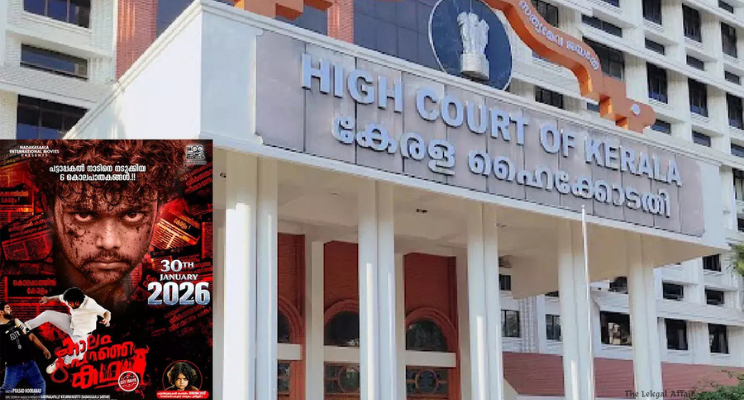
The Kerala High Court recently dismissed an appeal challenging the release of the Malayalam movie Kaalam Paranja Kadha, a film alleged to be inspired by the widely discussed Venjaramoodu Mass Murder case. The matter came before a Division Bench comprising Dr. Justice A.K. Jayasankaran Nambiar and Justice Preeta A.K., which ultimately dismissed the appeal as withdrawn after the appellant informed the Court that the movie had already been released, rendering the appeal infructuous.
The case originated from concerns raised by the father of the accused in the sensational Venjaramoodu Mass Murder case, which remains pending before the Principal Sessions Court, Thiruvananthapuram. The criminal case involves allegations against Afan, who is accused of murdering five relatives and attempting to murder his mother. Owing to the shocking nature of the allegations and extensive public attention surrounding the incident, the case has continued to attract widespread media scrutiny.
The petitioner, apprehending that the film Kaalam Paranja Kadha was substantially inspired by the pending criminal case, approached the High Court seeking to prevent the release of the movie. According to him, portrayal of events resembling the ongoing murder trial could prejudice judicial proceedings and adversely affect the dignity and reputation of the accused’s family.
The writ petition was initially heard by a Single Judge of the Kerala High Court. The petitioner argued that the film’s release could create public bias, influence perceptions regarding the accused, and indirectly interfere with the administration of justice. He also claimed that the family, despite being unwilling participants in public controversy, risked social defamation if viewers identified similarities between the fictional narrative and the actual criminal case.
However, the Single Judge declined to interfere with the film’s release. The Court observed that the petitioner had approached the Court merely on assumptions without actually viewing the movie. It held that judicial intervention could not be justified solely on speculative apprehensions that a film might affect a pending criminal trial.
Aggrieved by the decision, the petitioner filed a writ appeal before the Division Bench. Yet, by the time the appeal was taken up for hearing, the film had already been released publicly. Counsel appearing for the appellant therefore submitted that the appeal had become infructuous and sought permission to withdraw the matter. Accepting the request, the Division Bench dismissed the appeal as withdrawn.
The case once again brought into focus the recurring legal tension between freedom of artistic expression under Article 19(1)(a) of the Constitution and competing claims involving fair trial rights, reputation, privacy, and dignity of individuals connected with pending criminal proceedings.
The controversy surrounding Kaalam Paranja Kadha reflects broader judicial debates concerning films and creative works inspired by real-life crimes. Indian courts have repeatedly been required to balance artistic freedom with concerns that cinematic portrayals of ongoing criminal cases may prejudice investigations, influence witnesses, or create public narratives affecting fair adjudication.
At the same time, courts have consistently shown reluctance to impose pre-publication or pre-release restraints on artistic works unless there exists clear and immediate danger to administration of justice or violation of statutory restrictions. The present case therefore represented another instance where constitutional protections for creative expression intersected with concerns relating to criminal justice and personal dignity.
Although the appeal ultimately ended without adjudication on merits, the proceedings provide valuable insight into how courts approach requests seeking censorship or restraint of artistic works allegedly based upon pending criminal cases.
Arguments of the Parties:
The appellant, who is the father of the accused in the Venjaramoodu Mass Murder case, approached the High Court expressing serious apprehension regarding the release of the film Kaalam Paranja Kadha. According to him, the movie was substantially inspired by the sensational criminal case involving his son, who remains the sole accused in proceedings pending before the Principal Sessions Court, Thiruvananthapuram.
The appellant argued that the release of the film during pendency of the criminal trial could prejudice the administration of justice and undermine the accused’s right to a fair trial. It was contended that films based on real-life criminal incidents often shape public perception and generate preconceived notions regarding guilt or innocence, especially in cases attracting significant media attention.
According to the petitioner, cinematic portrayal of facts resembling the pending murder case could indirectly influence public opinion, create societal bias, and potentially affect witnesses or the larger environment surrounding the trial. The petitioner maintained that the criminal case was yet to be finally adjudicated and that no individual connected with the proceedings should be subjected to public condemnation through fictionalized cinematic depictions.
The appellant further argued that the film caused serious reputational injury and emotional distress to the family of the accused. He submitted that although the family had not invited public attention or scrutiny, release of a movie allegedly based upon the case exposed them to public judgment, social stigma, and humiliation.
An important contention raised before the Court concerned the balance between artistic freedom and dignity of living individuals. The petitioner argued that while filmmakers possess constitutional protection to create artistic works, such freedom cannot extend to trampling upon the dignity and reputation of persons connected with unresolved criminal proceedings.
It was specifically argued that if viewers were able to identify the accused or his family through similarities portrayed in the movie, the family would suffer irreparable harm in society. The petitioner therefore sought judicial intervention to restrain the release of the film until conclusion of the criminal trial.
The petitioner also expressed concern that dramatization of facts relating to a pending criminal matter could distort realities, sensationalize allegations, and contribute to “trial by media” through fictional narratives presented as entertainment.
On the other hand, the respondents opposed the plea seeking to halt release of the movie. Although the detailed submissions of the respondents are not extensively recorded in the brief order, the proceedings before the Single Judge reveal the broad legal position advanced against the petitioner’s claims.
The respondents essentially contended that the petition was based entirely upon assumptions and speculative apprehensions rather than concrete evidence. It was pointed out that the petitioner had admittedly not watched the movie and therefore could not conclusively establish that the film directly portrayed the Venjaramoodu Mass Murder case or identified the accused family.
The respondents maintained that courts cannot impose prior restraint on artistic expression merely because a person suspects similarities between fictional content and real-life events. Such speculative claims, according to them, were insufficient to justify interference with constitutionally protected freedom of expression and artistic creativity.
The respondents also relied upon settled principles governing censorship and prior restraint in India. It was argued that unless there exists clear statutory violation, obscenity, defamation, or immediate threat to public order or fair trial rights, courts ordinarily refrain from prohibiting release of films and creative works.
During proceedings before the Single Judge, it was further argued that there was no material demonstrating that release of the movie would directly interfere with judicial proceedings pending before the Sessions Court. Mere apprehension that a film might affect public opinion could not become a valid ground for restraining artistic expression.
By the time the matter reached the Division Bench in appeal, the factual situation had substantially changed because the movie had already been released publicly. Counsel appearing for the appellant, Advocate Sajju V., therefore informed the Court that the appeal had become infructuous and sought permission to withdraw it.
Consequently, the Division Bench did not enter into detailed examination of the merits of the controversy. However, the arguments raised in the proceedings highlighted important constitutional questions concerning the intersection of free speech, fair trial rights, privacy, dignity, and judicial restraint in matters involving artistic works based upon real-life crimes.
Court’s Judgment:
The Kerala High Court ultimately dismissed the writ appeal as withdrawn after noting that the movie Kaalam Paranja Kadha had already been released, thereby rendering the challenge infructuous.
The Division Bench comprising Dr. Justice A.K. Jayasankaran Nambiar and Justice Preeta A.K. recorded the submission made by counsel for the appellant, Advocate Sajju V., who informed the Court that the appeal no longer survived for consideration because the relief originally sought — namely prevention of the film’s release — had become impossible after the movie’s public release.
Accepting the submission, the Court dismissed the appeal as withdrawn without entering into detailed adjudication on the substantive legal issues involved.
Although the Division Bench’s order was brief and procedural in nature, the litigation as a whole nevertheless carries considerable legal significance because it engages with broader constitutional principles governing artistic freedom and judicial restraint in matters involving films allegedly based upon real criminal cases.
The earlier judgment delivered by the Single Judge formed the substantive basis underlying the final outcome of the dispute. The Single Judge had categorically refused to interfere with release of the movie primarily because the petitioner’s challenge was founded upon assumptions rather than verified facts.
The Court had noted that the petitioner admittedly had not watched the film before approaching the Court. Consequently, the allegation that the movie directly portrayed the Venjaramoodu Mass Murder case remained speculative. The Single Judge therefore held that courts cannot prohibit release of artistic works merely on apprehensions or suppositions regarding possible effects on pending judicial proceedings.
This reasoning reflects settled constitutional principles relating to prior restraint and freedom of speech under Article 19(1)(a) of the Constitution of India. Indian constitutional jurisprudence traditionally discourages pre-publication censorship or prior restraint except in narrowly defined circumstances expressly recognized by law.
Courts have repeatedly emphasized that creative expression, including films, literature, theatre, and visual arts, occupies an important place within constitutional protection of free speech. Any attempt to suppress or restrain artistic expression before publication or release is therefore subject to strict judicial scrutiny.
The Single Judge’s observations also underscore the principle that speculative fears regarding prejudice to criminal trials cannot automatically justify censorship. Courts ordinarily require concrete material demonstrating a real and substantial likelihood of interference with administration of justice before granting injunctions against publication or release of creative works.
The judgment further reflects judicial recognition that criminal trials are conducted within institutional safeguards capable of protecting fairness and impartiality despite external publicity or media attention. Indian courts have often held that judges are trained to decide cases based upon evidence placed on record rather than public narratives or media portrayals.
Another important dimension of the case concerns the competing claims of dignity and privacy raised by the petitioner’s family. The petitioner had argued that the family did not invite public scrutiny and that cinematic portrayal of events resembling the criminal case would expose them to defamation and social stigma.
While these concerns involve legitimate constitutional values relating to dignity and reputation under Article 21, the Court appeared unconvinced that sufficient factual foundation existed to establish direct identification or targeted portrayal of the family through the movie.
The Court’s refusal to interfere also reflects judicial caution against expanding censorship based upon perceived similarities between fictional works and real events. Creative works frequently draw inspiration from social realities, public incidents, or historical events, and courts generally avoid imposing restrictions unless the portrayal crosses legally impermissible boundaries.
Importantly, the dismissal of the appeal as withdrawn does not amount to judicial endorsement of the film’s content or conclusions regarding its alleged inspiration from the Venjaramoodu Mass Murder case. Rather, the proceedings concluded because the specific relief sought had become ineffective after the movie’s release.
Nevertheless, the case remains significant for illustrating the judiciary’s balancing exercise between artistic freedom and fair trial concerns. The High Court’s approach reinforces the principle that speculative apprehensions alone cannot justify judicial suppression of creative expression.
The litigation also demonstrates the practical difficulties associated with seeking pre-release injunctions against films. Judicial proceedings often continue while release schedules proceed simultaneously, sometimes resulting in matters becoming infructuous before final adjudication.
Ultimately, the Kerala High Court’s handling of the matter reflects a broader constitutional commitment toward protecting artistic freedom while maintaining institutional faith in the fairness and independence of criminal trials. By refusing to intervene on speculative grounds, the Court reaffirmed the principle that constitutional freedoms cannot be curtailed merely because artistic works resemble controversial real-life events.