


Introduction:
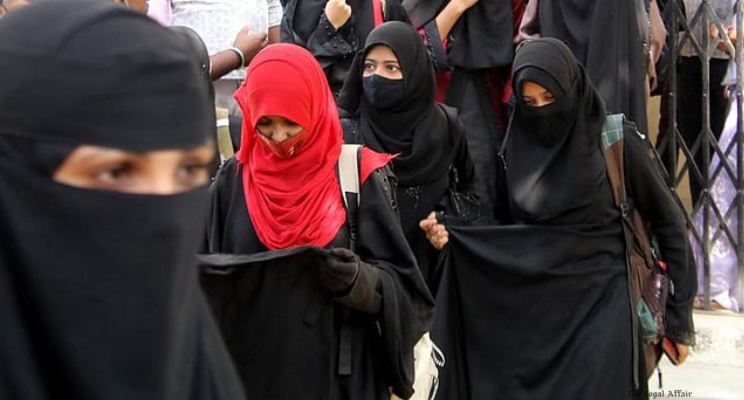
The Kerala High Court, in Manager, St. Rita’s Public School v. State of Kerala and Others (WP(C) No. 38698 of 2025), presided over by Justice V.G. Arun, recently closed a writ petition filed by St. Rita’s Public School, Ernakulam, challenging a directive issued by the Deputy Director of Education (DDE) which required the school to permit a Muslim girl student to attend classes wearing a headscarf. The petition arose out of a conflict between the school’s uniform policy and the student’s religious practice. However, the matter took a conciliatory turn when the student’s parents decided to withdraw her admission from the school, leading the High Court to note with appreciation that “better sense had prevailed” and that the spirit of “fraternity,” one of the foundational values of the Constitution, had ultimately triumphed over confrontation. The court’s handling of the case highlights a delicate balance between religious freedom, institutional autonomy, and the overarching need for communal harmony within the education system of a secular democracy.
Arguments and contentions of the petitioner school:
The petitioner, St. Rita’s Public School, managed by a Christian minority institution and affiliated with the Central Board of Secondary Education (CBSE), approached the High Court seeking judicial intervention against what it described as an unlawful directive by the State education authorities. The Deputy Director of Education, Ernakulam, had issued a notice asking the school to permit a Muslim girl student to wear a headscarf along with the prescribed school uniform. The school argued that such interference from the State education department was entirely outside the purview of its authority, given that CBSE-affiliated schools function under the central regulations and not under the administrative control of the State education officers. The petitioner contended that the DDE’s directive violated the legal framework governing CBSE schools and infringed upon the management’s right to frame internal regulations, including dress codes and codes of discipline.
Further, the school submitted that there was no legislative or executive order from the Government of Kerala authorizing students to wear religious symbols or attire in educational institutions that prescribe specific uniforms. By enforcing such a directive, the DDE had not only exceeded its jurisdiction but also interfered with the school’s right as a minority educational institution under Article 30(1) of the Constitution of India, which protects the right of minorities to establish and administer educational institutions of their choice. The petitioner’s counsel, Bimala Baby, Magi Pavithran, Roshan Shaji, Remya Thomas, and Jasmine Ligy, stressed that St. Rita’s Public School is an unaided minority institution, and its internal policies and disciplinary rules cannot be overridden by State officials without due process or legal backing.
The school also argued that allowing religious attire such as a headscarf within a uniformed institutional setup could lead to further demands from other communities, thereby undermining the uniformity, inclusiveness, and secular ethos that schools strive to uphold. It warned that accommodating such demands could create divisions among students and disturb the academic atmosphere. The petitioner clarified that its rules were not meant to target any particular religion but to maintain equality among all students, regardless of faith, caste, or creed.
In its petition, the school sought three major reliefs: first, to quash the DDE’s notice that directed the school to permit the student to wear a headscarf; second, to declare that the State education department lacked jurisdiction to issue directions to CBSE-affiliated schools; and third, to restrain any coercive action or interference by State authorities in the internal affairs of the institution. The petitioner emphasized that the High Court had already, in an earlier phase of the case, granted police protection to the school after reports of mob intrusion and threats over the hijab issue, further underscoring the volatility surrounding the matter.
Arguments and contentions of the respondent student and the State:
On the other hand, the counsel representing the student and her family took a more conciliatory approach during the final hearing. It was submitted that the student’s parents had decided to withdraw their daughter from St. Rita’s Public School and to seek admission in another institution, thereby rendering the core issue of the dispute largely academic. The student’s counsel highlighted that the family did not wish to escalate the controversy or portray the Catholic community as intolerant. In fact, they expressed appreciation for the contribution of the Latin Catholic community in the field of education, acknowledging that it had established numerous reputed institutions across the country.
The student’s counsel stated that their decision to withdraw was made out of concern for the child’s peaceful learning environment, and not as an act of protest. The counsel noted that continuing in the same school under strained circumstances might not be conducive for the student’s education or mental well-being. It was further submitted that while the right to wear a headscarf is recognized under Article 25 of the Constitution as a matter of religious practice, it must also be harmonized with institutional discipline and secular education. Therefore, in the given circumstances, the student’s family preferred to resolve the issue amicably rather than turn it into a prolonged legal or social conflict.
The State, represented by the learned State Attorney, informed the court that it did not wish to precipitate the matter any further in view of the student’s withdrawal. The State also expressed that it was in favor of maintaining peace and fraternity within the school and community. While refraining from entering into a debate on the legality of the DDE’s notice, the State submitted that it respected the autonomy of CBSE schools but had only sought to protect the student’s rights temporarily during the pendency of the controversy. The State Attorney stated that since both parties had chosen to move towards a peaceful resolution, there was no necessity for judicial adjudication on the contentious constitutional or administrative questions raised in the petition.
Court’s reasoning and observations:
Justice V.G. Arun, after hearing the parties, observed that the case had reached a natural conclusion through the decision of the student’s parents to withdraw her admission from St. Rita’s Public School. The court acknowledged that the dispute had evoked strong sentiments on both sides, touching upon sensitive issues such as religious expression, minority rights, and the autonomy of educational institutions. However, Justice Arun noted with satisfaction that “better sense had prevailed” and that the foundational principle of “fraternity” — which the Preamble of the Constitution enshrines as essential for ensuring unity and integrity of the nation — had ultimately guided the resolution of the matter.
In his judgment, Justice Arun remarked:
“After a detailed hearing, there is a welcome submission that the 7th respondent’s parents have decided to discontinue her studies in the petitioner’s school and to admit her in another institution. In view of such a decision, I am of the opinion that the contentious issues that are now raised need not be gone into. The learned State Attorney has also stated that in view of the submission, the State also decided not to precipitate the issue… This Court is happy to note that better sense has prevailed and ultimately, fraternity, which is one of the foundational principles on which the edifice of our Constitution is built, remains strong. The writ petition is accordingly closed.”
The court, in its oral observations, also recognized the emotional strain that such disputes can place on both educational authorities and parents. Addressing the counsel for the school, Justice Arun remarked that he understood the sentiments of the Sisters who managed the institution but added that, “Ultimately, it may appear that they have pushed her out of the school.” This observation reflected the court’s awareness of the social perception surrounding the controversy and its subtle reminder that inclusivity must not give way to exclusion under the guise of discipline.
To this, the counsel for the student responded that there was no intention to project the Catholic community as intolerant, emphasizing instead that they simply wished to avoid further escalation. The court appreciated this stance and noted that both sides had demonstrated maturity by stepping back from confrontation. In a personal remark, Justice Arun shared, “For your information, I had my schooling in a Catholic school. Every day started with ‘In the name of the Father’. I am also a beneficiary.” This personal reflection underscored the judge’s empathetic understanding of both religious traditions and educational values.
The symbolic importance of the decision:
Though the High Court did not enter into a detailed legal determination regarding the scope of religious freedom or the autonomy of minority educational institutions, the case holds deep symbolic value. It reflects how sensitive issues relating to identity and belief can be resolved not merely through judicial pronouncements but through mutual respect, dialogue, and understanding. By closing the petition rather than adjudicating upon constitutional questions, the Court avoided a polarizing precedent while reaffirming that fraternity and mutual respect should prevail over divisiveness.
The court’s remarks resonate deeply in a constitutional democracy like India, where the balance between personal religious expression and institutional discipline remains a recurring point of debate. Justice Arun’s acknowledgment that “fraternity remains strong” serves as a reminder that India’s pluralistic fabric depends not on uniformity, but on the ability to coexist harmoniously despite differences. The outcome also sends a subtle message to administrative authorities to act with restraint and sensitivity when intervening in matters involving minority institutions, especially those governed by central boards like CBSE.
The High Court’s approach in this case mirrors its earlier judicial philosophy seen in other instances where it has emphasized moderation and mutual understanding rather than judicial enforcement in matters involving religious symbols. It is consistent with the constitutional vision where individual rights and institutional autonomy must be balanced without allowing one to suppress the other. The emphasis on fraternity also aligns with the Supreme Court’s broader jurisprudence on secularism, which views the State as a neutral arbiter rather than a patron of any particular religious practice.
Conclusion:
The Kerala High Court’s decision to close the plea filed by St. Rita’s Public School marks a calm and reasoned end to a potentially divisive controversy. Instead of allowing the issue to escalate into a broader ideological conflict, the Court commended both sides for choosing a peaceful resolution. Justice V.G. Arun’s emphasis on “fraternity” as the guiding value reinforces the constitutional promise that India’s strength lies in unity amidst diversity. By avoiding a rigid stance and encouraging understanding, the judgment illustrates the importance of dialogue over confrontation, empathy over rigidity, and coexistence over exclusion. It reaffirms that the true spirit of secularism is not in denying faith, but in accommodating differences with dignity. Ultimately, this case serves as a gentle yet powerful reminder that in a nation as diverse as India, harmony and mutual respect must always prevail over discord.