


Introduction:
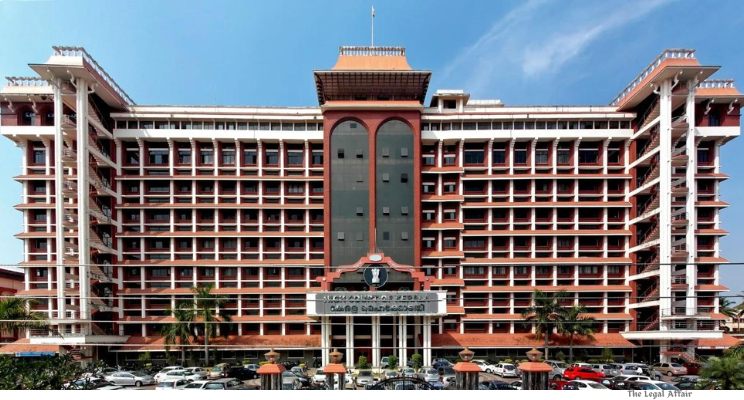
In a recent judgment, the Kerala High Court quashed criminal proceedings against an employer charged under Section 294(b) of the Indian Penal Code (IPC) for allegedly using obscene language within the premises of a textile shop. The case, K P Aliyar v State of Kerala, centered around the interpretation of what constitutes a “public place” under Section 294(b) IPC. The Court, led by Justice A. Badharudeen, clarified that the term “in or near public place” as mentioned in the IPC includes areas in the vicinity of public places, thus broadening the scope of what can be considered a public place in relation to obscene acts.
Arguments:
Petitioner’s Arguments:
The petitioner, represented by Advocates Thomas J. Anakkallunkal and Maria Paul, argued that Section 294(b) IPC, which criminalizes obscene acts in public places, should not apply to the incident in question. They asserted that the alleged act occurred inside a private office cabin, which does not qualify as a public place or even a place “near a public place.” To support this argument, they cited the Allahabad High Court’s decision in Zafar Ahmad Khan v State (1962), which emphasized that whether an act is obscene should depend on the specific facts and context of each case.
The petitioner also referenced the Kerala High Court’s decision in Dr. K Ramachandran v Sub Inspector of Police (2022), where a doctor’s consulting room was not considered a public place or a place near a public place. Similarly, they argued that the office cabin in this case should not be classified as a public place, thereby rendering Section 294(b) IPC inapplicable.
Additionally, the defense pointed out that the complainant, an employee who had recently joined a labor union and encouraged others to do the same, had a motive to falsely implicate the petitioner. They contended that the defamation charges were a retaliatory measure to avoid facing disciplinary proceedings initiated against the complainant for dereliction of duty.
Respondent’s Arguments:
The respondent, represented by Advocates Anoop V. Nair and Devi P., argued that the office cabin within the textile shop should be considered a place “near a public place” under Section 294(b) IPC. They claimed that the abusive language used by the petitioner in the cabin was heard by others, causing annoyance, and thus fell within the scope of the IPC provision.
The respondent’s counsel argued for a broad interpretation of “in or near public place” to include areas where public access is possible, even if such access is restricted. They emphasized that the primary concern under Section 294 IPC is the impact of the obscene act or language on the public, particularly the annoyance caused to others.
Court’s Judgment:
After reviewing the arguments, the Kerala High Court quashed the criminal proceedings against the petitioner. Justice A. Badharudeen, in his judgment, elaborated on the interpretation of Section 294(b) IPC. The Court held that while the term “in or near public place” is indeed broad and not confined to places with unrestricted public access, the application of this section must be based on the context and specific circumstances of each case.
The Court noted that the incident took place inside a private cabin within a textile shop. Although the cabin could be considered a place near a public area, the Court found that the allegations were primarily motivated by ongoing disciplinary proceedings against the complainant. The complainant’s personal vendetta against the petitioner raised doubts about the credibility of the charges.
Furthermore, the Court reiterated that for an act to attract Section 294(b) IPC, two essential elements must be met: (i) the act must involve obscene words or actions in a public place or near a public place, and (ii) the act must cause annoyance to others. While the abusive words might have been heard by others, the Court found that the circumstances surrounding the complaint were questionable.
In light of these considerations, the Court concluded that the petitioner’s actions did not warrant criminal prosecution under Section 294(b) IPC. The proceedings against the petitioner were thus quashed, providing relief to the employer.