


Introduction:
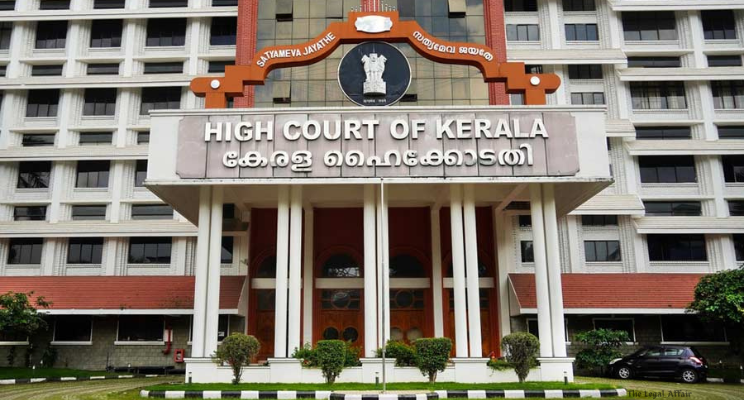
The Kerala High Court in the case X v. State of Kerala, Crl. App. 548/2022, 2025 LiveLaw (Ker) 622 delivered a significant ruling on the interpretation of house trespass under Section 450 of the Indian Penal Code. The matter arose from a shocking incident where the accused, a man who was the lessee of the house where his wife and children resided, poured acid through the window at night, grievously injuring his family. The trial court convicted him under Section 326A IPC (voluntarily causing grievous hurt by acid) and Section 450 IPC (house trespass with intent to commit an offence punishable with life imprisonment). On appeal, a division bench comprising Justice Raja Vijayaraghavan V and Justice K V Jayakumar upheld the conviction under Section 326A but set aside the conviction under Section 450. The bench emphasized that as a lawful lessee in possession of the house, the accused could not be convicted of house trespass, which by definition required unlawful entry into another’s property. At the same time, the Court upheld the punishment under Section 326A, observing the cruelty inflicted on his wife and children. The Court also gave detailed directions on victim compensation under Section 357A CrPC, mandating adequate monetary relief for acid attack survivors.
Arguments of the Appellant:
The appellant, convicted by the sessions court, argued that his conviction under Section 450 IPC was legally unsustainable because he was the lawful lessee of the property. His counsel, P Mohamed Sabah along with a team of advocates, contended that the ingredients of house trespass were absent in this case. They referred to Section 441 IPC, which defines criminal trespass as entering into or upon the property of another with the intent to commit an offence or unlawfully remaining there. Since the house was leased to the accused by the owner (PW11), and he and his family were in exclusive possession, his entry or presence in the house could not be deemed unlawful. Without unlawful entry, the very basis of Section 450 collapsed. The defense further emphasized that mere animosity within the family or committing a crime inside the house did not convert lawful possession into trespass. The appellant’s counsel acknowledged the heinous nature of the acid attack but insisted that the law must be applied correctly, and wrongful addition of Section 450 would result in an unjust extension of criminal liability.
The appellant also challenged the trial court’s approach to sentencing and compensation. While the trial court imposed a fine of Rs. 1,00,000, it failed to recommend victim compensation under Section 357A CrPC. The defense urged the High Court to re-examine whether proper statutory duties were followed in ensuring justice for victims, while limiting the conviction strictly to proven offences.
Arguments of the Respondent:
The State, represented by Advocate Bindu O V, opposed the appeal and sought confirmation of the trial court’s findings. The prosecution highlighted the brutality of the act, noting that the acid attack left permanent disfigurement and grievous injuries, including blindness in the elder daughter. It argued that the accused had committed the crime with extreme cruelty, intending to cause maximum harm. While conceding that the accused was the lessee, the State emphasized that the act was not just a domestic quarrel but an attack within a shared household, and the nature of his conduct amounted to a grave breach of trust and morality.
The prosecution pressed for upholding convictions under both Section 326A and Section 450 IPC, reasoning that the accused entered the portion of the house occupied by his wife and children with the intent to commit an offence. Even if lawful possession was granted, the prosecution attempted to argue that the specific circumstances justified applying house trespass. On the issue of victim compensation, the State acknowledged that the trial court had imposed a fine but had not considered Section 357A’s mandate. It urged the High Court to correct this omission and ensure that the survivors received adequate financial support, in line with Supreme Court precedents on acid attack compensation.
Court’s Judgment:
The Kerala High Court carefully analyzed the legal position and the facts. On the issue of house trespass under Section 450 IPC, the Court referred to Section 441 IPC, which defines criminal trespass. It noted that two essential elements must be present: first, entry into a property in the possession of another, and second, such entry or unlawful remaining must be with intent to commit an offence, intimidate, insult, or annoy the person in possession. Since PW11, the house owner, confirmed that the house was leased to the accused and no formal rent deed was executed, the accused was still legally the lessee and thus in possession of the property. Being in possession, the accused could not be said to have committed trespass upon his own premises. Therefore, one of the key ingredients of Section 441—and consequently Section 450—was absent. The Court firmly held that a lessee cannot be charged with trespass in his own leased premises, no matter how heinous an offence he may commit inside. On this ground, the conviction under Section 450 was set aside.
However, the Court had no hesitation in upholding the conviction under Section 326A IPC. It recounted the devastating injuries inflicted on the victims and the cruelty of pouring acid on his wife and children while they were asleep. The bench emphasized that the offence involved deliberate cruelty and carried grave consequences, justifying stringent punishment. The Court clarified that while legal technicalities barred the application of Section 450, the seriousness of Section 326A remained unaffected.
On compensation, the Court criticized the trial court for failing to apply Section 357A CrPC properly. Referring to landmark Supreme Court rulings such as Ankush Shivaji Gaikwad v. State of Maharashtra and Laxmi v. Union of India, the bench reiterated that in acid attack cases, awarding victim compensation is not discretionary but a judicial duty. The word “may” in Section 357A must be interpreted as mandatory. Courts must ensure that survivors receive adequate financial support for medical treatment, rehabilitation, and long-term care. Consequently, the High Court directed the State to pay Rs. 3,00,000 each to the wife and four children of the accused, in addition to the fine imposed by the trial court.
Thus, the appeal was partly allowed—conviction under Section 450 IPC was set aside, but conviction under Section 326A IPC and enhanced victim compensation were upheld.