


Introduction:
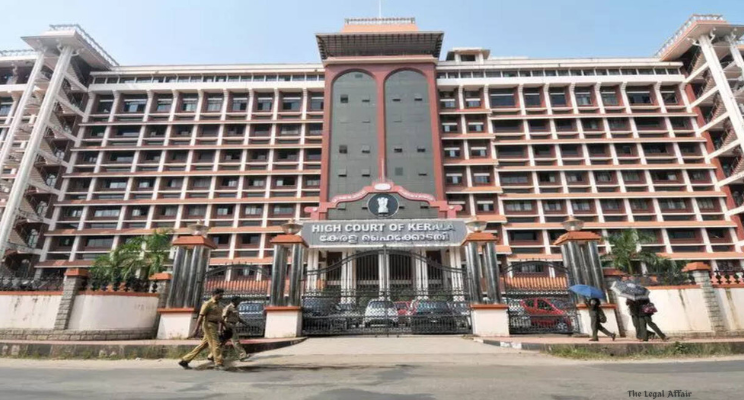
In a significant move that underscores the pressing need for modernized and foolproof criminal investigations, the Kerala High Court has acquitted a man previously convicted of murder, citing serious investigative lapses. The case, titled Suresh v. State of Kerala (Crl. A 602/2019), saw a Bench comprising Justice Raja Vijayaraghavan V and Justice K V Jayakumar deliver a detailed judgment that not only highlighted deficiencies in the specific case but also directed the State Police to upgrade their investigative methodologies in strict compliance with the Bharatiya Nagarik Suraksha Sanhita (BNSS), 2023. Represented by Advocate V. Sethunath, the appellant Suresh had challenged his conviction, which was opposed by Senior Public Prosecutor Neema T.V. for the State. The Court’s observations pivot around the pivotal role of scientific and digital tools in ensuring the integrity of the justice delivery system, especially in cases involving heinous crimes like murder.
Arguments of the Appellant:
The appellant, Suresh, through his counsel V. Sethunath, presented a strong challenge to the validity of his conviction. He argued that the trial court had erred in relying on evidence that was both circumstantial and poorly investigated. The defense stressed that the entire case was marred by glaring lapses on the part of the police authorities, which included failure to collect and preserve critical forensic evidence, contradictions in the timeline of events, and discrepancies in the statements of witnesses. The defense also contended that there was no direct evidence linking the accused to the crime scene and that the confessions or statements obtained were not recorded in compliance with the procedural safeguards as mandated under the BNSS and the Indian Evidence Act. Furthermore, the defense drew attention to the complete absence of video or audio recording of witness statements, despite the technological feasibility and the statutory encouragement under BNSS to do so. These lapses, it was contended, raised serious doubts about the prosecution’s case and rendered the conviction unsustainable.
Arguments of the Respondent:
On the other hand, the respondent State, represented by Senior Public Prosecutor Neema T.V., defended the conviction, asserting that the cumulative weight of circumstantial evidence was sufficient to establish the guilt of the accused beyond reasonable doubt. The State argued that while certain procedural lapses may have occurred, they did not go to the root of the matter or cause a miscarriage of justice. It was contended that the police had conducted a satisfactory investigation under the then-existing standards, and the lack of digital or scientific methods did not automatically render the investigation deficient. The prosecution further claimed that the chain of events, including motive, opportunity, and behavior of the accused post-incident, pointed decisively towards guilt. However, the Court was unconvinced by this line of reasoning, especially in light of the BNSS’s new mandates and the gravity of the offense.
Court’s Observations and Judgment:
In a scathing critique of the investigative standards applied in the case, the Kerala High Court unequivocally held that the conviction of the accused could not be sustained due to fundamental flaws in the manner the investigation was conducted. The Bench noted that the State’s police machinery had failed to utilize even basic crime scene management protocols, let alone employ advanced scientific or digital tools. The Court highlighted that under the BNSS, 2023, which replaces colonial-era procedures with a modern legal framework, it is imperative for police to conduct investigations using scientific precision and technological tools. Central to the Court’s reasoning was the State’s failure to embrace e-Sakshya, a digital platform that facilitates the secure and immediate preservation of all evidence in audio-visual and digital formats. The Court stressed that under BNSS, the use of e-Sakshya is not optional but an essential mechanism to ensure transparency, accountability, and procedural integrity. Specifically, the Court pointed to Sections 105 (search and seizure), 176(3) (documentation of crime scenes in cases punishable by more than 7 years), and Sections 180 and 183 (video-recording of statements) as critical provisions that must be strictly complied with to maintain the sanctity of the investigative process.
The judgment further referred to landmark precedents such as Pooja Pal v Union of India [(2016) 3 SCC 135], Thomaso Bruno v State of UP [(2015) 7 SCC 178], and Rollymol v State of Kerala [2024 KHC 7324], which collectively emphasize the need for scientific rigor and transparency in investigations. The Court quoted with emphasis that “each piece of evidence must be meticulously analysed, every protocol followed, and all leads are to be exhausted” if justice is to be served. The failure to collect DNA, preserve the crime scene, document witness statements via digital means, or even maintain an unbroken chain of custody for the material evidence raised profound concerns in the present case. The Court held that these deficiencies were not merely procedural but substantial enough to vitiate the entire prosecution’s case. It was further noted that effective investigators today are expected to integrate traditional police skills with modern forensic science, including cyber forensics and DNA sequencing, to build watertight cases.
Additionally, the Court underscored that the BNSS introduces a culture shift, replacing the archaic police procedures with a technology-driven and evidence-focused approach. It noted that the continued reliance on outdated methods, despite legislative reforms and technological availability, not only weakens prosecutions but also undermines public trust in the criminal justice system. The Court called upon the Kerala State Police to urgently adopt training and standard operating procedures that incorporate BNSS mandates. In a strong directive, the Court ordered the Registry to forward a copy of the judgment to the State Police Chief and the Home Department, emphasizing the need for immediate action. The police were specifically instructed to adopt e-Sakshya or any other equivalent digital platform to document all major investigative acts, especially those involving serious offenses. The judgment concludes with a warning that any future investigation falling short of the BNSS’s stringent requirements may not withstand judicial scrutiny, and wrongful convictions or acquittals due to poor investigation will erode the very foundation of criminal jurisprudence.