


Introduction:
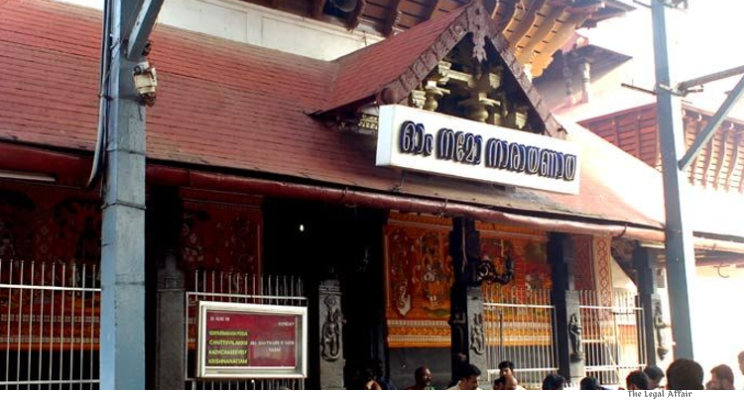
In a notable ruling, the Kerala High Court has prohibited videography by vloggers in the outer courtyard of the Guruvayur Sree Krishna Temple, known as Nadapanthal. This decision comes in response to a petition filed by devotees concerned about maintaining the sanctity of the temple’s rituals and privacy of worshippers. The case, P P Venugopal v. State of Kerala and Others, highlights issues surrounding unauthorized recording and the adherence to traditional temple practices.
Petitioners’ Argument:
The petitioners, including advocates R Krishna Raj, R Pratheesh, E S Soni, Sreeraja V, and Laxmi Priyaa N, argued that recent incidents involving videography in the Nadapanthal disrupted the temple’s sacred atmosphere. They presented evidence of a non-Hindu woman allegedly causing a disturbance by celebrating her birthday and cutting a cake in the temple courtyard. The petitioners contended that such actions contravened the Kerala Hindu Places of Public Worship (Authorization of Entry) Act, 1965, which regulates entry into Hindu temples. They sought the court’s intervention to restrict videography and enforce traditional temple practices.
Respondents’ Argument:
While the Guruvayur Devaswom Managing Committee and its Administrator did not directly contest the petition, they were expected to comply with the court’s directives. Their general defense would likely focus on balancing the preservation of traditional practices with the need to accommodate modern activities, advocating for reasonable restrictions on videography to prevent disruptions while respecting religious and cultural practices.
Court’s Judgment:
The division bench of Justice Anil K Narendran and Justice P G Ajithkumar issued a strong directive to protect the sanctity and security of the Guruvayur Sree Krishna Temple. Acknowledging the temple’s designation as a “Special Security Zone” under the Kerala Police Act, 2011, the court emphasized that the Nadapanthal and other inner areas are unsuitable for unrestricted videography.
The court ruled that videography in the Nadapanthal is permissible only for marriage functions and specific religious ceremonies. Unauthorized recording by vloggers and other individuals was prohibited to avoid disturbances and maintain adherence to temple traditions. The Guruvayur Devaswom Managing Committee and the temple’s Administrator were instructed to ensure compliance through enhanced security measures and, if necessary, police intervention.
Justice Narendran and Justice Ajithkumar reinforced that the Managing Committee must comply with the Guruvayur Devaswom Act, 1978, which governs the proper conduct of temple rites and ceremonies. The committee is tasked with managing the temple’s affairs respectfully, ensuring that worship practices remain undisturbed by external activities.
The ruling underscores the court’s commitment to preserving the traditional sanctity of the Guruvayur Temple while addressing concerns about unauthorized videography. The court has scheduled a follow-up hearing on October 18 to further discuss any additional issues arising fromthe case.