


Introduction:
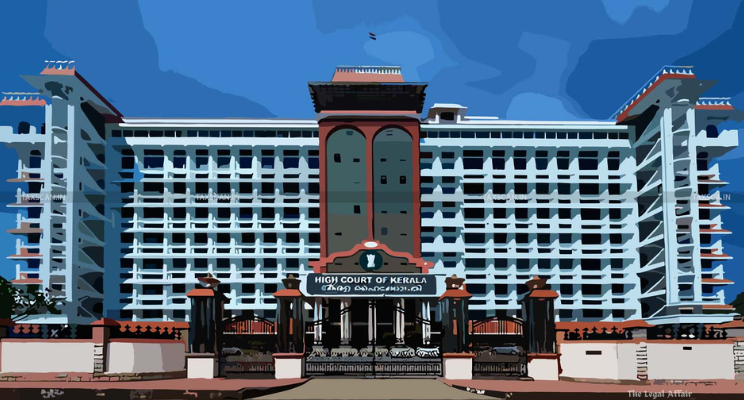
In The South Indian Bank Limited v. Income Tax Officer [ITA No. 64 of 2024; 2025 LiveLaw (Ker) 827], the Kerala High Court, speaking through a Division Bench of Justice A. Muhamed Mustaque and Justice Harisankar V. Menon, authoritatively clarified the legal position governing non-deduction of tax at source (TDS) on interest income paid to senior citizens upon submission of Form 15H under Section 197A(1C) of the Income Tax Act, 1961. The appeal arose from proceedings wherein the appellant-bank was treated as an “assessee in default” under Section 201 for allegedly failing to deduct TDS on interest paid to senior citizen depositors, despite having received duly filled declarations in Form 15H. The High Court was thus called upon to decide whether, once a bank accepts valid statutory declarations asserting NIL tax liability, it can nevertheless be faulted for non-deduction of TDS by importing conditions not expressly mandated by the statute. Answering this in the negative, the Court allowed the appeal, holding that the Revenue’s reliance on Footnote No. 10 appended to Form 15H imposed an unworkable and excessive burden on the payer and amounted to excessive delegated legislation, thereby defeating the legislative intent of granting beneficial treatment to senior citizens.
Statutory Framework and Background:
The controversy is rooted in the interplay between Section 194A, Section 197A(1C), and Section 201 of the Income Tax Act, 1961, read with Rule 29C of the Income Tax Rules, 1962. Ordinarily, Section 194A obligates banks to deduct TDS on interest income paid on fixed deposits. However, Parliament carved out a special, beneficial exception for senior citizens through Section 197A(1C), which provides that where a senior citizen furnishes a declaration in the prescribed form, verified in the prescribed manner, stating that the tax on his estimated total income for the relevant previous year would be NIL, the person responsible for paying the interest shall not deduct tax at source. The prescribed form for this purpose is Form 15H, notified under Rule 29C. In the present case, the appellant-bank received Form 15H declarations from its senior citizen depositors, relied upon them in good faith, and accordingly did not deduct TDS on the interest paid during the relevant assessment years. The bank also filed its TDS returns, enclosing the declarations. Despite this statutory compliance, the Revenue initiated proceedings to treat the bank as an assessee in default, relying primarily on Footnote No. 10 appended to Form 15H, which, according to the Department, required the payer to independently assess whether the interest income exceeded the maximum amount not chargeable to tax after accounting for deductions under Chapter VIA and set-off of losses.
Arguments on Behalf of the Assessee (Bank):
The appellant-bank, represented by Senior Counsel Abraham Joseph Markos and his team, contended that it had acted strictly in accordance with Section 197A(1C) by accepting valid Form 15H declarations from senior citizen depositors. It was argued that once such declarations are furnished in the prescribed form and verified in the prescribed manner, the statute itself commands that TDS need not be deducted, leaving no residual discretion with the payer. The bank emphasized that Form 15H does not require disclosure of Chapter VIA deductions or loss set-offs, nor does it obligate the payer to independently compute the payee’s taxable income. Importing such a requirement through a footnote, it was argued, would not only be ultra vires the Act but would also impose a herculean and impractical burden on banks, effectively requiring them to perform a quasi-assessment of each depositor’s tax affairs. The assessee further submitted that treating the bank as an assessee in default under Section 201(1) and (1A) despite statutory compliance defeats the very purpose of granting beneficial treatment to senior citizens, and that Footnote No. 10, to the extent it enlarges statutory obligations, constitutes excessive delegated legislation.
Arguments on Behalf of the Revenue:
The Revenue, represented by Counsel P. G. Jayashankar and Navaneeth N. Nath, defended the impugned orders by contending that Form 15H cannot be blindly acted upon where the interest income exceeds the basic exemption limit. Relying on Footnote No. 10, the Department argued that the payer must verify whether, after considering deductions under Chapter VIA and permissible set-offs, the payee’s income truly results in NIL tax liability. According to the Revenue, in cases where the interest income itself crossed the threshold, the bank ought not to have accepted the declaration at face value. Failure to do so, it was argued, rendered the bank liable as an assessee in default, justifying demands under Section 201(1) for tax and Section 201(1A) for interest. The Revenue maintained that the statutory scheme aims to prevent revenue leakage and that Form 15H should not become a device to bypass TDS obligations where tax is otherwise payable.
Court’s Analysis and Reasoning:
The Division Bench undertook a careful examination of the statutory text, the scheme of beneficial exemptions for senior citizens, and the practical implications of the Revenue’s interpretation. The Court observed that Section 197A(1C) is explicit: upon furnishing a declaration in the prescribed form stating that the tax on estimated income would be NIL, the obligation to deduct TDS stands lifted. The statute does not require the payer to independently scrutinize the correctness of the declaration beyond ensuring that it is in the prescribed form and duly verified. The Bench found merit in the bank’s contention that imposing a duty to assess deductions under Chapter VIA or set-offs would transform the payer into a tax assessor, a role neither contemplated by the Act nor practically feasible. The Court noted that Form 15H itself contains no columns for detailing Chapter VIA deductions or loss set-offs, reinforcing the conclusion that the payer is not expected to conduct such an inquiry. Turning to Footnote No. 10, the Bench held that reading it as mandatory would defeat the very purpose of Section 197A(1C), which was enacted to simplify compliance and confer a beneficial dispensation on senior citizens. The Court further held that to the extent Footnote No. 10 purports to impose additional substantive conditions not found in the parent statute, it amounts to an exercise of excessive delegated power, and therefore cannot override or dilute the statutory mandate.
Court’s Judgment:
In view of the above analysis, the Kerala High Court allowed the appeal, set aside the orders treating the bank as an assessee in default, and held that once valid Form 15H declarations are furnished and accepted, the bank cannot be faulted for non-deduction of TDS. The Court categorically ruled that the Revenue’s reliance on Footnote No. 10 was misplaced and unsustainable, and that the bank had acted in accordance with law. Consequently, the demands raised under Section 201(1) and 201(1A) were quashed, restoring certainty and clarity to the statutory scheme governing TDS on interest income for senior citizens.