


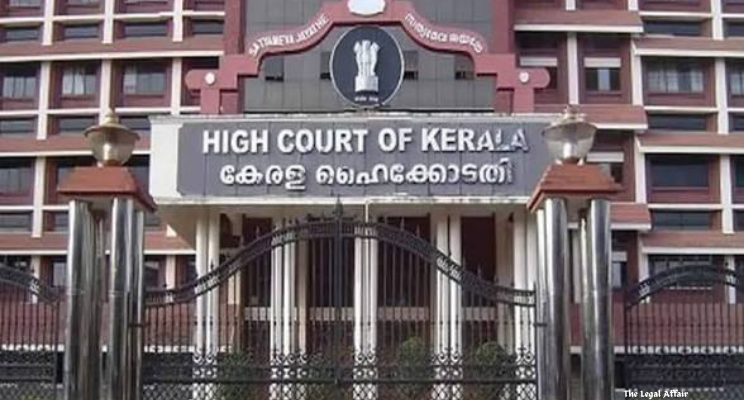
Introduction:
The Kerala High Court has reaffirmed that statutory restrictions imposed on investigative agencies cannot take away or dilute the constitutional powers of a High Court under Article 226 of the Constitution of India. Where the materials placed before it disclose a cognizable offence warranting investigation, the High Court retains the authority to direct registration of a First Information Report (FIR) or order an appropriate investigation, notwithstanding procedural restrictions contained in other laws.
Justice A. Badharudeen delivered the judgment while considering a writ petition seeking directions to the Central Bureau of Investigation (CBI) and the Vigilance and Anti-Corruption Bureau (VACB) to examine the alleged involvement of four additional individuals in an ongoing corruption investigation concerning officials of the Enforcement Directorate’s Kochi Zonal Office. The decision, reported as 2026 LiveLaw (Ker) 602, addresses the relationship between constitutional judicial review and statutory provisions governing criminal investigations.
The Court considered whether restrictions under the Prevention of Corruption Act, 1988, and procedural requirements concerning the hearing of affected persons under Sections 175 and 223 of the Bharatiya Nagarik Suraksha Sanhita, 2023 (BNSS), could prevent it from exercising its constitutional jurisdiction to direct registration of an FIR or an investigation. It examined this question in light of the Constitution Bench judgment of the Supreme Court in State of West Bengal v. Committee for Protection of Democratic Rights (2010), which recognised the constitutional courts’ authority to direct investigations even where statutory restrictions govern investigative agencies.
While reaffirming the breadth of its constitutional powers, the High Court did not order an investigation into the four individuals named by the petitioner. It found that the ongoing investigation had not produced reliable material connecting them with the alleged offences. The Court clarified, however, that the investigating officer remained free to investigate any person’s involvement if relevant material emerged during the course of the investigation.
The distinction between the Court’s legal authority and the circumstances justifying its exercise was central to the decision. The judgment establishes that statutory provisions cannot automatically prevent constitutional courts from directing an investigation, but it does not mean that such directions must be issued whenever a petitioner makes allegations against particular individuals. The Court must independently assess the available material and determine whether it discloses a cognizable offence requiring judicial intervention.
The underlying vigilance case was registered on May 15, 2025, following allegations that an Assistant Director of the Enforcement Directorate had demanded a bribe of ₹2 crore through an intermediary in exchange for settling a case. During a trap operation, the intermediary was allegedly caught accepting ₹2 lakh as illegal gratification. The investigation subsequently identified a hawala agent and a chartered accountant, who were also arrayed as accused, according to the statement submitted by the VACB.
The petitioner later sought an investigation into four additional individuals, relying on allegations concerning hawala transactions, financial irregularities and interference in official enquiries. The VACB informed the Court that the investigation was progressing but that no reliable material had emerged to connect those individuals with the offences under investigation. It also stated that the examination of accused persons and witnesses had not produced any substantial lead implicating them.
Against this background, the High Court addressed two connected but distinct questions. The first was whether statutory restrictions and procedural safeguards could curtail its constitutional authority under Article 226. The second was whether the facts presented in the particular case justified directing an investigation into the four additional individuals. By answering the first question in favour of the continuing constitutional jurisdiction of the High Court while declining the specific relief sought on the available evidence, the Court clarified both the scope and the limits of judicial intervention in criminal investigations.
Arguments of the Parties:
The petitioner approached the Kerala High Court seeking directions to the CBI and the VACB to investigate the alleged involvement of four additional individuals in the corruption case concerning officials of the Enforcement Directorate’s Kochi Zonal Office. The petition arose from an investigation that had already uncovered allegations of bribery and had resulted in the identification of multiple accused persons.
The petitioner’s request was founded on allegations extending beyond the initial accusation against the Assistant Director of the Enforcement Directorate. The petitioner referred to alleged hawala transactions, financial irregularities and interference in official enquiries, contending that the involvement of four other individuals also required examination. The relief sought was intended to ensure that the investigation considered these alleged connections rather than remaining confined to the persons already identified by the investigating agency.
The legal question raised by the petition was whether the High Court could exercise its powers under Article 226 to direct registration of an FIR or an investigation despite statutory restrictions applicable to investigative agencies and procedural provisions requiring certain persons to be heard. The petitioner relied on the constitutional character of the High Court’s jurisdiction and the principle that statutory limitations imposed on an investigative agency cannot automatically restrict the powers of a constitutional court.
In substance, the petition required the Court to consider whether provisions governing criminal investigations could operate as an absolute bar to judicial intervention when allegations of cognizable offences were brought to its attention. The petitioner sought the Court’s intervention to secure further investigation into the alleged involvement of the four individuals, notwithstanding the position taken by the VACB.
The petitioner’s request also raised a broader concern about the effectiveness of investigations into alleged corruption involving public officials. Where allegations suggest possible financial transactions, intermediary involvement or interference with official proceedings, a court may be asked to examine whether the investigation has adequately addressed the relevant material. However, the existence of allegations alone does not establish that a particular individual has committed an offence. The Court therefore had to consider the constitutional authority invoked by the petitioner alongside the evidence available to support the specific relief requested.
The respondents, including the investigating authorities, placed a different emphasis on the status and findings of the ongoing investigation. The VACB informed the Court that the vigilance case had been registered on May 15, 2025, following allegations that an Assistant Director of the Enforcement Directorate had demanded a bribe of ₹2 crore through an intermediary for settling a case. During the subsequent trap operation, the intermediary was allegedly apprehended while accepting ₹2 lakh as illegal gratification.
The investigating agency further informed the Court that the investigation had progressed and that a hawala agent and a chartered accountant had been identified and arrayed as accused. According to the VACB’s statement, however, the available evidence had not established a reliable connection between the four individuals named by the petitioner and the offences being investigated.
The VACB also submitted that the statements recorded from the accused and witnesses had not yielded any substantial lead implicating those individuals. Its position was therefore that the investigation had not produced material sufficient to justify the additional action sought by the petitioner.
This response placed the evidentiary basis for further investigation at the centre of the dispute. The authorities’ position was not merely that the investigation was already underway, but that its findings, as reported to the Court, did not support the petitioner’s request to investigate the four additional individuals at that stage.
The legal issue concerning statutory restrictions also required the Court to examine the effect of the Prevention of Corruption Act and the BNSS provisions cited in the petition. The relevant question was whether requirements under those laws, including procedural safeguards relating to the hearing of affected persons, could prevent the High Court from exercising its constitutional jurisdiction under Article 226.
The respondents’ account of the investigation and the absence of reliable material implicating the four individuals were significant to the factual outcome. Nevertheless, the broader constitutional question could not be resolved merely by reference to the investigative agency’s position. The Court had to independently determine the extent of its powers and whether the available material justified the particular direction sought.
The resulting judgment drew a clear distinction between the High Court’s legal authority to intervene and the circumstances in which intervention would be warranted. It affirmed that statutory restrictions do not automatically eliminate constitutional jurisdiction, while also recognising that a direction to investigate specific individuals must be supported by material sufficient to justify such an order.
Court’s Judgment:
Justice A. Badharudeen examined the scope of the High Court’s constitutional jurisdiction under Article 226 and considered whether statutory restrictions governing investigative agencies could prevent the Court from directing registration of an FIR or ordering an investigation. The Court relied on the Constitution Bench judgment of the Supreme Court in State of West Bengal v. Committee for Protection of Democratic Rights (2010), which addressed the relationship between statutory restrictions on police investigations and the constitutional powers of the High Courts and the Supreme Court.
The High Court held that its constitutional powers under Article 226 could not be taken away, curtailed or diluted merely because another statute imposed restrictions on investigative agencies. It emphasised that statutory provisions regulating the powers of an agency do not necessarily operate as restrictions on the independent constitutional jurisdiction of a High Court.
At the same time, the Court did not treat Article 226 as an unrestricted power requiring judicial intervention whenever an allegation of wrongdoing is made. The exercise of constitutional jurisdiction must be based on the materials placed before the Court and the circumstances of the particular case. The question is whether those materials justify the requested direction, not simply whether the petitioner has alleged that an offence occurred.
Constitutional Powers Under Article 226 Cannot Be Curtailed by Statutory Restrictions
The principal legal issue concerned the effect of statutory restrictions on the High Court’s authority to direct an FIR or an investigation. The Court considered the Prevention of Corruption Act and the procedural provisions under Sections 175 and 223 of the BNSS, which were relied upon in connection with restrictions and hearing requirements relevant to criminal proceedings.
Article 226 empowers High Courts to issue appropriate writs, orders and directions for the enforcement of fundamental rights and for other purposes. This constitutional authority enables a High Court to examine whether public authorities have acted lawfully and, in an appropriate case, to direct action necessary to secure justice.
The existence of statutory procedures governing criminal investigations does not, by itself, extinguish this constitutional jurisdiction. The Court emphasised that a distinction must be maintained between restrictions placed on the powers of investigative agencies and the powers vested in constitutional courts.
In this context, Justice Badharudeen relied on the Supreme Court’s Constitution Bench ruling in State of West Bengal v. Committee for Protection of Democratic Rights. That decision recognised that the constitutional powers of the High Courts under Article 226 and the Supreme Court under Article 32 to direct an investigation by the CBI cannot be taken away by Section 6 of the Delhi Special Police Establishment Act, 1946.
Section 6 of that Act concerns the extension of the powers and jurisdiction of members of the Delhi Special Police Establishment to a State, ordinarily requiring the consent of the State Government for the exercise of those powers and jurisdiction within that State. The Supreme Court’s ruling clarified that this statutory requirement does not prevent a constitutional court from directing a CBI investigation in the exercise of its constitutional jurisdiction.
Applying that principle, the Kerala High Court observed that restrictions governing the investigative authority of the Union cannot be interpreted as restrictions on the constitutional powers of the Court itself.
The Court noted:
“Thus, as held by the Constitution Bench decision of the Apex Court the power of the High Court under Article 226 of the Constitution cannot be taken away, curtailed or diluted by Section 6 of the Special Police Act. Irrespective of there being any statutory provision acting as a restriction on the powers of the Courts, the restriction imposed by Section 6 of the Special Police Act on the powers of the Union, cannot be read as restriction on the powers of the Constitutional Courts.”
The observation reinforces the constitutional principle that ordinary legislation cannot be interpreted in a manner that extinguishes or impermissibly restricts the powers conferred upon constitutional courts. A statute may regulate how an investigative agency operates, but such regulation does not automatically determine the extent of the High Court’s constitutional authority.
The ruling is particularly relevant in matters involving alleged corruption, where petitioners may seek judicial intervention to ensure that allegations are investigated appropriately. It confirms that statutory restrictions cannot, by themselves, be invoked as an absolute answer to a request for constitutional intervention.
However, the existence of this power does not mean that a CBI investigation must be ordered in every case involving allegations of corruption. The constitutional court must consider the facts, the available material and the nature of the relief sought before deciding whether intervention is warranted. The judgment therefore protects the availability of constitutional remedies without converting them into automatic entitlements.
Statutory Hearing Requirements Do Not Automatically Prevent an Investigation
The Court also considered whether statutory requirements concerning the hearing of affected persons could prevent the High Court from directing an investigation into alleged cognizable offences. The issue arose in the context of the petitioner’s request to investigate four individuals who had not, according to the materials described in the case summary, been implicated by reliable evidence emerging from the ongoing investigation.
The Court held that the non-impleadment of the persons against whom an investigation is sought, or the absence of a hearing for those persons by reference to statutory requirements in another law, does not automatically prevent the High Court from ordering an investigation. Where the Court is satisfied from the available material that a cognizable offence has been disclosed, procedural restrictions cannot, by themselves, remove its constitutional authority to issue an appropriate direction.
This observation is important because it distinguishes between the procedural rules governing investigative agencies and the High Court’s role as a constitutional court. A statutory hearing requirement may regulate the steps an authority must take in a particular situation. It does not necessarily mean that the High Court must refrain from considering whether an investigation should be ordered when the materials before it justify such intervention.
The Court’s reasoning also makes clear that the issue of whether a person must be heard before a particular statutory action is taken is not identical to the question of whether the High Court has jurisdiction to consider a writ petition. The applicable legal requirements must be assessed in their proper context, rather than being treated as a blanket prohibition against constitutional review.
The decision should not, however, be read as dispensing with every statutory safeguard or establishing that persons affected by investigative or judicial action can never claim a hearing. The Court’s finding was narrower: the non-impleadment or non-hearing of the persons concerned, where statutory provisions are relied upon as a restriction, does not by itself deprive the High Court of its authority to direct an investigation if the necessary factual basis exists.
In this way, the judgment preserves the High Court’s ability to address allegations of cognizable offences while recognising that the actual exercise of its power must remain grounded in the circumstances of the case.
Power to Order an Investigation Does Not Mean Every Request Must Be Granted
Although the Kerala High Court affirmed its constitutional authority to direct registration of an FIR or an investigation in an appropriate case, it declined to grant the specific relief sought by the petitioner.
The distinction was central to the outcome. The petitioner wanted the CBI and the VACB to examine the alleged involvement of four additional individuals in the ongoing vigilance investigation. However, the VACB had informed the Court that the investigation had not yielded reliable material connecting those individuals with the offences under consideration.
According to the statement submitted by the agency, the statements of the accused and witnesses had not produced a substantial lead implicating the four individuals. The Court considered this position while assessing whether the materials justified a direction for further investigation specifically targeting them.
The High Court did not order an investigation merely because the petition referred to alleged hawala transactions, financial irregularities and interference in official enquiries. Allegations may warrant scrutiny, but the Court must examine whether the available material provides a sufficient basis for the requested judicial direction.
The constitutional principle established by the judgment therefore operates alongside a requirement of judicial assessment. Article 226 remains available even where statutory restrictions govern an investigative agency, but the Court must still determine whether the facts warrant the particular relief sought.
In the present case, the ongoing investigation had already resulted in the identification of an intermediary allegedly caught accepting ₹2 lakh during the trap operation, as well as a hawala agent and a chartered accountant who were arrayed as accused. Yet the materials placed before the High Court did not establish a reliable connection between the four additional individuals and the alleged offences.
The Court consequently found no sufficient basis to direct the specific investigation requested by the petitioner. Its refusal was based on the evidentiary postion presented in the case, rather than any conclusio