


Introduction:
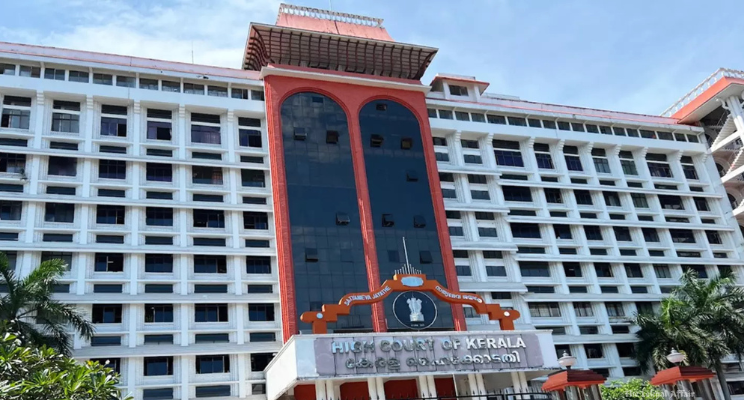
In Rameshan v. State of Kerala (Crl. M.C. No. 9203 of 2025; 2025 LiveLaw (Ker) 670), the Kerala High Court, through Justice C.S. Dias, delivered a progressive ruling on the interpretation of Section 351 of the Bharatiya Nagarika Suraksha Sanhita, 2023 (BNSS). The case revolved around the rights of an accused who was permanently exempted from personal appearance before the trial court and sought permission to answer the court’s questions either through a written statement or via electronic video linkage. The petitioner, employed abroad, faced prosecution under Section 55(g) of the Kerala Abkari Act. When the trial court dismissed his application requesting that his counsel be allowed to respond on his behalf during the Section 351 examination, he challenged the order before the High Court. The High Court’s judgment not only clarified the application of Section 351 BNSS but also harmonized it with the existing electronic linkage and filing rules, thereby advancing a technologically integrated and humane approach to criminal procedure.
Arguments of the Petitioner:
The petitioner, represented by advocates K.V. Anil Kumar, Radhika S. Anil, and Nijaz Jaleel, argued that the trial court’s refusal to permit him to respond through written statements or electronic means was contrary to the spirit and language of Section 351 of the BNSS. It was submitted that Section 351(5) explicitly provides for the filing of a written statement as an acceptable mode of compliance in lieu of personal examination. The counsel further relied upon the landmark Supreme Court judgments in Basavaraj R. Patil v. State of Karnataka [(2000) 8 SCC 740] and Keya Mukherjee v. Magma Leasing Ltd. [(2008) 8 SCC 447], which laid down the principles under Section 313 CrPC—now corresponding to Section 351 BNSS—regarding the dispensation of physical presence during questioning in cases of genuine hardship. The petitioner contended that since he had been permanently exempted from personal appearance due to employment abroad, compelling his physical presence for examination would amount to undue hardship and a procedural rigidity inconsistent with modern technological advances and legislative intent.
It was further argued that the Kerala High Court’s Electronic Video Linkage Rules for Courts, 2021 and Electronic Filing Rules for Courts, 2021 have been implemented precisely to ensure that justice is not hindered by physical limitations. Under Rule 11 of the Linkage Rules, the courts are vested with the discretion to conduct proceedings through video linkage for purposes including framing of charges, recording of statements under Section 313 CrPC (now Section 351 BNSS), and detention proceedings. The petitioner emphasized that with these enabling provisions and the clear legislative intent reflected in the BNSS to integrate digital access to justice, denying him such a facility would amount to a denial of procedural fairness and access to justice, guaranteed under Article 21 of the Constitution of India.
The petitioner’s counsel also drew the Court’s attention to Section 251(2) BNSS, which explicitly permits that charges may be read and explained to the accused either physically or through audio/video electronic means. This, it was submitted, further demonstrates the legislative recognition that technology can facilitate the conduct of criminal trials without compromising fairness or due process. The petitioner maintained that a purposive interpretation of Section 351 BNSS must be adopted, aligning it with both constitutional values and technological innovations, allowing him to either file a written statement or answer questions via video linkage.
Arguments of the Respondent (State):
The learned Senior Public Prosecutor, A. Vipin Narayan, opposed the petition, arguing that the personal appearance of an accused during the Section 351 BNSS examination serves a crucial purpose in the criminal trial. It provides the court with an opportunity to personally observe the demeanor of the accused and assess his responses to the incriminating circumstances appearing against him. The State contended that such an interaction between the court and the accused is vital to ensure authenticity and to rule out the possibility of coached or fabricated responses. Therefore, the trial court was justified in rejecting the request to allow the accused’s counsel to respond on his behalf.
The prosecution further submitted that while the BNSS and the Kerala Linkage Rules recognize electronic procedures, the use of such mechanisms must not dilute the substantive safeguard of direct judicial interaction. The respondent emphasized that technological facilities cannot be employed in a manner that circumvents the statutory requirement of the accused’s involvement during examination. It was contended that the legislative intention behind Section 351 BNSS is to ensure that the accused is made aware of the evidence against him and is given an opportunity to personally explain or rebut such evidence. Allowing mere written responses, the prosecution argued, may deprive the court of an opportunity to assess the voluntariness and credibility of those answers.
However, the prosecution acknowledged that in exceptional cases where physical appearance is impossible, courts may, in their discretion, permit alternate modes of compliance. Nevertheless, the respondent insisted that such discretion must be exercised sparingly and only upon the establishment of compelling circumstances, not merely for convenience. The prosecution therefore urged the Court to uphold the trial court’s decision and dismiss the petition.
Court’s Judgment:
After carefully considering the rival submissions and examining the relevant statutory provisions, Justice C.S. Dias observed that the question before the Court was whether an accused who has been permanently exempted from personal appearance could answer the questions under Section 351 BNSS either through a written statement or via video linkage. The Court began by referring to Section 351(5) BNSS, which expressly provides that “if the court dispenses with the personal attendance of the accused, it may accept a written statement filed by the accused as sufficient compliance with the provisions of this section.” This, the Court held, represents a clear legislative departure from the rigid requirements of Section 313 CrPC under the old regime, thereby embracing procedural flexibility and technological advancement in criminal trials.
The Court then referred to the Supreme Court’s rulings in Basavaraj R. Patil and Keya Mukherjee, which recognized that personal examination under Section 313 CrPC is not an inflexible requirement. In cases of genuine hardship—such as where the accused is abroad or incapacitated—the Court may allow the filing of written statements or use of technological means to ensure compliance. These decisions, according to the Kerala High Court, form the jurisprudential foundation upon which Section 351(5) BNSS is built. The BNSS, being a modernized code, has codified this judicial discretion to reflect contemporary realities and digital readiness in judicial processes.
Justice C.S. Dias emphasized that the purpose of questioning under Section 351 is not to trap the accused but to offer him a fair chance to personally explain any circumstances appearing in the evidence against him. The emphasis is on ensuring fairness and comprehension, not mechanical presence. If the accused’s answers—whether written or given through video linkage—fulfill this purpose, then procedural justice is fully served. The Court observed that the Electronic Video Linkage Rules for Courts (Kerala), 2021 and Electronic Filing Rules for Courts (Kerala), 2021 were introduced precisely to enable courts to conduct proceedings at all stages through electronic means, including during the recording of statements and framing of charges.
The Court highlighted that Rule 11 of the Linkage Rules empowers the court, at its discretion, to conduct proceedings through electronic linkage for purposes such as detention, framing of charges, and recording of statements under Section 351 BNSS. Further, Rule 8(16) prescribes the procedure for authentication and signing of electronically recorded statements, ensuring that such procedures maintain evidentiary sanctity. The Court also noted that Section 251(2) BNSS, which allows for charges to be read and explained to the accused via audio/video electronic means, reinforces this technological adaptability within the criminal justice system.
Justice Dias, adopting a purposive and harmonious interpretation, held that the confluence of Section 351 BNSS with the Kerala Linkage Rules and Filing Rules embodies a progressive legislative and judicial policy aimed at integrating technology to enhance access to justice. The Court underscored that justice delivery must adapt to the changing socio-technological landscape while ensuring fairness and inclusivity. Denying the accused, who was employed abroad and permanently exempted from appearance, the opportunity to respond via written statement or video linkage would amount to a rigid and unjust application of procedure.
The Court therefore concluded that there exists no legal impediment in permitting the petitioner to answer questions under Section 351 BNSS either by filing a written statement as per Section 351(5) or through electronic video linkage under the Linkage Rules, with proper authentication in accordance with Rule 8(16). Consequently, the High Court allowed the petition and set aside the trial court’s impugned order, directing that the petitioner may adopt either of these modes to respond to the court’s questions.
Justice Dias further remarked that this interpretation is in line with the broader constitutional philosophy of access to justice under Article 21 and the State’s commitment to modernization of judicial infrastructure. The judgment thus bridges the gap between procedural law and technological innovation, ensuring that justice remains accessible, flexible, and fair, even across borders.