


Introduction:
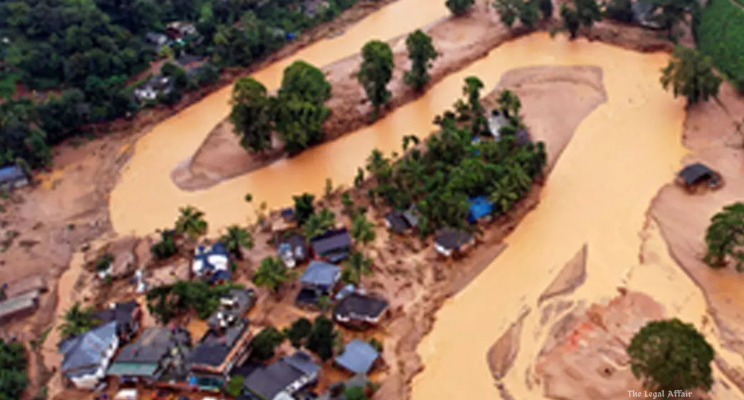
The Kerala High Court, in a significant observation, urged the Central government to consider relaxing the State Disaster Response Fund (SDRF) and National Disaster Response Fund (NDRF) norms. The division bench of Justice A.K. Jayasankaran Nambiar and Justice Easwaran S., while hearing In Re: Prevention And Management Of Natural Disasters In Kerala v. State of Kerala (WP(C) 28509/2024), underscored the pressing need to address rehabilitation efforts in the landslide-hit region of Wayanad. The State of Kerala informed the Court about its precarious financial position, with a substantial portion of SDRF funds committed to outstanding debts, including ₹180 crores for past airlifting services. The Court remarked that withholding these funds at a time of crisis exacerbates the challenges faced by the State. It directed the Central government to take a stand on relaxing norms by January 10, 2025, enabling the State to redirect these funds for immediate rehabilitation efforts.
Arguments of Both Sides:
The State of Kerala, in its submissions, laid out the financial strain it faces in addressing the rehabilitation needs of landslide-affected Wayanad. It revealed that out of the total ₹782.99 crores in the SDRF, significant sums were earmarked for arrears, including ₹120 crores for airlifting services provided in 2006, 2016, and 2017, and an additional ₹60 crores toward other pending bills. After accounting for various commitments, only ₹61.03 crores remain available for rehabilitation efforts. Highlighting the urgency of the situation, the State requested the Court to intervene and urge the Central government to relax SDRF/NDRF norms, freeing up ₹180 crores for immediate use in Wayanad.
The Court, while deliberating on the State’s predicament, questioned the timing of the Central government’s reminder for arrears in October 2024. The bench remarked that the request appeared to coincide with the State’s plea for disaster relief following the landslide in July. The Court noted that such reminders add psychological pressure on the State during crises, obstructing effective disaster management. It observed that relaxing norms would alleviate financial strain, enabling the State to focus on urgent rehabilitation efforts.
On the other hand, the Central government’s counsel argued that the arrears for airlifting services were long overdue and could not be ignored indefinitely. The government maintained that proper accounting of SDRF/NDRF funds was essential to ensure financial discipline. However, the counsel refrained from taking an immediate stand on the Court’s suggestion for norm relaxation, citing the need for higher-level consultations.
Court’s Judgment:
After examining the submissions, the Kerala High Court emphasized the need for flexibility in disaster management funds during crises. The bench observed that the ₹180 crores owed by the State to the Central government could be utilized more effectively for Wayanad’s rehabilitation if SDRF/NDRF norms were relaxed. It remarked that withholding these funds creates an unnecessary burden on the State, hindering its ability to address immediate needs. The Court directed the Central government to consider the request for norm relaxation and take a position by January 10, 2025.
The Court further highlighted the importance of proactive disaster management strategies. It criticized the delayed reminder for arrears, noting that such demands, made during times of crisis, reflect insensitivity to ground realities. The bench observed that while fiscal accountability is crucial, disaster relief efforts should not be compromised.
In addition to addressing financial concerns, the Court raised questions about the feasibility of hosting large-scale events like the Sunburn Festival in Wayanad. It expressed concerns about the environmental and logistical challenges of accommodating large crowds in a region recovering from a landslide. The Court directed the authorities to provide detailed plans for crowd and traffic management, as well as permissions obtained for the event. It emphasized the need to balance economic activities with environmental sustainability and disaster preparedness.
The judgment underscored the importance of intergovernmental cooperation in disaster management. It called on the Central government to adopt a compassionate approach, prioritizing rehabilitation over financial recoveries during emergencies. The bench urged the State to ensure transparency in utilizing SDRF funds, demonstrating accountability in disaster relief efforts. The Court’s proactive stance reflects its commitment to safeguarding the rights and welfare of affected communities while advocating for systemic improvements in disaster management policies.