


Introduction:
In a path-breaking judgment blending constitutional propriety with cultural sensibility, the Karnataka High Court has directed the Union of India to formulate distinct and comprehensive laws or guidelines governing restaurant businesses—bifurcating them into small, medium, and large establishments—to ensure that uniform standards of hygiene and food safety are maintained across all levels of consumption, from luxurious dining spaces to humble street stalls. The decision was rendered by Justice M. Nagaprasanna while disposing of a writ petition filed by the Karnataka Pradesh Hotel and Restaurants Association and another, who had challenged the constitutionality of the Food Safety and Standards Act, 2006 (FSSAI Act) and the Licensing and Registration of Food Businesses Regulations, 2011.
The Court not only upheld the validity of the existing legislative framework but also emphasized that the present classification of food business operators based merely on annual turnover was economically simplistic and failed to address the diverse operational realities of India’s vast culinary ecosystem. While recognizing the indispensable cultural and social role of street food and local eateries, the Court underscored the necessity of evolving a nuanced, tiered regulatory regime that balances public health, food hygiene, and traditional Indian culinary practices. The verdict thus stands as an intersection of constitutional governance, economic pragmatism, and cultural protectionism, reaffirming that “food safety has become an inescapable pillar of public governance.”
Arguments by the Petitioners:
The petitioners, represented by Senior Advocate Uday Holla and Advocate Vivek Holla, primarily contended that the Food Safety and Standards Act, 2006, and the Regulations framed under it in 2011, were unconstitutional, discriminatory, and arbitrary, thus violating Article 14 of the Constitution of India, which guarantees equality before the law. They argued that the classification of food business operators based solely on annual turnover failed to consider the size, capacity, or operational differences between various types of establishments. According to them, the same regulatory burden could not be imposed equally on a small eatery or street vendor and a large commercial restaurant chain.
They further submitted that the FSSAI regime’s licensing requirements were unreasonable and placed disproportionate compliance burdens on small operators, many of whom lacked the infrastructure, resources, or technical knowledge to adhere to the complex regulations. The petitioners pointed out that the notification issued by the Food Safety Commissioner dated 13 March 2012, mandating every food business operator to obtain FSSAI registration or license by August 4, 2012, was draconian and overlooked the socio-economic conditions of small vendors. They sought a declaration that such mandatory conversion from the earlier Prevention of Food Adulteration (PFA) licenses to FSSAI licenses was unconstitutional and violated their right to carry on business under Article 19(1)(g) of the Constitution.
It was also contended that the Indian legislation was a mechanical copy of the U.S. Food Safety and Standards Act, failing to appreciate the unique socio-economic fabric of India, where a significant portion of the population depends on small and unorganized food businesses. The petitioners claimed that by imposing similar standards and obligations across the board, the regulations discriminated against smaller establishments and were inherently inequitable. Furthermore, they argued that the Act lacked adequate transitional support, financial incentives, or capacity-building mechanisms to help small vendors comply with the new regime.
Their legal argument emphasized that the classification based on turnover had no rational nexus with the objective of ensuring food safety. Rather than turnover, factors like nature of food served, type of premises, method of preparation, and level of public access should determine the classification. Therefore, the petitioners sought judicial intervention to strike down the provisions or, at the very least, direct the government to introduce a more equitable and pragmatic framework.
Arguments by the Respondents:
The Union of India, represented by Deputy Solicitor General H. Shanthi Bhushan and Advocate Anuj Udupa, along with State counsel Spoorthy Hegde and Advocate Dore Raj, strongly defended the constitutionality of the FSSAI Act and its regulations. They argued that the Food Safety and Standards Act, 2006 had been enacted after exhaustive deliberation, with the objective of consolidating multiple food safety laws under a single umbrella, thereby ensuring uniformity and modern scientific standards across the nation. The Act received the President’s assent on 23 August 2006, and its constitutional validity was presumed unless explicitly struck down.
The respondents submitted that food safety regulations form an essential component of public health governance and that the government bears a constitutional duty under Article 47 to improve public health and nutrition. The respondents further highlighted that the FSSAI Act was based on international best practices, including principles adopted by the Codex Alimentarius Commission, an international food safety body recognized by the World Health Organization (WHO) and the Food and Agriculture Organization (FAO). Therefore, it could not be termed arbitrary merely because it adopted global benchmarks.
The government also rebutted the claim that the regulations imposed unreasonable restrictions on small business operators. They contended that the Act already provided for graded licensing—small operators could obtain registration instead of a full-fledged license, ensuring proportional regulation. The respondents emphasized that no law can compromise on food safety, as it directly concerns public health and human life. They argued that the petitioners’ plea, if accepted, would open the floodgates for non-compliance and compromise the health of millions of consumers.
The respondents further noted that similar legislation and food safety regimes exist globally, including in countries like the United States, Japan, the United Kingdom, and the European Union, all of which apply uniform safety standards to all food business operators, big or small. Hence, India’s regulatory approach could not be deemed excessive or unreasonable. The government also pointed out that several High Courts and the Supreme Court had previously upheld the constitutionality of the Act, affirming that it serves an essential public purpose and aligns with the directive principles of state policy.
Court’s Judgment:
After hearing both sides, Justice M. Nagaprasanna delivered a detailed and visionary judgment that simultaneously upheld the constitutionality of the Food Safety and Standards Act, 2006 and directed the Union Government to undertake a structured reform of its regulatory framework. The Court observed that while the petitioners’ concerns regarding practical difficulties were legitimate, they did not justify invalidating the law, which served a vital public purpose.
The Court emphasized that the Food Safety and Standards Act and its regulations are lawful instruments of a benevolent legislative will, designed to safeguard citizens’ health, prevent adulteration, and ensure quality food standards. The Court noted that “each of these judgments delivered subsequent to the filing of the present petition reaffirms in resounding unanimity the vital public purpose that the Act serves – the preservation of food safety.” Hence, the Court refused to dilute the standards or read down the provisions merely because compliance was onerous for some operators.
However, acknowledging the cultural and operational diversity of India’s food sector, the Court directed the Union of India to enact new laws or guidelines bifurcating restaurant businesses into small, medium, and large categories based not only on turnover but also on scale, structure, and nature of service. It observed that the current classification based purely on financial metrics ignores the realities of India’s culinary sector, where hygiene and safety must be uniformly upheld across economic hierarchies.
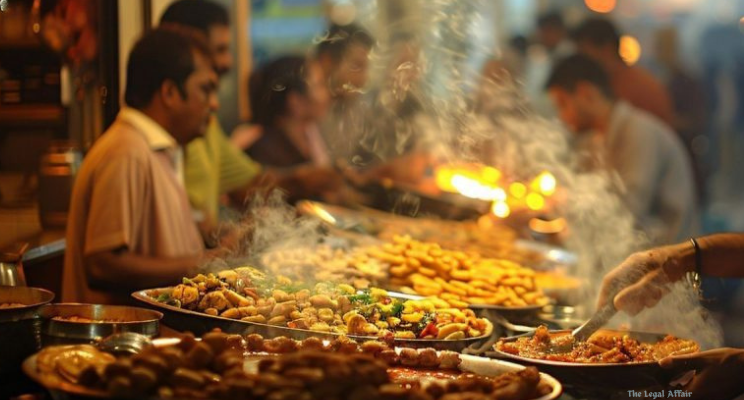
In a culturally sensitive observation, the Court recognized the irreplaceable value of India’s street food culture, describing it as a “cherished norm where the spirit of Indian cuisine thrives, from humble roadside stalls to modern food trucks and uber restaurants.” Nevertheless, the Court stressed that even traditional food practices must align with modern health and hygiene standards. It directed the State Government to bring in Health and Safety Standard Regulations for street vendors and food trucks and to create a mechanism for vigilant enforcement.
The judgment thus struck a fine balance between protecting public health and preserving India’s culinary heritage. It recognized that while the street vendor and five-star chef both embody India’s food diversity, both must adhere to safety norms appropriate to their scale and setting. The Court concluded that a tripartite bifurcation of restaurant businesses—small, medium, and large—was essential to achieve a practical and just balance between regulatory stringency and operational flexibility.
Ultimately, the High Court upheld the constitutionality of the FSSAI Act and Regulations, declared the petition devoid of merit, and disposed of it with the following key directives:
Mandamus to the Union of India to frame specific and separate guidelines for restaurant businesses dividing them into small, medium, and large categories.
Directive to the State Government to frame Health and Safety Regulations for street vendors and food trucks and to monitor their strict enforcement.
Reaffirmation that the Food Safety and Standards Act, 2006 and the Regulations of 2011 are constitutionally valid, reasonable, and necessary for public welfare.
Observation that food safety and public health cannot be compromised in the guise of business convenience.
The Court’s reasoning elegantly fused constitutional interpretation with social consciousness, noting that “food safety has become an inescapable pillar of public governance” and that modern India must embrace a holistic, culturally aware approach to food regulation that honors its traditions while protecting its people.