


Introduction:
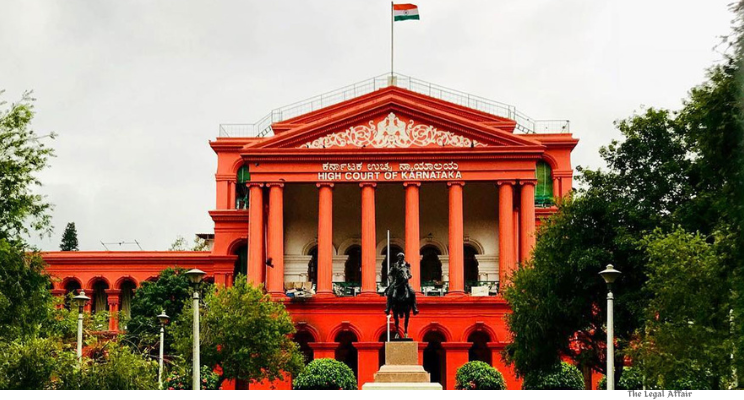
In a notable ruling, the Karnataka High Court addressed the crucial issue of maintenance in divorce proceedings, emphasizing the importance of adherence to court orders. The case centered around a petition filed by an estranged wife, identified as ABC, challenging the dismissal of her application for a stay on the divorce proceedings initiated by her husband, XYZ. The wife sought to compel her husband to pay the arrears of interim maintenance as previously ordered by the court. A single judge bench, led by Justice Lalitha Kanneganti, granted the petition and set aside the trial court’s order, thus reinforcing the obligation of spouses to comply with maintenance orders in matrimonial disputes.
The legal background to the case dates back to 2016 when the wife was granted interim maintenance by the trial court. Despite this order, the husband failed to pay the dues, prompting the wife to file an application seeking to stay the divorce proceedings until the arrears were settled. The trial court, however, dismissed her application, leading to her appeal before the High Court. Justice Kanneganti’s observations brought attention to a troubling trend where husbands often evade maintenance payments while pursuing divorce actions, thereby leaving their spouses in precarious financial situations.
Arguments of Both Sides:
Arguments by the Estranged Wife (Petitioner):
The wife contended that the trial court failed to exercise its inherent jurisdiction in dismissing her application for a stay on the divorce proceedings. She argued that it was unjust for the husband to pursue divorce while neglecting his legal obligation to pay maintenance. The petitioner emphasized that interim maintenance is designed to ensure that the wife can afford the basic necessities of life and to enable her to engage in legal proceedings without undue hardship.
The petitioner further asserted that the husband’s non-compliance with the court’s maintenance order undermined the judicial process and denied her the fruits of the legal remedies available to her. She highlighted the significant delay in receiving maintenance payments, which had left her struggling financially. The wife urged the High Court to recognize the inherent power of the court to stay proceedings in the interest of justice, particularly in cases where one party is willfully defying court orders.
In her submissions, she pointed out the practical difficulties faced by women in similar situations, where they are often left without adequate financial support while legal battles ensue. By staying the divorce proceedings until the maintenance was paid, she argued, the court would not only uphold the dignity of the judicial process but also protect the rights of the aggrieved spouse.
Arguments by the Estranged Husband (Respondent):
The husband countered the wife’s application by arguing that she had alternative remedies available to her, such as filing execution proceedings to recover the arrears of maintenance. He contended that staying the divorce proceedings was not warranted and that the wife should pursue the appropriate legal channels to enforce the maintenance order. The respondent maintained that the legal system provided mechanisms for executing court orders, and it was not necessary to impose additional conditions on the divorce proceedings.
In addition, the husband argued that the trial court’s rejection of the stay application was justified given the elapsed time since the interim maintenance order was issued in 2016. He pointed out that the wife had not taken timely action to enforce the order, which weakened her argument for a stay. He insisted that the court should not interfere with the divorce proceedings and should allow the legal process to unfold without additional hindrance.
The husband further argued that forcing him to pay the maintenance before proceeding with the divorce would unduly burden him and impede the fair resolution of the matter. He asserted that both parties should be allowed to pursue their claims without interference from the court, arguing that the wife was attempting to use the maintenance issue as leverage in the divorce proceedings.
Court’s Judgment:
The Karnataka High Court, in its deliberations, sided with the estranged wife, recognizing the broader implications of the case on matrimonial justice. Justice Lalitha Kanneganti criticized the prevailing trend of husbands evading maintenance obligations while pursuing divorce actions. The court noted that such behavior not only undermines the authority of the judicial system but also places an undue burden on the wife, who is often left struggling to meet her basic needs.
In its judgment, the court underscored the principle that interim maintenance is intended to facilitate the legal process for the wife, ensuring she can sustain herself while her rights are adjudicated. The bench pointed out that the refusal to stay the divorce proceedings effectively allowed the husband to benefit from his non-compliance with court orders, which was fundamentally unjust.
The court highlighted its authority under Section 151 of the Civil Procedure Code (CPC), which allows for the exercise of inherent powers to ensure justice is served. It emphasized that when one party blatantly disobeys court orders while simultaneously seeking further judicial relief, the court has a duty to intervene to prevent abuse of the legal process. The High Court found that the trial court had failed to exercise its discretion appropriately and allowed the wife’s plea, staying all further divorce proceedings until the arrears of maintenance were paid.
Furthermore, the High Court mandated that the family court should expedite the resolution of the divorce proceedings once the arrears were cleared, with a directive to dispose of the matter within six months, recognizing that the case had already been pending for eight years.