


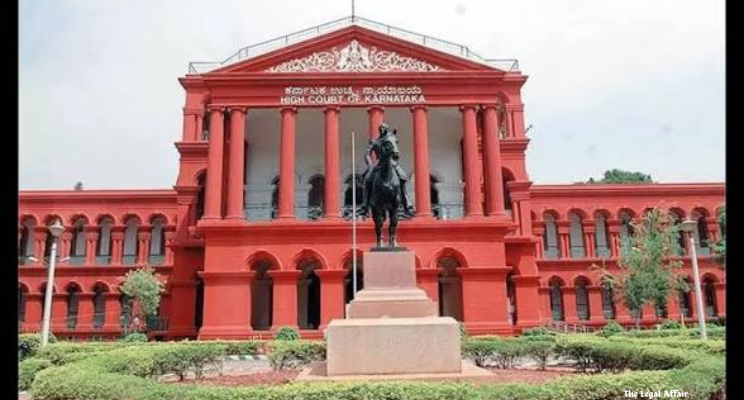
Introduction:
In a significant ruling reinforcing the constitutional principle of equality and fair treatment by the State, the Karnataka High Court directed the State Government to consider granting withheld rewards to several forest department personnel who participated in the historic ‘Operation Cocoon’, the mission that led to the neutralisation of the notorious forest brigand and sandalwood smuggler Veerappan in 2004. The judgment was delivered by Justice Sachin Shankar Magadum in Srinivasa S & Others v. State of Karnataka, Writ Petition No. 1190 of 2026 along with connected matters.
The case arose from a prolonged dispute concerning the distribution of rewards announced by the Karnataka Government for personnel associated with the Special Task Force (STF) that carried out Operation Cocoon. The petitioners included several retired and serving forest department employees such as forest guards, watchers, and drivers who had actively participated in the STF operations during the years when Veerappan’s criminal network posed a major challenge across the forest regions of Karnataka and Tamil Nadu.
Veerappan, known for sandalwood smuggling, poaching, kidnappings, and violent crimes, remained one of India’s most elusive forest outlaws for decades. In October 2004, following a long and coordinated operation involving police and forest officials, he was killed in what became known as “Operation Cocoon.” The mission was widely regarded as a major success for law enforcement agencies and involved extensive intelligence gathering, logistical support, and coordinated field operations carried out by numerous personnel over several years.
Following the successful completion of the operation, the Director General and Inspector General of Police submitted proposals to the Government recommending reward payments for officers, staff members, and informants who contributed to the mission. Pursuant to this recommendation, the Government issued an order dated July 8, 2005 identifying several STF personnel, including the present petitioners, as eligible beneficiaries entitled to receive rewards in recognition of their contribution to the operation.
However, despite the issuance of the Government Order, the rewards were not fully disbursed to all eligible personnel. Over time, dissatisfaction emerged among several STF members who claimed that the State had arbitrarily withheld their benefits despite formally recognizing their role in the operation. Matters became more complicated when the Government issued an endorsement dated August 17, 2015 restricting reward payments only to six officers who were allegedly present on the specific date when Veerappan was neutralized on October 18, 2004.
This restrictive interpretation effectively excluded numerous forest department personnel who had participated in the STF operation over a prolonged period but were not physically present during the final encounter. Aggrieved by the exclusion, several personnel approached the Karnataka High Court in earlier rounds of litigation. In 2024, a coordinate bench of the High Court quashed the 2015 endorsement and held that denying rewards to other eligible personnel was arbitrary and discriminatory.
The present batch of petitions was filed by similarly situated forest department personnel seeking extension of the same relief granted in the earlier judgment. The petitioners argued that once the High Court had already declared the Government’s restrictive approach illegal, the State was duty-bound to extend the benefits to all similarly placed personnel without compelling each individual to approach the court separately.
The case therefore raised important constitutional questions regarding equality before law, non-discrimination, administrative fairness, and the obligation of the State to act as a model employer. The judgment ultimately became an important reaffirmation of the principle that once relief is granted to one set of similarly situated employees, the State cannot selectively deny identical treatment to others belonging to the same class.
Arguments of the Parties:
The petitioners contended that they had actively served as members of the Special Task Force constituted for anti-Veerappan operations and had rendered valuable assistance throughout the lengthy and dangerous mission. Represented by Advocate B.S. Nagaraj, the petitioners argued that the Government itself had acknowledged their contribution by including their names in the list of eligible beneficiaries under the Government Order dated July 8, 2005.
According to the petitioners, once their names were formally included among the recognized beneficiaries, the State could not later alter the eligibility criteria and arbitrarily restrict the benefits to a handful of officers alone. They argued that the subsequent endorsement issued in 2015, which confined reward eligibility only to six officers allegedly present at the time of Veerappan’s death, was contrary to the original Government Order and fundamentally discriminatory.
The petitioners emphasized that Operation Cocoon was not a one-day event but the culmination of years of coordinated efforts involving multiple personnel from police and forest departments. They argued that the mission required sustained intelligence gathering, logistical coordination, forest surveillance, operational planning, and support functions performed by numerous officials over an extended period. Therefore, restricting rewards only to officers present during the final encounter ignored the collective nature of the operation.
The petitioners further relied upon the earlier judgment of the coordinate bench in W.P. No. 10982/2018, wherein the High Court had already quashed the 2015 endorsement and held the State’s restrictive interpretation to be arbitrary and unconstitutional. According to them, the issues involved in the present batch of petitions were identical to those already adjudicated by the Court.
It was argued that once the High Court had settled the legal issue and directed payment of rewards to similarly situated personnel, the State was constitutionally obligated to extend the same treatment to all eligible members without compelling each of them to initiate fresh litigation. The petitioners maintained that forcing similarly placed employees to repeatedly approach courts for identical relief amounts to administrative unfairness and unnecessary harassment.
The petitioners also invoked the constitutional principle of equality under Article 14 of the Constitution. They contended that selective denial of rewards despite identical service conditions and recognized participation in the STF amounted to hostile discrimination. According to them, the State cannot adopt different standards for employees belonging to the same class when the factual and legal circumstances are identical.
On the other hand, the State Government, represented by Additional Government Advocate Aditya Diwakar, defended the 2015 endorsement and attempted to justify the restricted distribution of rewards. The State argued that the Government possessed the discretion to determine the criteria for grant of rewards and to identify personnel who played a direct role in the final operation leading to Veerappan’s death.
The State maintained that the ultimate success of Operation Cocoon depended upon the officers who were directly involved in the final phase of the operation on October 18, 2004. Therefore, according to the Government, the decision to limit rewards to those officers was reasonable and within administrative discretion.
The State also contended that participation in the STF by itself did not automatically confer a vested right to claim rewards. It argued that reward schemes are generally discretionary in nature and depend upon the degree of contribution assessed by the competent authorities.
However, the petitioners countered this argument by pointing out that the State itself had already identified them as eligible beneficiaries in the 2005 Government Order. Therefore, they argued that the Government could not subsequently adopt an inconsistent position by denying benefits to the very individuals earlier declared eligible.
Another important aspect highlighted by the petitioners was that the State’s continued resistance despite the earlier coordinate bench judgment amounted to disregard of judicial discipline and constitutional fairness. They argued that the Government should have voluntarily extended the benefit of the earlier ruling to all similarly situated personnel instead of compelling each individual to file separate writ petitions.
The petitioners further relied upon principles laid down in earlier judicial precedents emphasizing that once relief is granted to one set of employees belonging to a particular category, the State must extend similar treatment to all others identically placed unless there exists a valid distinguishing factor.
Thus, the central dispute before the Court revolved around whether the State could continue withholding rewards from similarly situated STF personnel after the earlier High Court judgment had already declared such exclusion arbitrary and discriminatory.
Court’s Judgment:
The Karnataka High Court allowed the batch of writ petitions and directed the State Government to consider the petitioners’ claims for release of reward amounts in terms of the Government Order dated July 8, 2005 within a period of twelve weeks.
Justice Sachin Shankar Magadum delivered a detailed judgment emphasizing the constitutional obligation of the State to treat similarly situated persons equally and to avoid unnecessary litigation where legal issues have already attained finality.
At the outset, the Court noted that the controversy involved in the present petitions was no longer res integra because a coordinate bench of the High Court had already examined the validity of the 2015 endorsement in earlier proceedings. That judgment had categorically held that the Government’s attempt to restrict rewards only to a few officers present during the final encounter was arbitrary, discriminatory, and contrary to the object underlying the original Government Order.
The Court observed that the earlier coordinate bench had undertaken an elaborate examination of the factual background and clearly concluded that all personnel whose names appeared in the eligible beneficiaries’ list prepared pursuant to the 2005 Government Order were entitled to consideration for rewards. Therefore, the State was estopped from contending that only a limited set of officers deserved recognition.
Justice Magadum strongly criticized the State’s conduct in continuing to deny relief to similarly situated personnel despite the earlier judicial pronouncement. The Court remarked that once the very substratum of the dispute — namely the 2015 endorsement — had already been quashed by the High Court, the Government ought to have implemented the spirit of that judgment uniformly instead of forcing each affected employee to seek separate legal remedies.
The Court stressed that the State, as a model employer, bears a constitutional responsibility to act fairly, reasonably, and consistently. According to the judgment, when a court grants relief to one class of employees after adjudicating a common issue, the State cannot selectively extend the benefit only to those who approached the court while denying the same treatment to others identically situated.
The Court relied upon the principle laid down by the Division Bench in Nagappa v. State of Karnataka, observing that the doctrine of equality requires the Government to voluntarily extend benefits arising from judicial decisions to all similarly placed individuals. The Court clarified that compelling employees to repeatedly litigate identical issues undermines public administration and burdens the judicial system unnecessarily.
Justice Magadum held that the present petitioners stood on “identical footing” with the beneficiaries in the earlier writ petitions. Their names had already been recognized in the 2005 Government Order, and there existed no legally sustainable basis to deny them similar treatment.
The Court also emphasized that Operation Cocoon was a collective mission involving coordinated efforts from numerous personnel across departments. Therefore, limiting recognition only to officers physically present during the final encounter defeated the broader purpose behind the reward scheme, which was intended to acknowledge the contribution of all individuals involved in the successful operation.
Importantly, the judgment recognized the doctrine of parity as a core constitutional principle. The Court held that denying the same benefits to similarly placed petitioners would amount to “perpetuation of illegality.” Once the earlier judgment attained finality, the State was duty-bound to maintain consistency and fairness in implementation.
The Court further observed that constitutional governance demands adherence not only to technical legality but also to substantive fairness. Administrative authorities cannot arbitrarily distinguish between individuals belonging to the same category where no rational basis for differentiation exists.
Consequently, the Court directed the State Government to consider the petitioners’ claims for release of reward amounts in terms of the Government Order dated July 8, 2005 while keeping in view the legal principles laid down in the earlier batch of writ petitions. The exercise was ordered to be completed within twelve weeks.
The judgment carries broader significance in service jurisprudence and administrative law. It reiterates that governments cannot compel citizens or employees to repeatedly litigate settled issues merely because they were not parties to earlier proceedings. The ruling reinforces the idea that the State must function as a fair and responsible employer guided by constitutional values rather than narrow technicalities.
Beyond the immediate dispute concerning Operation Cocoon rewards, the decision serves as an important reminder that equality before law is not confined to abstract constitutional language but extends to everyday administrative actions affecting employees and public servants. By directing uniform treatment for all eligible STF personnel, the Karnataka High Court reaffirmed that recognition for public service cannot be selectively distributed in a discriminatory manner once entitlement has already been judicially acknowledged.