


Introduction:
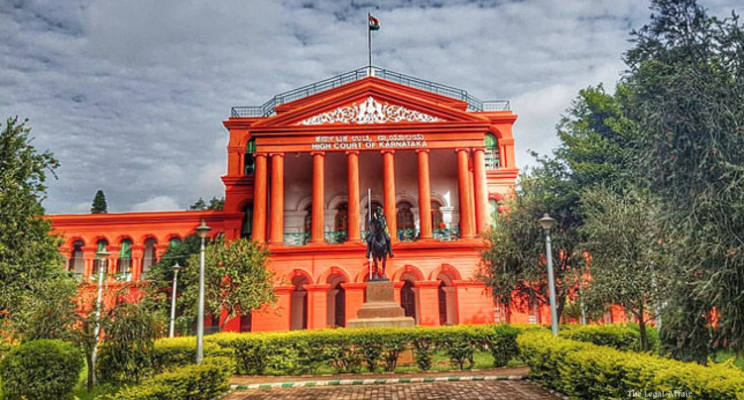
In the case, Dr. Mohankumar M. v. State of Karnataka, the Karnataka High Court addressed a key issue regarding the scope of revision in discharge applications under criminal law. The petitioner, Dr. Mohankumar M., sought discharge from criminal charges of abetment and corruption, claiming that his financial assistance to the daughter of the first accused did not amount to criminal involvement. The case involved allegations that the petitioner helped the first accused, Dr. C. Anisha Roy, legalize an illegal sum of money by making a payment of Rs. 25 lakhs for his daughter’s M.D. (Pediatric) admission. The Karnataka High Court, led by Justice H.P. Sandesh, dismissed the revision petition, emphasizing that a revision against a discharge order has a very limited scope. The court reiterated that, in discharge applications, the court is only required to assess the material collected by the investigating officer and cannot entertain a full defence or conduct a mini-trial.
Arguments of Both Sides:
The petitioner, Dr. Mohankumar, argued that the allegations against him were baseless and stemmed from his act of providing financial assistance to a friend. He clarified that he had transferred Rs. 25 lakhs directly to the educational institution for the admission of the first accused’s daughter, and this payment was made using his self-earned money, which was duly reflected in his income tax returns and bank accounts. Dr Mohankumar contended that the financial transaction was legitimate and that there was no intention of abetting any criminal activity. He emphasized that the transaction had been transparent and made directly to the institution’s account, with no personal benefit gained from the payment. Additionally, he sought discharge because the payments made were purely for educational purposes and did not attract Section 109 of the Indian Penal Code (IPC) for abetment.
On the other hand, the prosecution opposed the discharge application, asserting that the evidence collected during the investigation pointed to a suspicious nature of the transactions. The prosecution noted that although the petitioner claimed to have made the payment from his funds, the sudden deposit of Rs. 17.5 lakhs into his account raised doubts. Furthermore, the petitioner had not disclosed these deposits in his income tax returns, indicating a potential attempt to conceal the source of funds. The prosecution argued that the documents gathered by the investigating officer provided sufficient grounds to move forward with the case and that the petitioner’s explanation could only be considered during the trial, not at the discharge stage.
Court’s Judgment:
The Karnataka High Court, while rejecting the revision petition, emphasized that the scope of revision in discharge applications is extremely limited. Justice Sandesh observed that in such applications, the court must only consider the material presented by the investigating officer and cannot engage in evaluating the merits of the defence or conduct a mini-trial. The court explained that the primary function of the court at this stage is to examine whether there is sufficient material on record to proceed with the case.
In this case, the court acknowledged that the petitioner did not dispute the fact that he had made the Rs. 25 lakh payment to the educational institution. However, the court also noted that the investigation had revealed additional evidence, including the sudden deposit of Rs. 17.5 lakhs and Rs. 9.95 lakhs in cash into the petitioner’s account before the payment. This raised concerns about the legitimacy of the funds. The court clarified that such transactions could not be dismissed as mere defence arguments and must be considered as part of the investigation material.
The court rejected the petitioner’s claim that the amounts were self-earned and reflected in his income tax returns, highlighting that the investigating officer had collected sufficient evidence to suggest otherwise. The petitioner’s explanation regarding the source of the funds was deemed insufficient and speculative, especially given the nature and timing of the deposits.
Regarding the petitioner’s plea for discharge based on parity, the court also ruled against it. While the petitioner pointed out that two other accused, Nos. 3 and 5, had been discharged by the trial court, and the court found that the circumstances surrounding those discharges were not comparable. The petitioner had failed to explain the source of the deposited cash, unlike the other accused. The court held that the mere fact that other accused were discharged did not provide a valid basis for the petitioner’s discharge.
Justice Sandesh concluded by reaffirming that the discharge application was rightly rejected by the trial court, as the material on record was sufficient to proceed with the case. The revision petition was, therefore, dismissed. The court reiterated that in cases like these, where the material suggests possible criminal activity, the role of the court is limited to ensuring that the case moves forward, allowing the defence to present its arguments during the trial.