


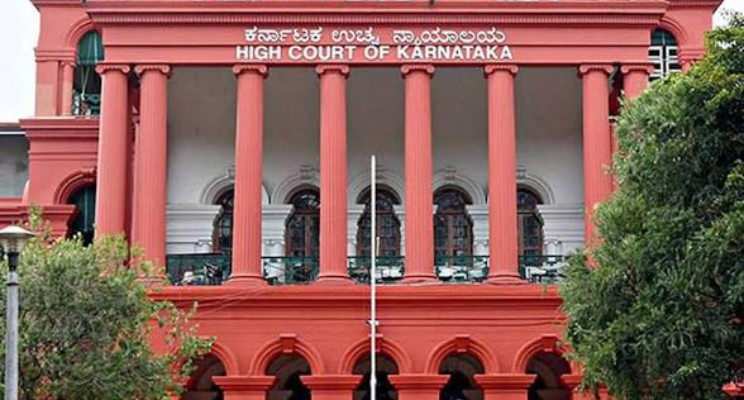
Introduction:
The case of Krishna J. Rao v. State of Karnataka & Anr. (WP No. 11843/2026) came before the Karnataka High Court, presenting a complex and sensitive intersection of criminal law, consent, social realities, and the welfare of a child born out of the alleged acts. The matter was heard by Justice M. Nagaprasanna, who was called upon to decide a petition seeking quashing of an FIR registered under provisions of the Bharatiya Nyaya Sanhita, 2023.
The petitioner, a 22-year-old student, had been accused of repeatedly engaging in sexual relations with his classmate on the false promise of marriage, leading to her pregnancy and the birth of a child. The FIR invoked serious provisions, including Section 64(2)(m) (rape repeatedly on the same woman) and Section 69 (sexual intercourse by deceitful means) of the BNS.
The case, however, did not present a straightforward narrative of criminality. The petitioner contended that the relationship was consensual, while the complainant highlighted the devastating consequences of the petitioner’s alleged conduct—her disrupted future, the birth of a child, and the financial and emotional burden placed on her and her family.
Faced with these competing claims, the High Court adopted an unusual but pragmatic approach. While staying further proceedings in the criminal case, it imposed a condition requiring the petitioner to pay ₹75,000 per month for the maintenance of the victim and the child.
The case thus raises significant legal and ethical questions: Can consent be invoked in relationships where promises of marriage are involved? What is the responsibility of a biological father in such circumstances? And how should courts balance criminal liability with immediate humanitarian concerns?
Arguments on Behalf of the Petitioner:
The petitioner, represented by Senior Advocate PP Hegde, argued that the allegations in the FIR did not constitute an offence under the Bharatiya Nyaya Sanhita, 2023. It was contended that the relationship between the petitioner and the complainant was consensual and based on mutual affection.
Counsel emphasized that the parties were in a romantic relationship and had willingly engaged in physical relations. Therefore, the essential ingredients of Section 64(2)(m), which deals with repeated rape, were not satisfied. Similarly, it was argued that Section 69, which criminalizes sexual intercourse obtained through deceitful means such as false promise of marriage, would not apply in a case where the relationship was genuinely consensual and not induced by fraud.
The petitioner also raised concerns regarding the impact of media coverage on the case. It was argued that the matter had attracted significant public attention, leading to a “media trial” that could prejudice the petitioner’s rights. Counsel submitted that the petitioner was a young student and that the continued publicity surrounding the case was causing irreparable harm to his reputation and future prospects.
It was further pointed out that the petitioner’s family had political affiliations, which had led to the issue being amplified by rival groups. Counsel urged the Court to impose restrictions on media reporting to ensure a fair adjudication of the case.
At the same time, the petitioner’s counsel acknowledged the need to safeguard the interests of the child. It was submitted that the petitioner was willing to comply with any directions issued by the Court in this regard, while maintaining that the criminal proceedings themselves were unwarranted.
Arguments on Behalf of the Complainant:
The complainant, represented by Advocate Francis Xavier, presented a starkly different picture. It was argued that the petitioner had taken advantage of the complainant’s trust and engaged in repeated sexual relations under the false promise of marriage.
Counsel emphasized the severe consequences of the petitioner’s actions. The complainant, who was at a formative stage of her life, had become a mother and was now burdened with responsibilities that had significantly altered her future. The argument highlighted the emotional, social, and economic challenges faced by the complainant and her family.
It was pointed out that the complainant’s parents belonged to economically weaker sections, with her mother working as a housekeeping staff and her father as a daily wage labourer. The birth of the child had placed an additional financial strain on the family, leaving them in a precarious situation.
A critical submission was that the petitioner had not taken any responsibility for the child, despite being the biological father—a fact established through medical testing. Counsel argued that the petitioner had not visited the child or provided any support, thereby abandoning both the complainant and the child.
The complainant’s counsel also opposed any attempt to trivialize the matter as a consensual relationship. It was argued that consent obtained on the basis of a false promise of marriage is not genuine consent and falls within the ambit of criminal law.
At the same time, the complainant’s counsel assured the Court that the victim and her family would exercise restraint in engaging with the media, in order to maintain the dignity and sensitivity of the proceedings.
Judgment:
The Karnataka High Court, through Justice M. Nagaprasanna, delivered an order that reflects both legal reasoning and humanitarian concern.
At the outset, the Court acknowledged the petitioner’s argument that the relationship may have been consensual. It observed that if the case involved only consensual acts without further consequences, it might have considered staying the proceedings in their entirety.
However, the Court noted that the present case involved additional and significant factors—most notably, the birth of a child. This fact fundamentally altered the nature of the dispute, introducing considerations of responsibility, welfare, and justice that could not be ignored.
The Court observed that the complainant, a young woman, had been placed in an extremely difficult position. Her future prospects had been severely impacted, and she was now faced with the responsibility of raising a child. The Court remarked on the harsh reality that she had to choose between her own future and the care of her child.
Importantly, the Court took note of the petitioner’s admitted status as the biological father. This acknowledgment, supported by medical evidence, established a clear link between the petitioner and the child, thereby imposing a moral and legal responsibility.
In light of these circumstances, the Court adopted what it described as a “unique solution to a unique problem.” It granted an interim stay on further proceedings in the criminal case but made it conditional upon the petitioner providing financial support.
The Court directed that the petitioner, either personally or through his parents, must pay ₹75,000 per month to the complainant for the maintenance of the child and the mother. It further directed that the first payment be made immediately and subsequent payments be made on a monthly basis.
The Court’s approach reflects a balancing of interests. On one hand, it preserved the petitioner’s right to challenge the FIR and seek quashing. On the other hand, it ensured that the immediate needs of the complainant and the child were addressed.
The Court also addressed the issue of media coverage. While it declined to impose a blanket gag order, it directed the parties to exercise restraint and avoid engaging with the media. The Court noted that it cannot control external actors but emphasized the responsibility of the parties to maintain the dignity of the proceedings.
The matter was listed for further hearing, indicating that the Court’s order was interim in nature and subject to final adjudication.