


Introduction:
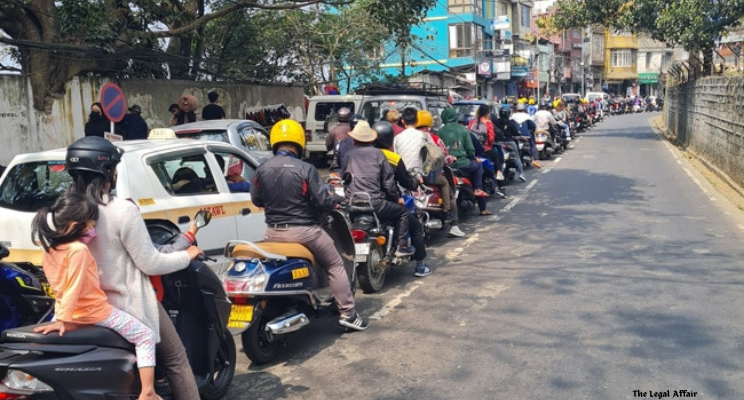
The Karnataka High Court, in the case Dr Archana Bhat K. v. State of Karnataka & Anr. [WP 27135/2023], has directed the state government to furnish details regarding the enforcement of helmet laws and other road safety measures for two-wheeler riders. The division bench, comprising Chief Justice N. V. Anjaria and Justice M. I. Arun, expressed concerns over the rampant violation of helmet rules and the increasing number of reckless driving incidents, particularly among youngsters in Bengaluru. The court observed that three-person rides, wheelies, and non-compliance with safety norms have become a serious issue, leading to accidents and fatalities. The observations were made while hearing a public interest litigation (PIL) filed by Dr Archana Bhat K., who sought urgent measures to ensure the availability of child safety helmets and harnesses for children as young as nine months. While considering the PIL, the court expanded its focus beyond the implementation of Rule 138(7) of the Central Motor Vehicle (Second Amendment) Rules, 2022, emphasizing that overall road safety measures for two-wheeler riders must be addressed by the government. The state has been granted time until March 11 to submit its response.
Arguments of Both Sides:
The petitioner, Dr. Archana Bhat K., represented by her counsel, argued that child safety in two-wheelers has been neglected despite existing legal provisions. She emphasized that in several countries, including Sri Lanka, child helmets are widely available, and similar safety measures should be implemented in India. The petition highlighted Rule 138(7) of the Central Motor Vehicles (Second Amendment) Rules, 2022, which mandates that a safety harness must be used to attach children below four years to the driver of the motorcycle. However, the petitioner pointed out that helmets designed for children under four years are largely unavailable in India, leaving them vulnerable to serious injuries in case of accidents. The plea urged the court to direct the state to ensure an adequate supply of child-friendly helmets and enforce compliance with the safety measures prescribed in the amendment.
On the other hand, the Karnataka state government, while acknowledging the petitioner’s concerns, informed the court that steps have already been initiated to address the issue. The government stated that a meeting with helmet manufacturers had been conducted, and discussions regarding the production and availability of child safety helmets were ongoing. A helmet designed for children above four years was produced before the court, but the government admitted that its suitability for children below that age remained uncertain. The state contended that the matter required careful examination before implementing any directives. However, the government did not provide a clear explanation regarding the enforcement of existing helmet laws for adults and general road safety violations.
Court’s Judgment:
The Karnataka High Court took a strong stance against the lack of enforcement of road safety laws, particularly concerning helmets and reckless two-wheeler riding. The bench noted that helmet laws were already in place but were not being implemented effectively. Expressing frustration over the state’s inaction, the court observed that in Bengaluru, it was common to see three persons riding a two-wheeler, performing dangerous stunts such as wheelies, without any action being taken by the police. The judges remarked that such behaviour had caused numerous accidents and fatalities, making strict enforcement of safety rules imperative.
The court clarified that its approach in this case would not be limited to the implementation of Rule 138(7) but would also encompass the broader issue of helmet enforcement for all two-wheeler riders, including pillion riders. The bench emphasized that the state’s response should detail the measures undertaken to address reckless riding, enforce helmet laws, and prevent overloading of two-wheelers. The judges also questioned the practical viability of child safety helmets, directing the government to provide further clarification on their usability for children under four years. The state has been given time until March 11 to submit a comprehensive reply addressing all these aspects.
This ruling reflects the court’s commitment to improving road safety and ensuring strict adherence to existing traffic regulations. The judgment underscores the necessity for proactive governance and responsible law enforcement to curb reckless driving habits and prevent avoidable accidents.