


Introduction:
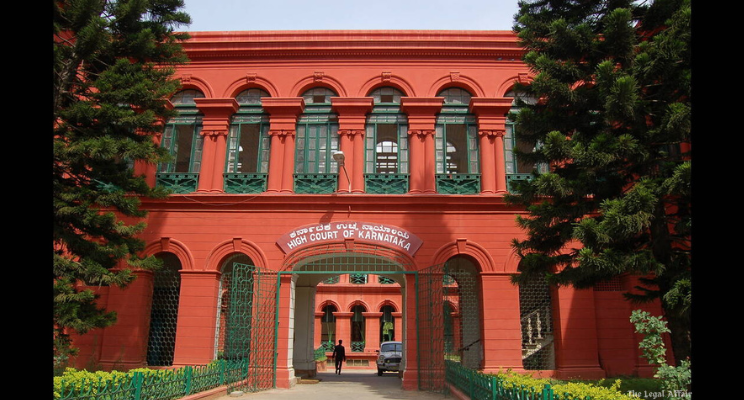
In the case of M/s. Imagex Technologies India Pvt. Ltd. & Anr v. M/s. Graintec Industries & Anr, bearing Writ Petition No. 34745 of 2024 and reported as 2025 LiveLaw (Kar) 205, the Karnataka High Court, presided by Justice M. Nagaprasanna, has emphatically reaffirmed the statutory bar on accepting written statements beyond the 120-day limitation period prescribed under Order VIII Rule 1 of the Code of Civil Procedure, 1908, in commercial disputes. The petitioners in this matter, defendants in a commercial suit for the recovery of money, had challenged the rejection of their application to file a written statement beyond the statutory deadline by the trial court. The issue before the High Court centered on whether the filing of a written statement could be permitted if the defendant, prior to the expiry of 120 days from service of summons, had moved an application seeking an extension of time.
Arguments:
The petitioners, represented by Advocate G.S. Venkat Subbarao, argued that while the statutory limitation for filing a written statement is 30 days from service of summons, the proviso allows for extension up to 120 days for valid reasons recorded in writing. They contended that since they sought an extension before the lapse of 120 days, the application ought to have been considered and allowed. Emphasizing procedural flexibility and fairness, the petitioners submitted that rigid application of procedural timelines should not defeat substantive rights, especially when the application was made in advance of the statutory deadline. They invoked the court’s inherent powers under Section 151 CPC and also sought relief under Section 5 of the Limitation Act, arguing that procedural rules should not be construed in a manner that causes injustice.
The respondents, M/s. Graintec Industries, represented by Advocate S.S. Sagar, strongly opposed the petition, asserting that the statutory language of Order VIII Rule 1, as amended and made applicable to commercial suits, unequivocally states that the outer limit for filing a written statement is 120 days from the date of service of summons. They maintained that beyond this deadline, no discretion vests in the court to condone the delay or accept the written statement. In this case, the defendants were served with summons on 17-02-2024 and appeared in court on 06-03-2024. Time was sought on 03-04-2024, but the written statement was eventually filed only on 04-07-2024—137 days post service of summons and 17 days beyond the maximum permissible limit. It was further argued that the petitioners had failed to act diligently and that their conduct reflected delay and laches.
Judgement:
The High Court rejected the petitioners’ submission as “preposterous,” observing that allowing an extension even on an application filed on the 119th day would render the 120-day limitation meaningless and would effectively defeat the mandate of the statute. Justice Nagaprasanna explained that the amended provision is neither permissive nor open-ended; it is a rigid and directory provision which statutorily extinguishes the defendant’s right to file a written statement beyond 120 days. The court drew support from the express language of the amended Order VIII Rule 1 CPC applicable to commercial suits which provides: “…but which shall not be later than one hundred twenty days from the date of service of summons and on expiry of one hundred twenty days from the date of service of summons, the defendant shall forfeit the right to file the written statement and the court shall not allow the written statement to be taken on record.” This clause, the court observed, is unequivocal and leaves no scope for interpretative generosity or procedural indulgence beyond the fixed timeframe. The judge emphasized that the provision, although clothed with judicial discretion, limits that discretion strictly within the 120-day window. Once that period lapses, the right is extinguished by operation of law. The court noted that procedural latitude is permissible within the boundaries set by statute, and not beyond it. The illustration provided by the court was particularly illustrative: if a defendant files an application on the 119th day seeking further time, no court, including the High Court, has the jurisdiction to extend the limitation beyond 120 days. The rationale, according to the bench, is to ensure speedy adjudication and procedural discipline in commercial litigation. Such rigidity, though seemingly harsh, is essential to meet the objectives of the Commercial Courts Act, 2015, which aims at swift resolution of commercial disputes. The High Court noted that the trial court had rightly declined to accept the written statement and that there was no procedural irregularity or legal infirmity in the impugned order. In effect, the Court ruled that the written statement filed after the lapse of 120 days could not be accepted and the petition challenging such rejection was liable to be dismissed. It also held that the invocation of Section 151 CPC and Section 5 of the Limitation Act was misconceived, since the statutory bar under Order VIII Rule 1 was absolute and self-contained. The Court reiterated that litigants must be diligent in prosecuting their defence, especially in commercial suits, where procedural compliance is of paramount importance. Laxity, delay, or expectation of benevolent indulgence by courts cannot be a substitute for statutory compliance. The judgment thus serves as a strict reminder that commercial litigation mandates adherence to procedural timelines and that statutory deadlines are not mere technicalities but binding commands. The High Court concluded by noting that procedural discipline is a cornerstone of commercial jurisprudence and reiterated the purpose behind prescribing a rigid deadline under the amended CPC: to prevent unnecessary adjournments, procedural delays, and to expedite the trial of commercial cases. Therefore, any interpretation or practice that attempts to subvert this mandate would undermine the legislative intent behind the Commercial Courts Act. Accordingly, the writ petition filed by M/s. Imagex Technologies India Pvt. Ltd. & Anr was dismissed with a firm declaration that the right to file a written statement in a commercial dispute beyond 120 days is statutorily barred and extinguished, leaving no room for judicial discretion.