


Introduction:
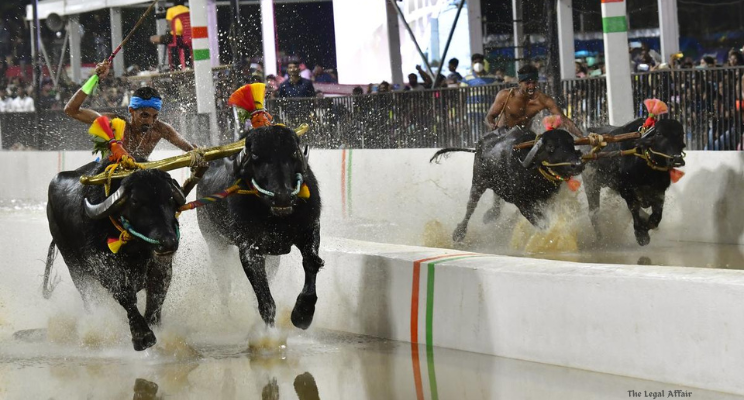
In V Keshavamurthy v. State of Karnataka & Others (WP 35617/2024), the Karnataka High Court dismissed a public interest litigation (PIL) seeking directions to the Deputy Commissioner of Kolar District for permission to conduct a bull race/bullock cart race in Dullapalli village in January 2025. The petitioner, V Keshavamurthy, had approached the court after submitting a representation to the authorities in October 2024, requesting official approval and adequate security arrangements for the event. He argued that the race held significant cultural and traditional value for the local villagers and needed government recognition. However, a division bench comprising Chief Justice N V Anjaria and Justice M I Arun ruled that the decision on granting permission rested entirely with the authorities, and the court would not intervene in such matters. The bench further held that the petitioner did not have any enforceable right to seek judicial intervention under Article 226 of the Constitution. Accordingly, the PIL was dismissed.
Arguments of Both Sides:
The petitioner, V Keshavamurthy, contended that the bull race/bullock cart race had deep cultural and traditional significance for the people of Dullapalli village. He argued that such events had been conducted for generations and played a crucial role in preserving the region’s rural heritage. The petitioner emphasized that the event was not merely a sport but an integral part of local traditions and religious festivities. He pointed out that in similar cases across India, courts had allowed such races with proper regulations, recognizing them as part of the region’s cultural fabric. He submitted that he had made a representation to the authorities in October 2024, requesting necessary approvals and security measures, but there was no response. Since the event was scheduled for January 2025, he approached the High Court, seeking directions to the Deputy Commissioner of Kolar to act upon his representation and grant permission for the race. He further argued that the court’s intervention was necessary to ensure that the event could be conducted lawfully without any last-minute disruptions.
On the other hand, the State of Karnataka opposed the petition, arguing that the petitioner had no fundamental or enforceable right to demand the conduct of a bull race. The government, represented by Additional Government Advocate Niloufer Akbar, submitted that the decision to permit such events rested solely with the administrative authorities, and courts should not interfere in these matters. The state also highlighted the potential risks involved in such races, including concerns about animal welfare and public safety. The respondents contended that while cultural events were important, they must be regulated within the legal framework, and the authorities were best placed to decide whether permission should be granted based on prevailing circumstances. The government maintained that a writ petition under Article 226 was not the appropriate remedy for such grievances, as it did not involve any fundamental rights violation or larger public interest that required judicial intervention.
Court’s Judgment:
After hearing both sides, the Karnataka High Court dismissed the petition, holding that it was not inclined to invoke public interest jurisdiction in this matter. The division bench of Chief Justice N V Anjaria and Justice M I Arun categorically stated that the decision on whether to permit a bull race or bullock cart race lay entirely within the domain of the concerned administrative authorities. The court emphasized that it would not issue any directions to the authorities regarding the petitioner’s representation, as doing so would amount to unnecessary judicial interference in executive functions. The bench further observed that the petitioner did not have any legal or enforceable right to demand the conduct of the event through judicial intervention. The judges referred to established legal principles, stating that unless there was a clear violation of fundamental rights or legal provisions, courts should not entertain petitions seeking administrative directions. The judgment also underscored that a public interest litigation under Article 226 should be reserved for cases involving genuine public concerns and not for matters that were purely administrative in nature. Since the petitioner had merely sought a direction to consider his representation, without any legal basis for compelling such action, the court found no merit in the plea and dismissed the PIL accordingly.