


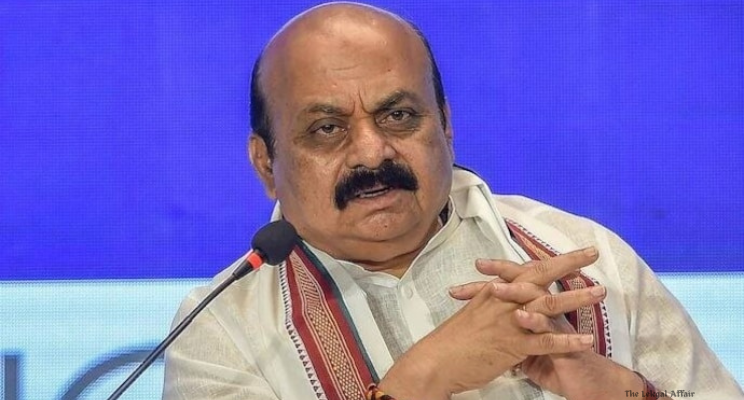
Introduction:
In a significant ruling highlighting the judiciary’s role in safeguarding free speech while curbing misuse of criminal law, the Karnataka High Court in Criminal Petition Nos. 12164/2024 & 12183/2024 (Basvaraj Bommai v. State of Karnataka) quashed two criminal cases filed against former Chief Minister Basavaraj Bommai, who was accused of delivering objectionable statements during a protest rally against the Waqf Board and the State Government over alleged encroachment on farmers’ and temples’ lands. Justice S R Krishna Kumar, while granting the petition, held that the complaints lacked specific allegations sufficient to attract the offence under Section 196(1)(a) of the Bharatiya Nyaya Sanhita (BNS) and that the continuation of proceedings would amount to an abuse of process. The court’s judgment underscores the importance of clear, unambiguous evidence before criminal prosecution can proceed under laws relating to promotion of enmity on religious or communal lines, especially in the politically sensitive context of statements made during protests.
Arguments of Both Sides:
The controversy stemmed from Bommai’s participation in a protest rally organized to condemn the alleged actions of the Waqf Board and the State Government regarding properties claimed to be usurped from farmers and temples. During his speech, Bommai allegedly remarked that “wherever a stone is thrown, Waqf property is to be found,” leading to two FIRs being registered at Shiggaon Police Station under Section 196(1)(a) BNS, which criminalizes words or acts promoting enmity between groups based on religion, race, or similar grounds. The FIRs accused Bommai of inciting communal disharmony and hurting religious sentiments. Senior Advocate Prabhuling K Navadgi, appearing for Bommai, argued forcefully that the complaints failed to establish the essential ingredients required for Section 196(1)(a), which demands that statements must be clearly intended to promote enmity or hatred between different communities. He relied on judgments from both the Supreme Court and High Courts establishing that vague, bald allegations without specific incitement cannot form the basis of prosecution under hate speech laws. Navadgi submitted that Bommai’s remarks, while critical of alleged government mismanagement, did not contain calls for violence, derogatory language directly targeting a religious group, or statements designed to foster enmity. He emphasized that criminal prosecution in such matters should not become a tool for stifling dissent or political speech protected under Article 19(1)(a) of the Constitution.
In contrast, Additional Special Public Prosecutor B N Jagadeesha, appearing for the State, opposed the quashing of proceedings, asserting that the video recordings of the protest rally prima facie demonstrated that Bommai’s statements could incite communal tensions. He argued that the remarks, taken in the context of the rally’s charged atmosphere, were sufficient to attract Section 196(1)(a) and warranted investigation and trial to determine their true nature and impact. Jagadeesha maintained that the court should refrain from interfering at this preliminary stage and allow the prosecution to complete its process, especially when sensitive communal issues were involved.
Judgement:
Justice S R Krishna Kumar, after a detailed examination of the complaint, FIRs, and principles laid down by the Supreme Court regarding hate speech, observed that the statements attributed to Bommai were limited to criticizing the proliferation of Waqf properties and did not contain words directly or indirectly instigating enmity or violence. The court pointed out that the complaint relied solely on the phrase “wherever a stone is thrown, Waqf property is to be found” without further evidence of intent to provoke hostility between religious groups or incite communal disharmony. Justice Krishna Kumar cited established jurisprudence clarifying that for a prosecution under Section 196(1)(a) or its analogous provisions under earlier statutes, there must be clear and specific allegations showing an intention to create enmity, ill-will, or hatred between different religious or social groups. Mere critical or hyperbolic political statements, even if exaggerated, do not amount to a criminal offence unless they cross the line into incitement.
Relying on precedents, the court held that vague and omnibus allegations cannot be the basis for continuing criminal proceedings in cases involving free speech. The bench found the FIRs and complaints devoid of the essential elements necessary to attract the offence alleged, with no averments indicating that Bommai’s remarks posed a real risk of public disorder or communal violence. Justice Krishna Kumar observed that “continuation of the proceedings qua the petitioner would amount to abuse of process of law thus warranting interference.” Consequently, the petitions were allowed, and the proceedings in both FIRs were quashed. The bench, however, clarified that the order’s benefit would apply exclusively to Bommai and not extend to any other individuals named as accused in the cases, leaving open the possibility of proceedings against others if evidence warranted.
The judgment sends a strong message that courts must protect citizens, including politicians, from unwarranted criminal proceedings based on vague or politically motivated complaints, particularly when the alleged speech concerns matters of public policy or criticism of government bodies. It also reinforces that laws criminalizing hate speech should not be misused to chill legitimate expressions of dissent or political criticism, which form the bedrock of democratic discourse in India.