


Introduction:
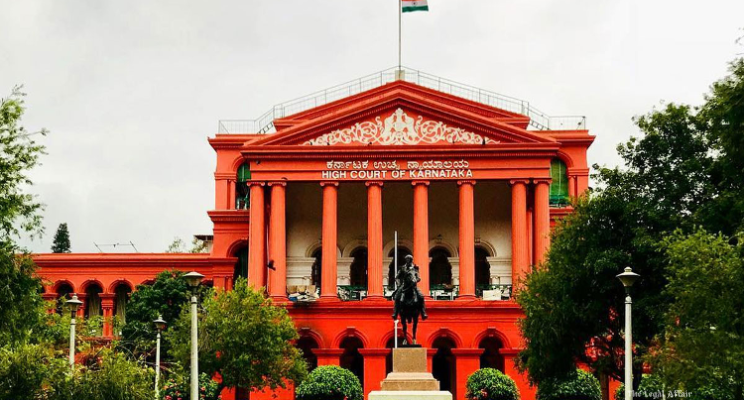
The Karnataka High Court recently quashed criminal defamation proceedings initiated against Shilpa Kiran and Suresha G.S., who were serving as News Anchor and Head of News-1 Kannada TV channel, respectively. The complaint, filed by a police sub-inspector, alleged offences under Sections 290, 505(1), 34, 499, and 500 of the Indian Penal Code (IPC). The High Court, in its ruling, emphasized procedural irregularities and the lack of a valid private complaint under Section 199 of the Code of Criminal Procedure (CrPC), 1973. Justice S.R. Krishna Kumar, while delivering the judgment, pointed out that the registration of the First Information Report (FIR) was not based on a private complaint by an aggrieved person, which is a mandatory requirement for initiating defamation proceedings under Sections 499 and 500 IPC. The Court also highlighted the absence of necessary permissions under Section 155(2) CrPC for prosecuting non-cognizable offences, such as Sections 290 and 505(1) IPC. Consequently, the proceedings were deemed illegal and without jurisdiction.
Arguments:
The petitioners argued that the charges were flawed for multiple reasons. Firstly, the inclusion of Sections 290 and 505(1) IPC, which are non-cognizable offences, required prior permission from the jurisdictional magistrate—a step that was skipped. Secondly, the absence of a private complaint under Section 199 CrPC made the charges of defamation (Sections 499 and 500 IPC) untenable. Thirdly, they emphasized that the alleged defamatory content was telecast on a news channel, yet the channel or its corporate entity was not made a party to the FIR or the charge sheet. Citing precedents like Rajeev Chandrasekhar v. K. Koteswar Rao and Sunil Bharti Mittal v. CBI, they argued that the proceedings were void.
The respondent, represented by the State, maintained that the petitioners were directly involved in the broadcast and were thus culpable. However, the Court dismissed this argument, reiterating that the procedural safeguards under CrPC must be adhered to.
Justice Krishna Kumar underscored that, in cases involving defamation, an aggrieved individual must file a private complaint before a magistrate under Section 199 CrPC. Additionally, the Court ruled that the omission to include the news channel as a party was a critical flaw, rendering the proceedings unsustainable. Referring to earlier judicial rulings, the Court stated that individuals cannot be prosecuted in isolation without impleading the corporate entity they represent.
Judgement:
As a result, the High Court allowed the petition and quashed the proceedings, safeguarding the procedural rights of the accused while reiterating the necessity of following due process in criminal defamation cases.