


Introduction:
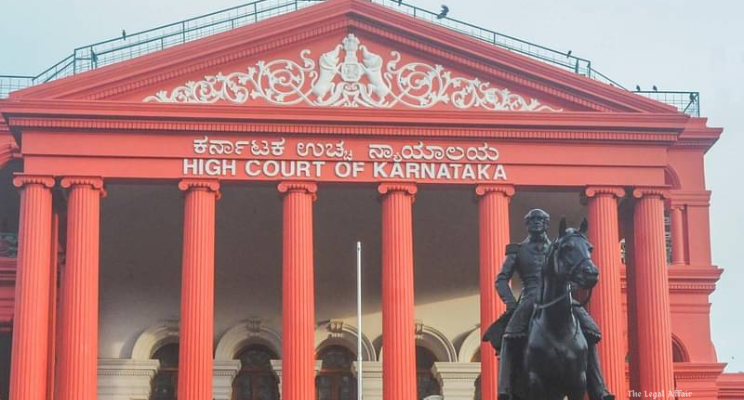
In a significant ruling, the Karnataka High Court quashed the trial court’s order sentencing a husband to an additional two months of civil imprisonment for non-payment of maintenance arrears. The case involved Chandrashekhar, who was initially sentenced to one month in prison for failing to comply with a maintenance order issued by the Family Court. His wife had sought maintenance under Section 125 of the Code of Criminal Procedure (Cr.P.C.), and after the husband’s non-compliance, she applied Section 125(3) of Cr.P.C. to recover arrears. The Magistrate, in response, imposed a one-month imprisonment term. However, after completing this term, the wife filed another application for the same arrears of 24 months, leading the trial court to impose an additional two-month imprisonment. Chandrashekhar challenged this order before the High Court, arguing that successive imprisonment for the same arrears was illegal. The High Court, referring to a previous coordinate bench ruling in Shri. Kallappa vs. Smt. Yallaubai, held that when an application is filed for the entire arrears, imprisonment cannot exceed one month. Justice Hemant Chandangoudar ruled that the second imprisonment was legally unsustainable and quashed the impugned order, providing relief to the petitioner.
Arguments of Both Sides:
The wife’s legal team argued that Chandrashekhar had repeatedly defaulted on his maintenance obligations, leaving her with no alternative but to approach the court. They contended that despite the Family Court’s maintenance order, the petitioner had failed to comply, forcing her to invoke Section 125(3) of Cr.P.C. to recover the arrears. The wife had initially sought recovery for 24 months of arrears, leading to the first imprisonment order. However, since the husband continued to withhold maintenance, she filed another application for the same arrears, leading to the second imprisonment order. The wife’s counsel justified the second application by stating that the maintenance amount remained unpaid, and repeated violations of the court’s order necessitated strict enforcement. They argued that non-payment of maintenance causes undue hardship and financial distress to dependents, and judicial leniency would embolden defaulters. The prosecution emphasized that imposing successive imprisonment terms would serve as a deterrent against wilful defaulters who exploit legal loopholes to evade their obligations.
On the other hand, Chandrashekhar’s counsel contended that the additional imprisonment was unlawful and contrary to established legal principles. They relied on the precedent set in Shri. Kallappa vs. Smt. Yallaubai, wherein the Karnataka High Court had held that if a maintenance claimant files a single application for recovery of all arrears, the imprisonment for non-payment cannot exceed one month. The defense argued that the wife had already filed an application for 24 months’ arrears, and the Magistrate had sentenced him to one month of imprisonment accordingly. They asserted that allowing another application for the same period and imposing an additional two-month imprisonment was tantamount to punishing him twice for the same default, violating his fundamental rights. The defense maintained that the law permitted successive applications for each month’s maintenance individually, but not repeated imprisonment for the same arrears when sought as a lump sum. Furthermore, they contended that continued incarceration would not serve any practical purpose, as the petitioner lacked the financial capacity to clear the dues. They emphasized that maintenance laws should not be misused as punitive tools but should instead aim at securing just financial support for dependents.
Court’s Judgment:
The Karnataka High Court, after reviewing the facts and legal precedents, quashed the additional imprisonment order imposed on Chandrashekhar. Justice Hemant Chandangoudar reaffirmed the principle laid down in Shri. Kallappa vs. Smt. Yallaubai, stating that when an application is filed for the entire arrears, imprisonment for non-payment cannot exceed one month. The court held that the wife’s initial application sought recovery for 24 months of arrears, leading to the husband’s one-month imprisonment. Since she later filed another application for the same period, the additional two-month imprisonment imposed by the Magistrate was legally unsustainable. The High Court emphasized that under Section 125(3) of Cr.P.C., the wife had the right to file successive applications for each month’s maintenance separately, but where a single application covers the entire arrears, imprisonment cannot exceed one month per application. The court observed that allowing multiple imprisonment terms for the same arrears would be unjust and contrary to the principles of natural justice.
The judgment further highlighted the need for a balanced approach in maintenance cases, ensuring that while dependents receive their rightful support, defaulters are not subjected to excessive punishment beyond legal limits. The court acknowledged the wife’s legitimate grievance over non-payment but ruled that enforcing imprisonment beyond the prescribed legal period was not permissible. It clarified that the wife was free to seek other legal remedies for recovery but could not seek repeated imprisonment for the same arrears. Accordingly, the High Court set aside the Magistrate’s order and allowed Chandrashekhar’s petition, granting him relief from further imprisonment while maintaining the enforceability of the maintenance order through legal channels.