


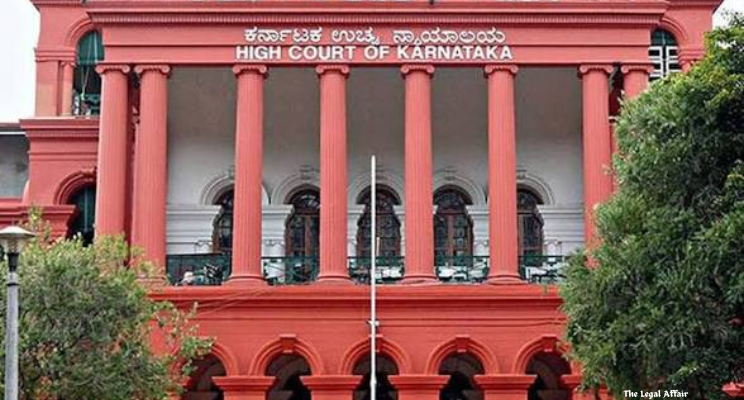
Introduction:
The Karnataka High Court has held that a complainant who provides his own money to facilitate a trap in an anti-corruption investigation cannot be compelled to wait until the conclusion of a prolonged criminal trial to recover his property. The Court emphasised that while the original currency notes used in a trap may have continuing evidentiary value, their status as material exhibits does not extinguish the complainant’s ownership or justify indefinite deprivation of the money.
The ruling was delivered by Justice M. Nagaprasanna in Sri G. Eshwaraiah v. Central Bureau of Investigation (CBI) & Others, Criminal Petition No. 9560 of 2026, reported as 2026 LiveLaw (Kar) 298. The Court disposed of the petition while granting the complainant liberty to approach the Special Court for appropriate relief concerning restoration of the trap amount.
The case arose from a corruption trap conducted by the Central Bureau of Investigation against two GST officials. The petitioner, a contractor and the de-facto complainant, had allegedly been subjected to a demand for illegal gratification by the accused officials. In order to facilitate the trap proceedings, he handed over ₹80,000 of his own money as the trap amount. The CBI subsequently apprehended the accused officials during the trap.
The currency notes used in the trap were treated with phenolphthalein powder and became important material evidence in the criminal case. Consequently, the money remained in the custody of the Special Court. While the prosecution could legitimately rely upon the original currency notes to establish the circumstances of the trap, the complainant contended that prolonged retention of his money imposed an unfair financial burden upon him.
The petitioner therefore approached the High Court seeking appropriate relief. His grievance was that the currency belonged to him and had been used only as an instrument for assisting the State in detecting the alleged corruption. According to him, once the trap had been completed and the currency notes had been secured as evidence, there was no justification for compelling him to remain without his own money throughout the duration of the criminal trial, which could potentially continue for years.
The controversy raised an important question concerning the treatment of seized property in criminal proceedings. Courts routinely face situations in which property seized during an investigation has evidentiary value but need not necessarily remain physically in judicial custody until the criminal case reaches its conclusion. The law provides mechanisms for appropriate custody, preservation and disposal of such property while ensuring that the evidence remains available for the purposes of trial.
The High Court examined this issue in the context of the Supreme Court’s landmark decision in Sunderbhai Ambalal Desai v. State of Gujarat (2002). The Supreme Court had emphasised the need for courts to deal expeditiously with seized property and had explained the principles governing the exercise of powers under Sections 451 and 457 of the Code of Criminal Procedure. The underlying rationale is that property should not unnecessarily remain in police or court custody for long periods when appropriate arrangements can preserve its evidentiary value.
The Karnataka High Court considered these principles alongside the peculiar nature of trap money. It recognised that the original currency notes, particularly because they had been treated with phenolphthalein powder, could have evidentiary significance. However, the Court also drew a clear distinction between the evidentiary character of the currency notes and ownership of the money.
The Court reasoned that the State did not provide the trap money to the complainant. Rather, the complainant used his own funds to facilitate the detection of the alleged corrupt conduct. The fact that the money subsequently became material evidence did not transfer ownership of the currency from the complainant to the State.
Justice Nagaprasanna therefore emphasised that the complainant remained the lawful owner of the trap amount. Recognition of ownership, the Court observed, would become meaningless if the owner was deprived of possession and enjoyment of his property for years without sufficient legal justification.
The Court also considered the larger public interest involved in anti-corruption cases. Citizens who report corruption and cooperate with investigating agencies perform an important role in supporting the administration of criminal justice. If such complainants are required to suffer financial hardship merely because they have assisted a trap operation, it may discourage citizens from approaching law enforcement authorities in future.
Rather than allowing the original currency notes to remain locked away indefinitely, the Court contemplated a mechanism under which the complainant could be restored an equivalent amount from the State exchequer after the trap proceedings attain finality, while the original notes could continue to remain available as material exhibits. The Court also granted the petitioner liberty to move the Special Court under Sections 497 and 503 of the Bharatiya Nagarik Suraksha Sanhita, 2023.
The Special Court was directed to consider such an application in light of the principles laid down by the High Court and dispose of it within four weeks. The Court thereby sought to preserve both interests: the evidentiary integrity of the prosecution and the proprietary rights of the complainant.
Arguments of the Parties:
The petitioner, Sri G. Eshwaraiah, was represented by Advocate H.S. Poornima. His principal grievance was that the ₹80,000 used as trap money belonged to him and had been retained in the custody of the Special Court merely because it constituted an important exhibit in the corruption trial.
The petitioner contended that there was no dispute regarding the ownership of the money. He had not received the amount from the CBI or from any government authority. The money had been taken from his own resources and handed over for the limited purpose of facilitating the trap against the accused GST officials.
According to the petitioner, the fact that the money had become material evidence did not change its underlying ownership. The State’s evidentiary interest in the currency notes could be protected without requiring the petitioner to remain deprived of the equivalent financial value throughout the criminal proceedings.
The petitioner further argued that criminal trials, particularly cases involving corruption allegations, can take considerable time to conclude. If the original currency notes were required to remain in the custody of the Special Court until the final judgment, the complainant could potentially be deprived of his money for several years.
This, according to the petitioner, would create an unfair consequence for a person who had cooperated with the State in exposing alleged corruption. Instead of being protected as a complainant, he would effectively bear a financial penalty for assisting the investigation.
The petitioner also relied upon the principles governing the release and disposal of seized property. The Supreme Court’s decision in Sunderbhai Ambalal Desai v. State of Gujarat was relevant in this regard because it recognised that seized property should not unnecessarily remain in police or court custody throughout criminal proceedings when its evidentiary requirements can be adequately safeguarded through appropriate orders.
The petitioner therefore sought restoration of his money or an effective mechanism through which he could regain its equivalent value without compromising the prosecution’s ability to produce the original trap currency as evidence.
On behalf of the CBI, Special Public Prosecutor P. Prasanna Kumar represented the investigating agency. The prosecution’s concern was necessarily connected with the evidentiary significance of the original currency notes. Trap cases often depend upon proof of the circumstances in which the money was demanded, delivered and recovered. The original currency notes, particularly when treated with phenolphthalein powder, can form an important part of that evidentiary chain.
The High Court recognised this evidentiary concern. The original currency could not simply be treated like ordinary seized property without considering its relevance to the prosecution. The phenolphthalein treatment and the circumstances of recovery could be material to establishing the alleged trap.
The Court therefore did not hold that the original currency must necessarily be physically handed back to the complainant immediately. Instead, it considered how the complainant’s proprietary interest could be protected while ensuring that the prosecution’s evidentiary requirements remained intact.
The legal issue was consequently not a simple question of whether seized property should always be returned to its owner. Rather, it required balancing the competing interests of evidentiary preservation and proprietary enjoyment.
The Court acknowledged that the original currency notes could remain material exhibits during the trial. At the same time, it rejected the proposition that this evidentiary status should automatically result in the complainant being financially deprived until the criminal proceedings reached their final conclusion.
The petitioner’s case therefore rested upon a distinction between the physical notes and their monetary value. The original notes could continue to be preserved for evidentiary purposes, while the complainant could, subject to the appropriate legal mechanism, receive an equivalent amount.
The Court also considered the larger implications of retaining trap money for prolonged periods. The complainant in a corruption case is not merely a passive witness. In a trap operation, he may be required to confront the alleged corrupt public servant, cooperate with investigators and part with his own money as part of the detection process.
The petitioner’s position was that such cooperation should not expose an honest citizen to an additional financial burden. A person who refuses to participate in corruption and instead approaches law enforcement should not emerge from the process financially disadvantaged because his own money was used to assist the investigation.
The respondents’ position, on the other hand, required the Court to recognise that criminal evidence must be preserved and that the trial court has a duty to ensure that material exhibits remain available. The solution therefore had to protect the integrity of the prosecution without unnecessarily compromising the complainant’s property rights.
The Court ultimately found that both concerns could be accommodated. The original notes could continue to serve as evidence, while the complainant’s proprietary interest could be addressed through an equivalent monetary payment at an appropriate stage.
This approach avoided creating a conflict between the complainant’s right to his property and the prosecution’s need to preserve evidence. It also avoided the practical difficulty of requiring the original currency notes to circulate again after they had become material exhibits.
The Court’s observations therefore focused on finding a legally workable solution rather than treating evidentiary custody as an absolute reason for indefinite deprivation.
Court’s Judgment:
Justice M. Nagaprasanna disposed of the petition while granting the complainant liberty to approach the Special Court under Sections 497 and 503 of the Bharatiya Nagarik Suraksha Sanhita, 2023, for appropriate orders concerning the trap money. The Special Court was directed to consider and dispose of such an application within four weeks.
The High Court’s reasoning began with a recognition of the two distinct legal interests involved. The original currency notes used in the trap were important material evidence and therefore required preservation. At the same time, the money belonged to the complainant, who had voluntarily used his own funds to facilitate the trap.
The Court held that there could be no real ambiguity concerning ownership. The CBI had not supplied the money to the complainant. The State had not advanced the ₹80,000 for the purpose of conducting the trap. Instead, the complainant had parted with his own money in order to assist the investigating agency.
The fact that the currency notes subsequently became material evidence did not alter this ownership. The Court explained that the State’s temporary use of the currency as an instrument of investigation did not transfer proprietary rights in that money to the State.
This distinction between ownership and evidentiary custody formed the foundation of the judgment. Once currency is seized and produced before a court, it may acquire evidentiary significance, but that does not necessarily mean that the owner loses all rights in the property.
The Court went further and observed that recognition of ownership becomes practically meaningless if the owner is denied enjoyment of the property for years without legal necessity. In the Court’s view, a legal system cannot merely declare that a person owns property while simultaneously permitting prolonged deprivation of its use.
The Court’s reasoning is closely aligned with the principles laid down by the Supreme Court in Sunderbhai Ambalal Desai v. State of Gujarat (2002). The Supreme Court had addressed the problem of seized property remaining in police stations and court custody for long periods. It emphasised that courts should exercise their powers under the criminal procedure law to ensure appropriate and timely orders concerning seized property.
The rationale behind Sunderbhai is practical as well as legal. Property can deteriorate, lose value or remain unnecessarily locked away while criminal proceedings continue for years. The mere fact that property is seized as part of a criminal case does not necessarily require it to remain physically in custody until the trial concludes.
The Karnataka High Court applied this broader principle to the specific circumstances of trap money. It recognised that the original currency notes had special evidentiary significance because they had been treated with phenolphthalein powder. Consequently, the Court did not disregard the need to preserve the original notes as material exhibits.
At the same time, the Court considered whether the complainant’s monetary interest could be restored without compromising the evidence. It indicated that the prosecuting agency or the State could, after the trap proceedings attain finality, restore an equivalent amount to the complainant from the State exchequer while allowing the original currency notes to remain as exhibits.
This suggested mechanism is significant. It separates the evidentiary identity of the original currency from its economic value. The original notes can continue to demonstrate the circumstances of the trap, while the complainant is not permanently deprived of the financial value represented by those notes.
The Court’s approach therefore recognises that evidence does not always have to remain physically in the same condition or custody if its evidentiary requirements can otherwise be preserved through lawful means. At the same time, the original currency’s evidentiary sanctity must remain protected.
The Court was particularly concerned with the position of complainants in anti-corruption cases. It observed that a successful trap is founded upon the courage of a citizen who chooses to resist corruption rather than submit to an illegal demand.
The Court regarded such citizens as participants in the administration of criminal justice rather than mere sources of evidence. A complainant who risks inconvenience, pressure and financial hardship to expose corruption should not, in the Court’s view, be subjected to an additional financial burden merely because his money became part of the prosecution’s evidence.
The Court’s observations therefore gave a broader public-interest dimension to the issue. If complainants knew that their own money could remain locked in judicial custody for the duration of a lengthy criminal case, some citizens might hesitate to cooperate with anti-corruption agencies.
The Court reasoned that the fight against corruption depends not only upon statutes and investigative agencies but also upon citizens being willing to report corrupt practices. A legal system that protects the complainant’s legitimate interests can strengthen public confidence in anti-corruption mechanisms.
This does not mean that complainants are entitled to automatic return of every piece of evidence immediately after a trap. The evidentiary requirements of the criminal case remain paramount. The Court specifically acknowledged that the original trap currency could continue to be material evidence.
The appropriate solution, therefore, is one that protects both interests. The original notes can remain preserved as evidence, while the complainant’s proprietary interest can be addressed through restoration of an equivalent amount in accordance with law.
The High Court accordingly granted the petitioner liberty to approach the Special Court under Sections 497 and 503 of the BNSS. The Court directed that the Special Court consider and dispose of the application within four weeks.
This direction is significant because the High Court did not itself order the immediate physical release of the original ₹80,000. Instead, it placed the matter before the Special Court, which is the appropriate forum to consider custody and disposal of material connected with the criminal case.
The Special Court was directed to consider the application in light of the observations made by the High Court. In doing so, it must balance the evidentiary importance of the original currency against the complainant’s proprietary rights.
The High Court also reiterated the broader principle that seized property should not be unnecessarily retained until the end of a criminal trial merely because the trial remains pending. Courts should consider appropriate mechanisms for preserving evidence while avoiding needless deprivation of property.
The judgment is particularly relevant to cases involving cash, vehicles and other forms of seized property. The Court noted the comprehensive guidelines evolved by the Supreme Court and other High Courts concerning expeditious release and disposal of seized property.
The principle has practical importance because criminal trials frequently take years to conclude. If every seized article is required to remain in judicial custody until the final judgment, owners may suffer substantial hardship even where the physical retention of the property is no longer necessary for proving the prosecution case.
In the context of trap money, the problem is even more pronounced because the money ordinarily belongs to the complainant rather than the accused. The State’s interest is principally evidentiary. The complainant’s interest is proprietary.
The Court’s decision therefore moves away from an approach in which evidentiary custody automatically results in prolonged deprivation. Instead, it encourages courts to consider whether the evidentiary purpose can be achieved through appropriate safeguards.
The ruling also carries an important constitutional dimension. Although the order’s principal focus was on criminal procedure and seized property, the Court’s reasoning reflects the broader legal principle that property rights cannot be rendered meaningless through unnecessary deprivation.
The Court’s statement that ownership without enjoyment can become a “barren declaration” captures the practical concern underlying the case. A legal right has little value if its hlder is denied the ability to enjoy it for an unnecessarily pro